
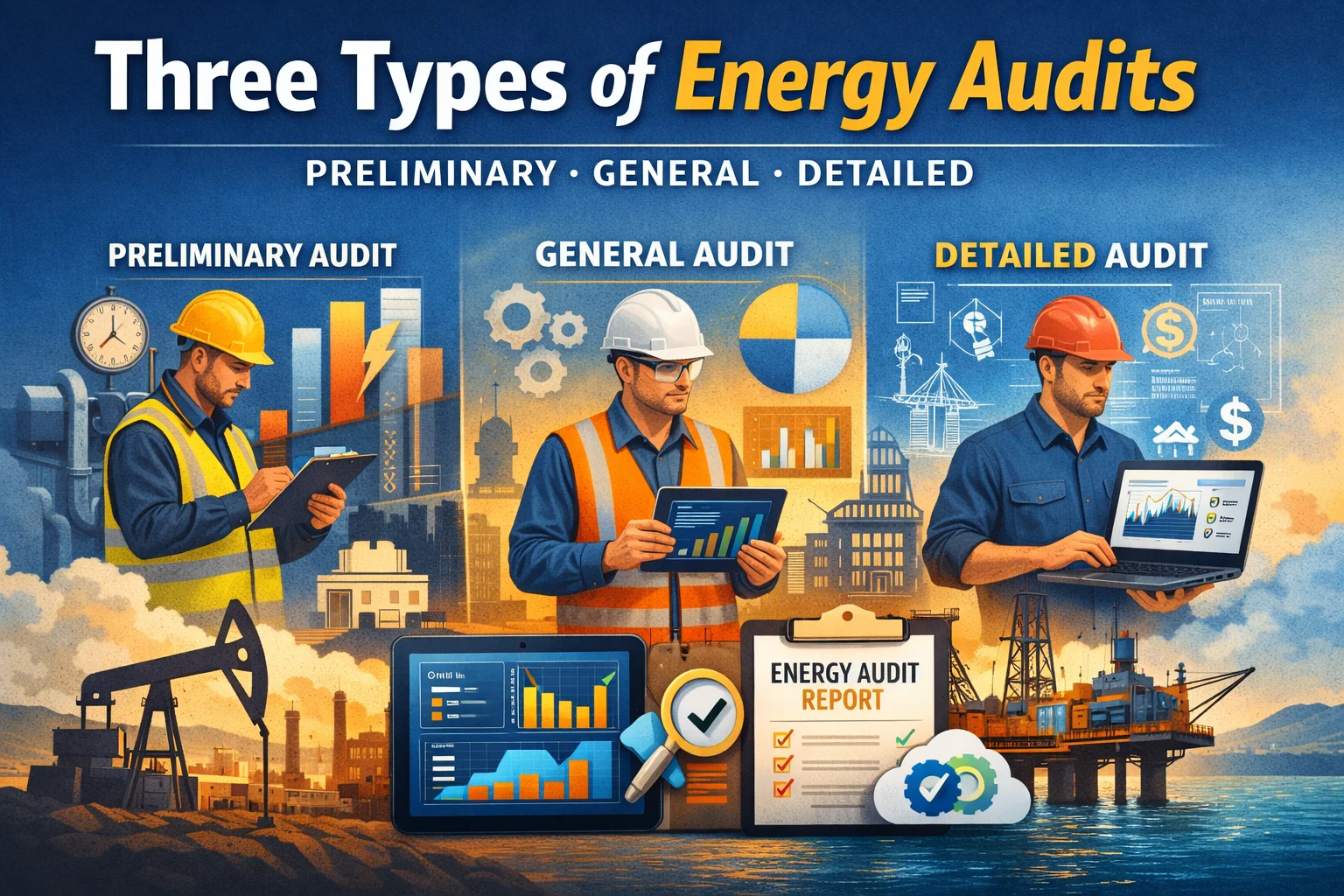
Energy efficiency is no longer optional—especially for industries with high operational costs like oil and gas. As energy prices rise and compliance standards tighten, businesses increasingly rely on energy audits to identify inefficiencies, reduce waste, and improve sustainability.
So, what are the three types of energy audits, and how do they differ? More importantly, which one is right for your facility?
In this guide, we’ll break down each type in a simple, practical way while also showing how digital inspection and audit tools like Inspections Track can streamline the entire process.
An energy audit is a systematic inspection and analysis of energy use within a facility. Its goal is to identify areas where energy is wasted and recommend cost-effective improvements.
Energy audits are commonly used in:
However, not all energy audits are the same. In fact, they are divided into three distinct types, each serving a different purpose.
Energy audits are typically classified as:
Let’s explore each one in detail.
A Preliminary Energy Audit, also known as a walk-through audit, is the most basic level of energy assessment.
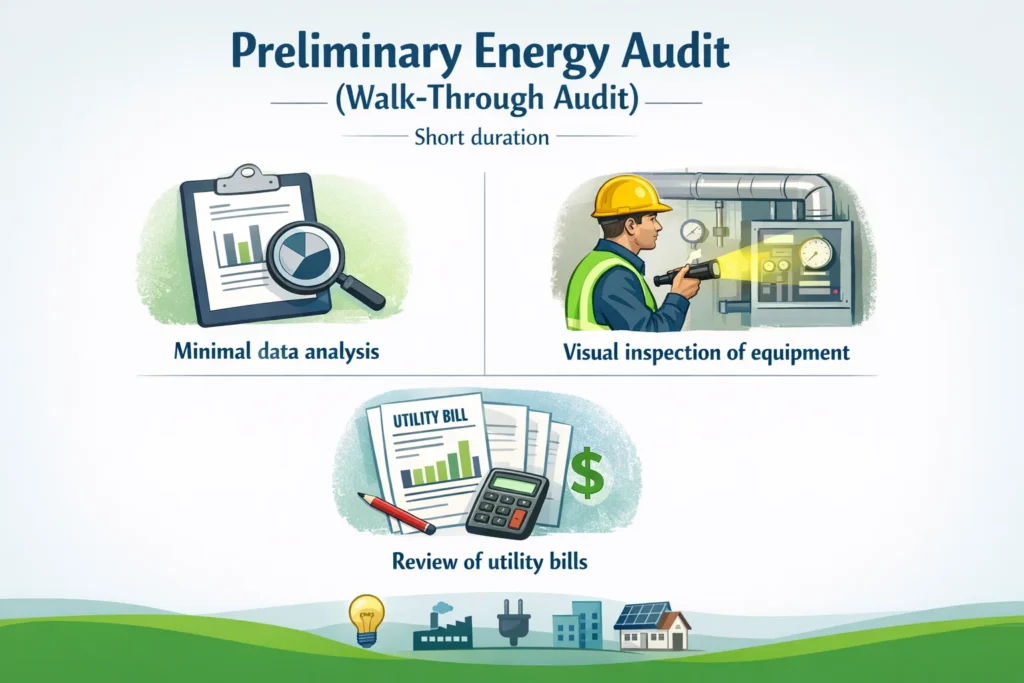
This audit provides a high-level overview of energy consumption patterns. It helps organizations quickly identify obvious inefficiencies without requiring extensive data collection.
Advantages
Limitations
A General Energy Audit goes deeper than a walk-through audit and provides a structured analysis of energy usage.
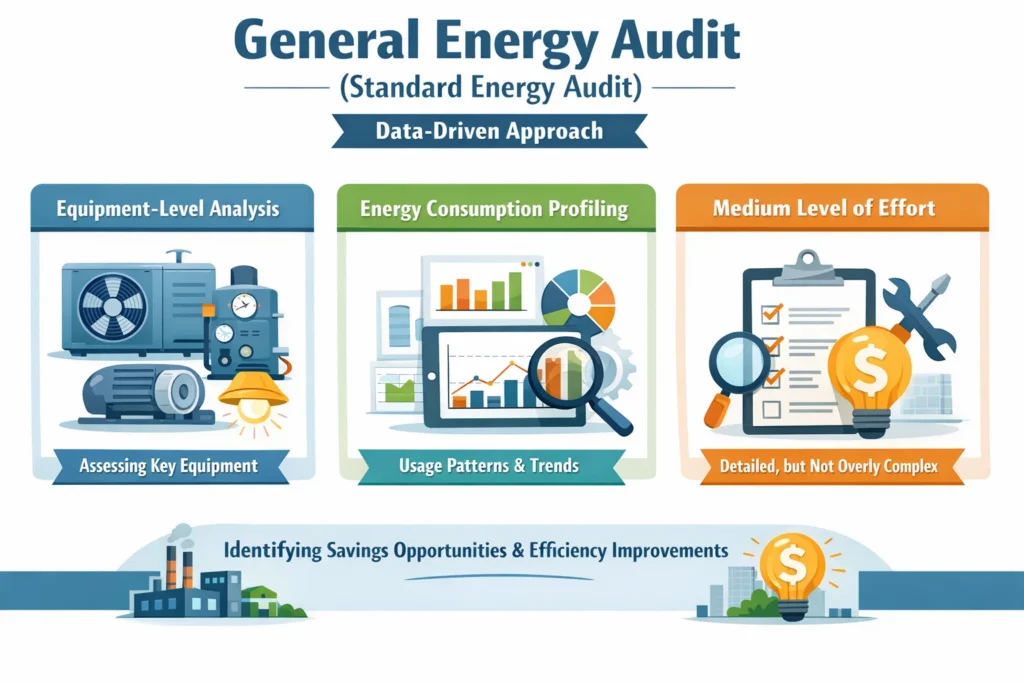
This audit includes measured data, equipment performance evaluation, and energy balance calculations. It identifies energy conservation measures (ECMs) with estimated savings.
Advantages
Limitations
A Detailed Energy Audit, also called an Investment-Grade Audit (IGA), is the most comprehensive and precise type.
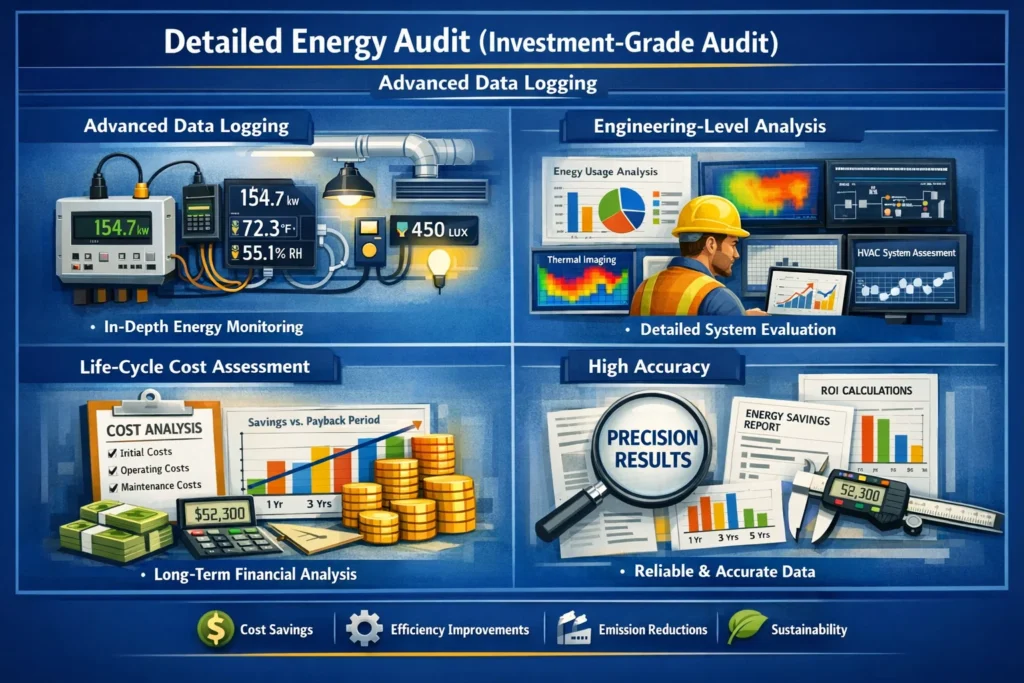
This audit involves extensive monitoring, simulations, and financial modeling. It supports capital investment decisions and long-term energy strategies.
Advantages
Limitations
| Audit Type | Scope | Cost | Accuracy | Best For |
|---|---|---|---|---|
| Preliminary Audit | Basic overview | Low | Low | Initial assessments |
| General Audit | System analysis | Medium | Medium | Operational improvements |
| Detailed Audit | Full engineering study | High | High | Capital investments |
In oil and gas operations, energy losses directly impact profitability, safety, and compliance. Therefore, energy audits play a critical role in:
However, manual audits often lead to data gaps, delays, and reporting errors.
That’s where digital inspection platforms make a real difference.
Inspections Track is a powerful digital inspection and audit software designed specifically for oil and gas inspections.
By using Inspections Track, energy audits become structured, repeatable, and scalable—especially for complex oil and gas facilities.
Choosing the right audit depends on your goals, facility size, and budget.
In all cases, pairing the audit with digital inspection software ensures accuracy, consistency, and compliance.
Understanding what the three types of energy audits are helps organizations make smarter energy decisions. While each audit type serves a unique purpose, their effectiveness greatly improves when supported by modern inspection technology.
For the oil and gas industry, platforms like Inspections Track bridge the gap between energy auditing, asset inspections, and compliance, delivering measurable results and long-term value.
Read more : avoiding corrosion detection errors in oil storage tanks
The three main types of energy audits are Preliminary (walk-through) audits, General (standard) audits, and Detailed (investment-grade) audits, each offering increasing levels of analysis and accuracy.
For oil and gas facilities, a Detailed energy audit is best because it provides in-depth analysis, accurate savings estimates, and supports large-scale investment and compliance decisions.
Inspection software like Inspections Track helps by digitizing data collection, improving accuracy, automating reports, and ensuring audit-ready documentation across oil and gas energy audits.

Introduction In the oil and gas industry, safety and operational efficiency rely heavily on properly maintained lifting gear. While regular inspections are mandated, many organizations overlook subtle indicators like wear, deformation, and deterioration. Understanding these…
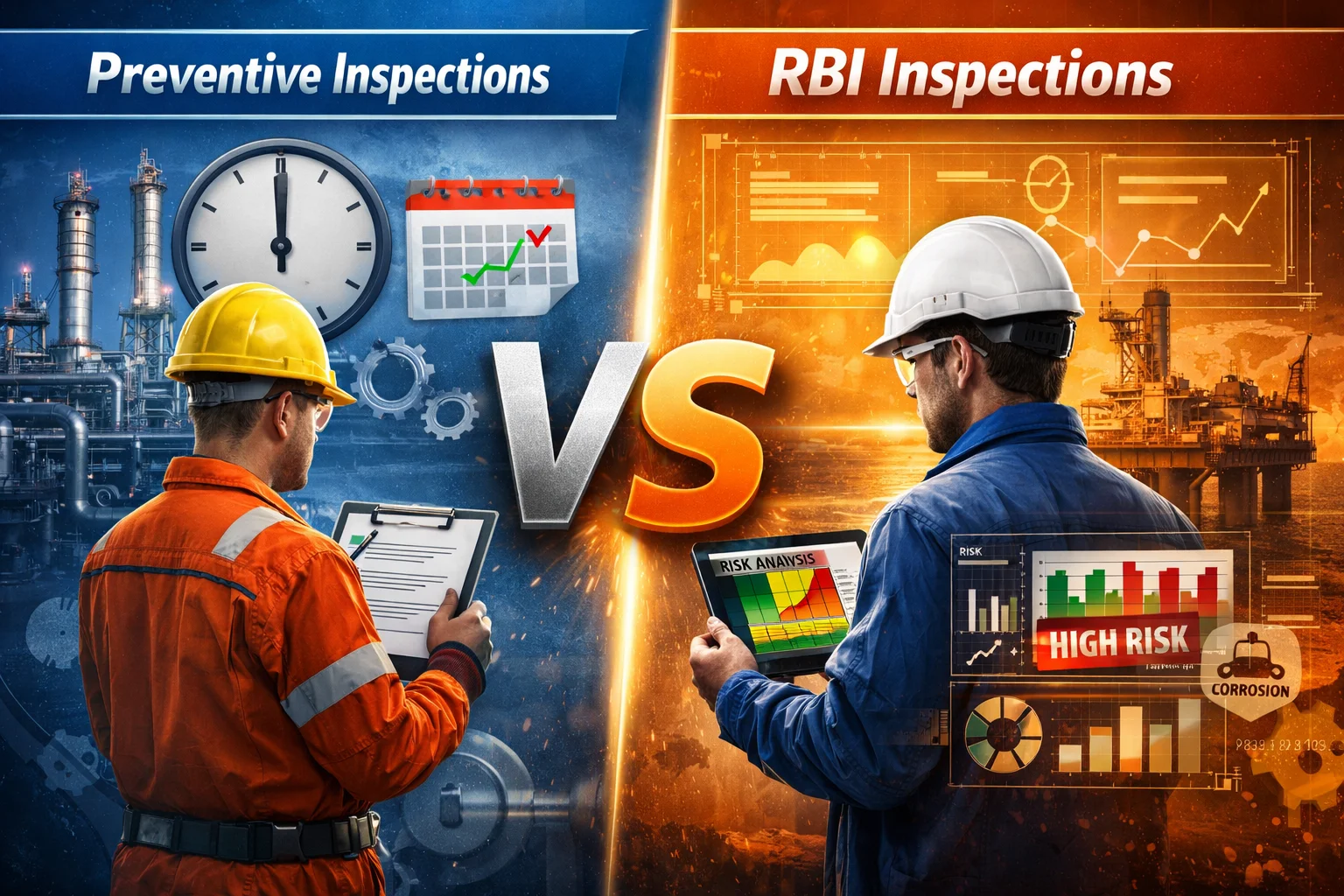
In the oil and gas industry, inspection strategies directly impact asset reliability, regulatory compliance, and operational safety. However, many organizations still struggle to understand the differences between preventive inspections and Risk-Based Inspection (RBI) methodologies. While…


Comment (1)
Quality Control Oil and Gas: Digital Inspections Software - inspectionstrack
Jan 15, 2026[…] Read more : three types of energy audits […]
Comments are closed.