
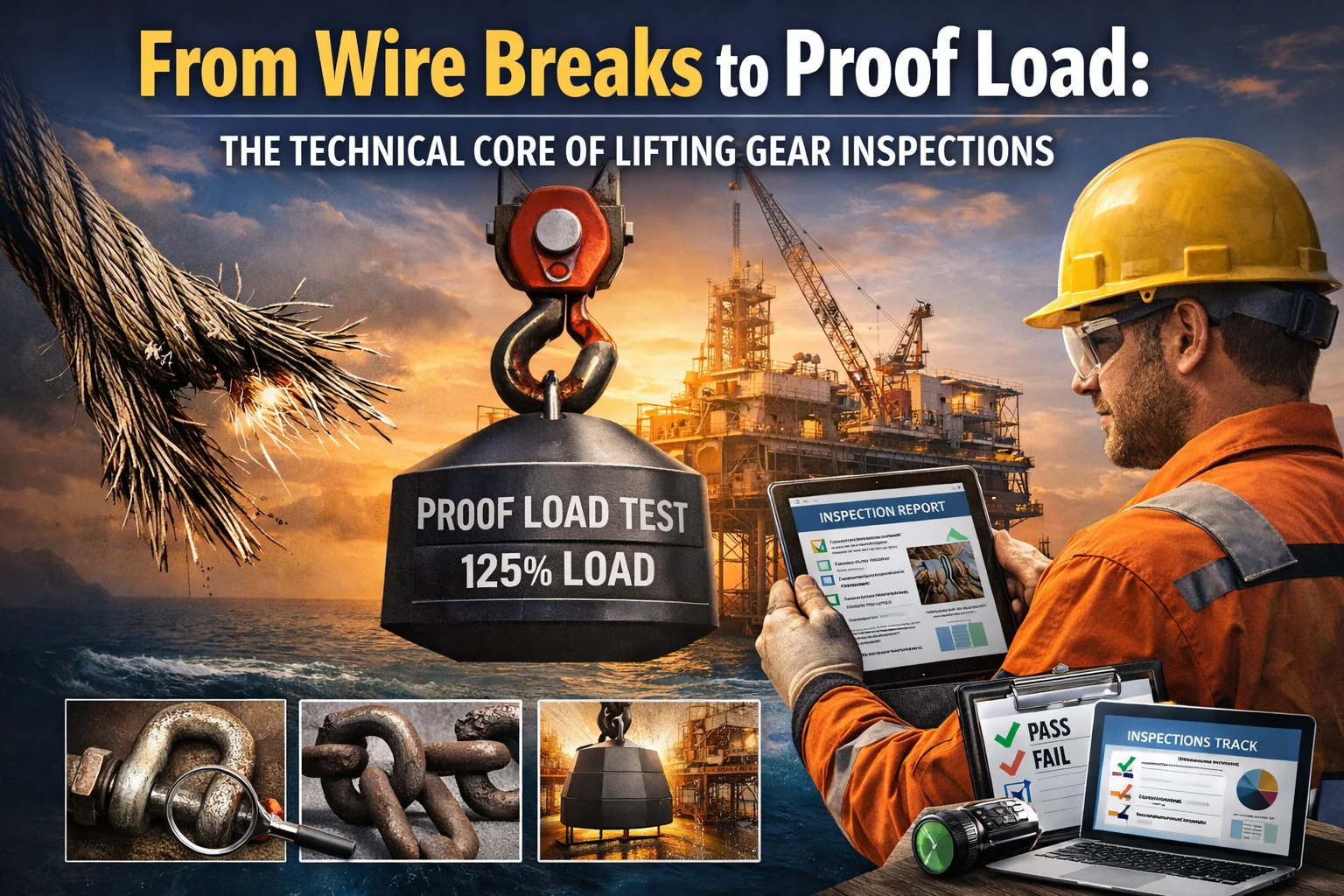
Lifting gear plays a critical role in industrial operations, especially in sectors like oil and gas, offshore drilling, construction, and heavy manufacturing. However, these components operate under immense stress, which makes regular inspections essential for safety and compliance.
From identifying wire rope breaks to performing proof load testing, lifting gear inspections involve a range of technical procedures designed to ensure reliability and prevent catastrophic failures. In this guide, we explore the technical core of lifting gear inspections and how digital tools like Inspections Track software for the oil and gas inspection industry help streamline the entire process.
Lifting gear inspections are systematic evaluations performed on equipment used for lifting or suspending loads. These inspections help identify defects, wear, deformation, and other conditions that could lead to failure.
Common lifting gear includes:
Because lifting equipment operates under dynamic loads, even minor defects can escalate into serious safety hazards. Therefore, regular inspections ensure compliance with international safety standards and industry regulations.
In the oil and gas sector, lifting operations occur in challenging environments such as offshore rigs, refineries, and drilling sites. Consequently, equipment must meet strict safety and performance requirements.
Key reasons inspections are essential include:
Moreover, regulatory bodies often require documented inspection reports. Therefore, accurate record-keeping becomes just as important as the inspection itself.
Wire ropes are among the most critical components in lifting systems. Because they endure continuous tension and friction, they are particularly vulnerable to damage.
Inspectors typically check for:
Even a small number of broken wires can significantly reduce the rope’s strength. Therefore, early detection is essential.
Hooks and shackles are essential load-bearing components. Over time, they may experience deformation due to excessive loads.
Inspection points include:
If the hook opening exceeds the allowable limit, the component must be removed from service immediately.
Chains and slings are widely used in rigging operations. However, they are susceptible to wear, elongation, and mechanical damage.
Inspectors evaluate:
Furthermore, synthetic slings require additional checks for cuts, burns, and chemical damage.
Proof load testing is one of the most critical aspects of lifting gear inspections. It involves applying a controlled load to the equipment to verify its strength and performance.
Proof load testing ensures that lifting equipment can safely handle its rated capacity without permanent deformation.
Benefits include:
Typically, proof load tests apply 125% to 150% of the rated load depending on industry standards.
| Step | Description |
|---|---|
| Equipment Preparation | Inspect visually before testing |
| Load Application | Gradually apply the proof load |
| Load Holding | Maintain load for a specified duration |
| Inspection | Check for deformation or structural damage |
| Documentation | Record test results and certification |
Because proof load testing involves high forces, it must always be performed under controlled conditions by trained inspectors.
During inspections, several types of defects may appear. Detecting them early significantly reduces the risk of accidents.
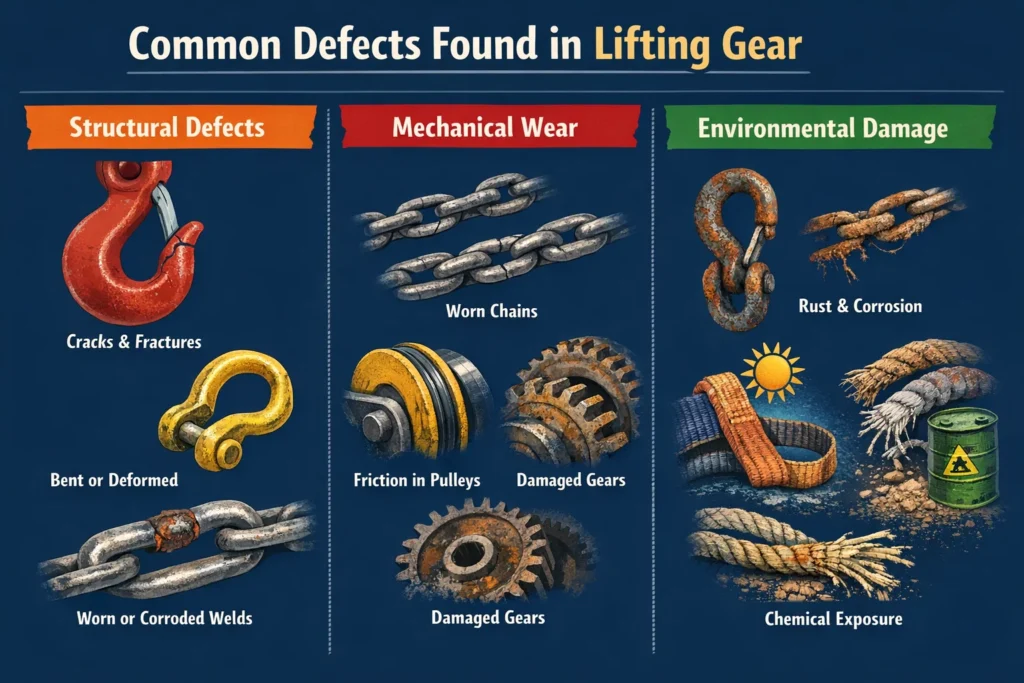
Consequently, routine inspections help identify these issues before they escalate into dangerous failures.
Traditionally, inspections relied heavily on paper checklists and manual documentation. However, modern industries now adopt digital inspection platforms to improve accuracy and efficiency.
This is where Inspections Track software becomes valuable for the oil and gas inspection industry.
Inspections Track offers powerful features designed specifically for inspection teams:
As a result, inspection teams can reduce paperwork, eliminate data errors, and improve reporting accuracy.
Organizations that adopt digital inspection systems gain several advantages.
Furthermore, digital platforms allow managers to analyze historical inspection data, which helps identify recurring equipment issues.
To ensure safety and compliance, organizations should follow several best practices.
Routine inspections help detect problems early before they become serious.
Inspectors must understand equipment design, failure modes, and testing procedures.
Accurate inspection records support compliance and operational transparency.
Inspection management software significantly improves documentation, reporting, and asset tracking.
As industries move toward digital transformation, inspection processes are becoming smarter and more automated.
Emerging trends include:
Solutions like Inspections Track software for the oil and gas inspection industry are already helping organizations modernize inspection workflows and maintain high safety standards.
From detecting wire rope breaks to performing rigorous proof load testing, lifting gear inspections form the technical backbone of safe industrial operations. These inspections protect workers, prevent equipment failure, and ensure compliance with strict safety regulations.
However, as inspection requirements become more complex, digital tools are becoming essential. By adopting advanced solutions like Inspections Track software, companies can streamline inspection processes, improve reporting accuracy, and enhance overall operational safety.
Ultimately, combining expert inspection practices with modern inspection technology ensures that lifting operations remain safe, reliable, and compliant in even the most demanding environments.
read more : lifting gear inspections derrick safety essentials
Lifting gear inspections ensure that equipment used for lifting loads is safe, functional, and compliant with industry safety standards.
Inspection frequency depends on usage and regulations, but many industries require regular periodic inspections along with pre-use visual checks.
Proof load testing involves applying a load greater than the equipmen
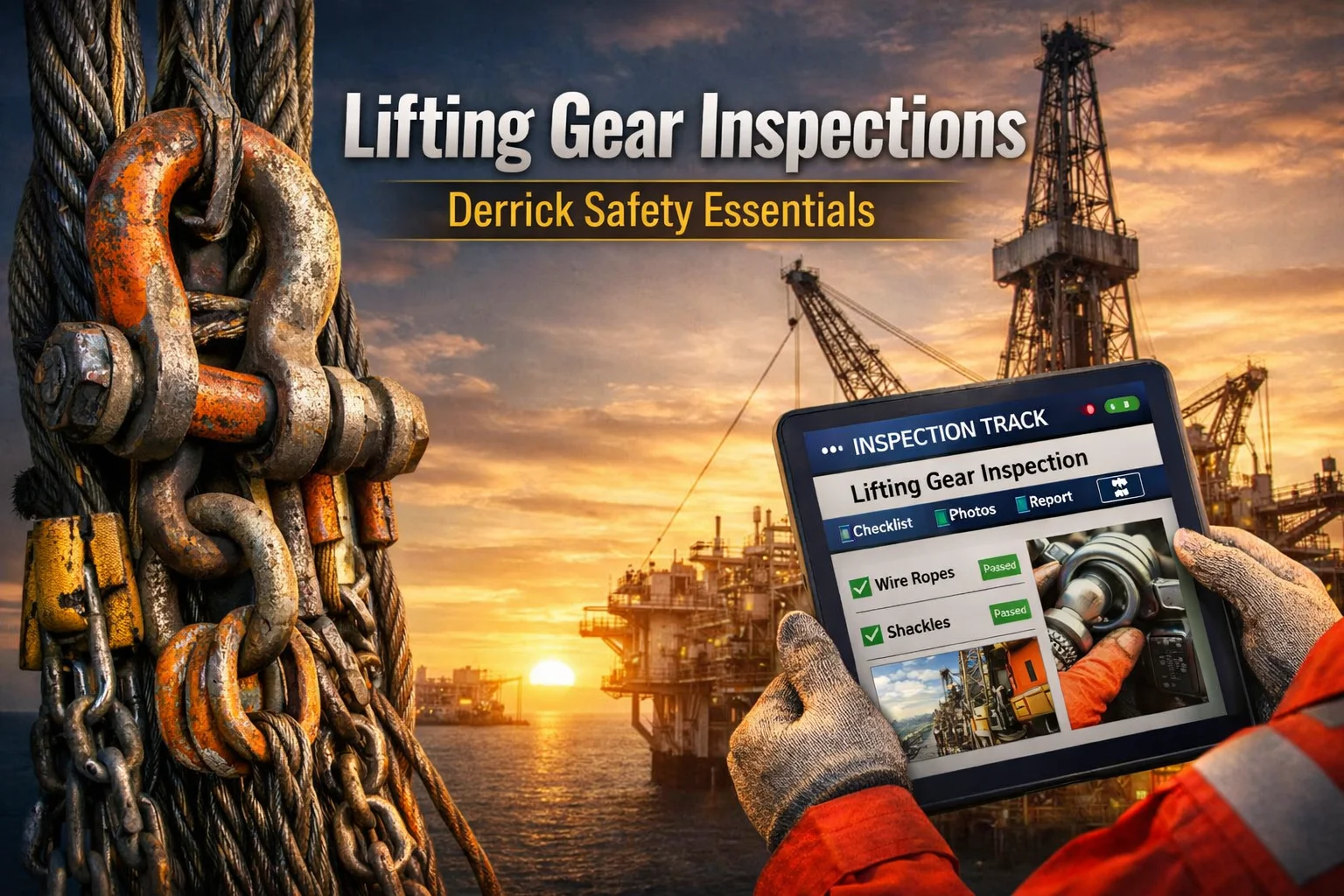
In the oil and gas industry, derrick operations rely heavily on lifting gear to move heavy loads safely and efficiently. From wire ropes to shackles and hoists, every component plays a critical role. However, if…
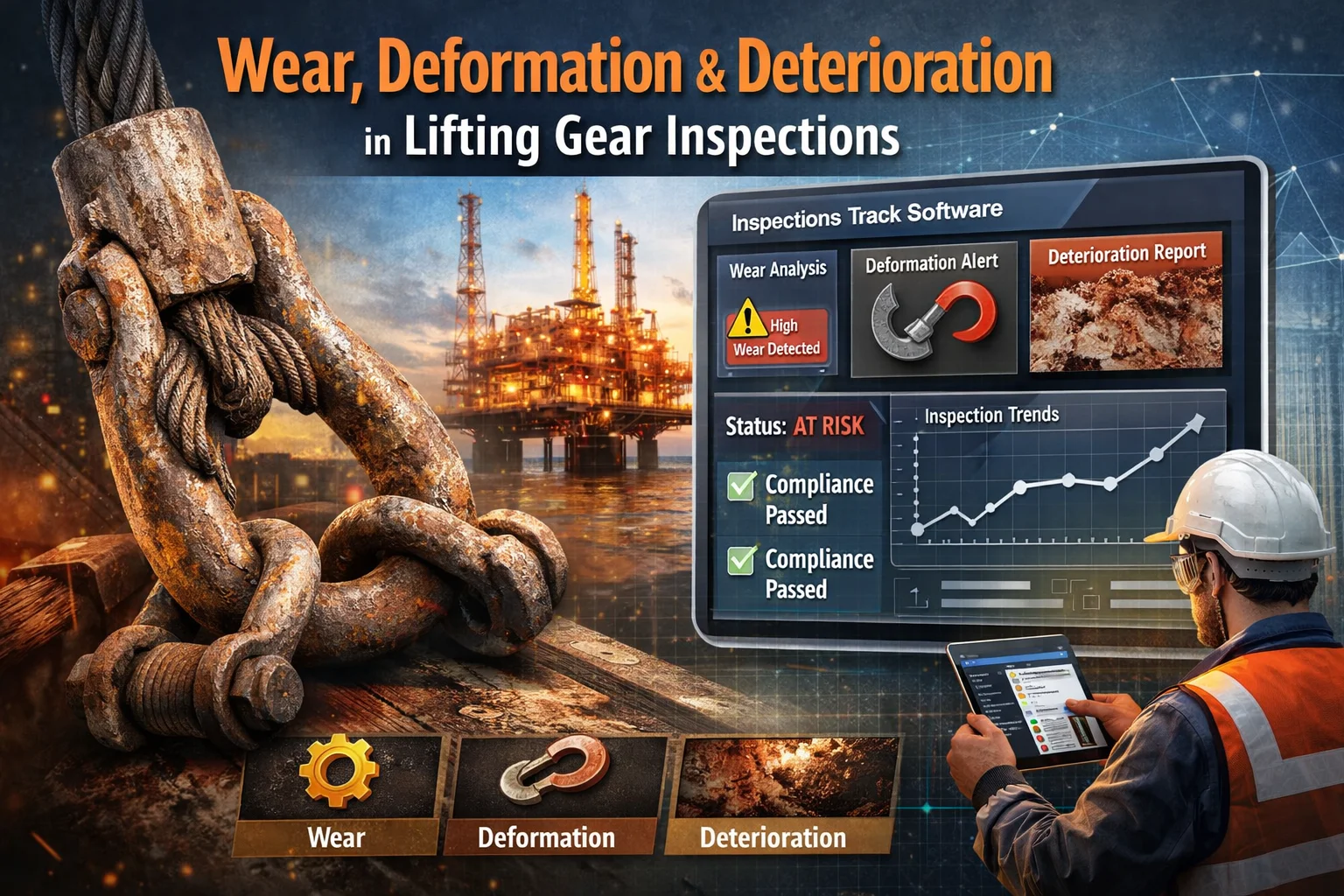
Introduction In the oil and gas industry, safety and operational efficiency rely heavily on properly maintained lifting gear. While regular inspections are mandated, many organizations overlook subtle indicators like wear, deformation, and deterioration. Understanding these…


