
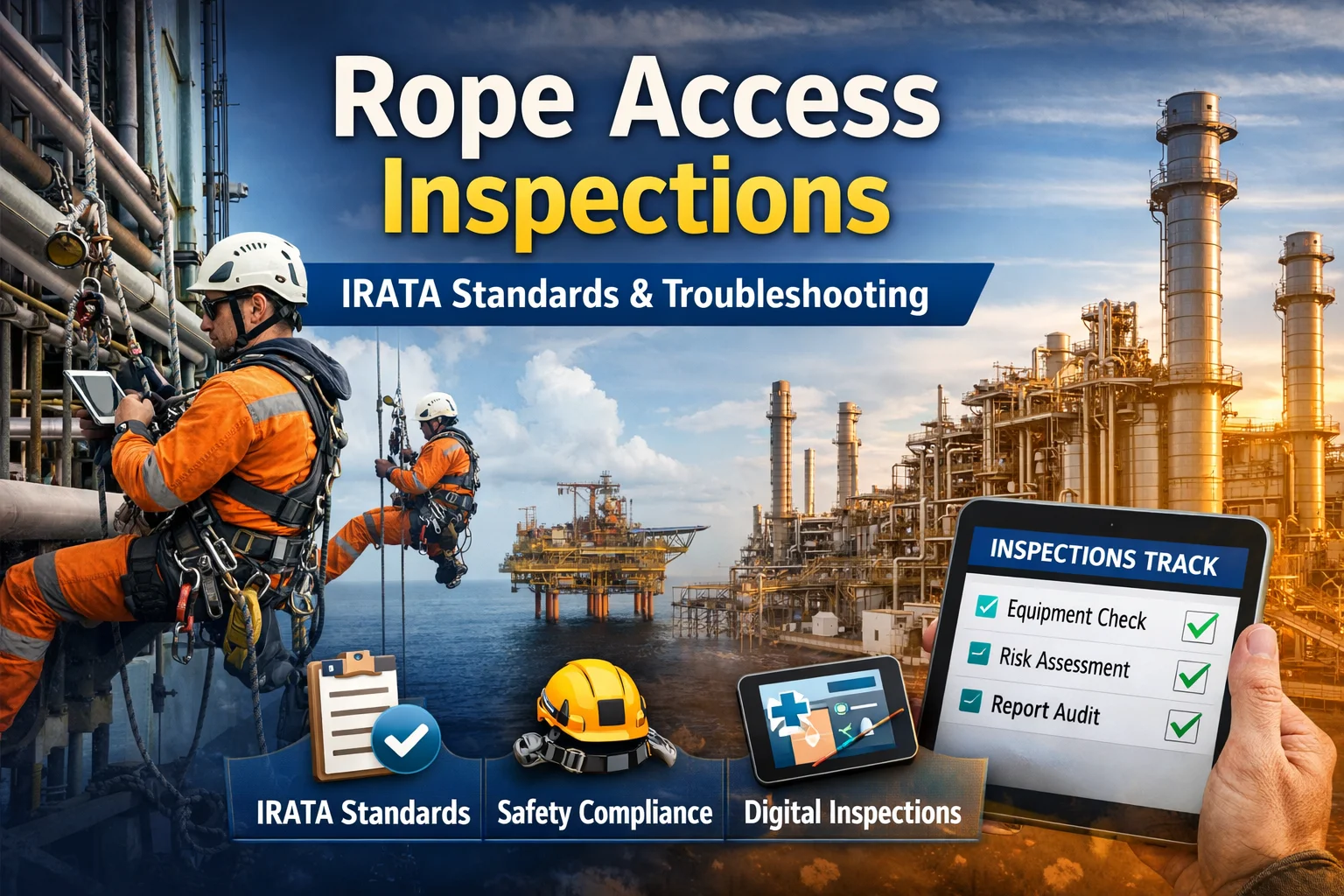
Rope access inspections have become a preferred inspection method in the oil and gas industry, especially for hard-to-reach structures such as flare stacks, offshore platforms, towers, and confined spaces. However, performing rope access work safely requires strict compliance with IRATA standards, proper planning, and effective issue management.
In this guide, we’ll break down IRATA rope access inspection requirements, common challenges inspectors face, and how digital solutions like Inspections Track software help streamline rope access inspections while maintaining full compliance.
Rope access inspections use specialized climbing and rigging techniques to allow certified technicians to safely reach elevated or restricted areas without the need for scaffolding or heavy lifting equipment.
As a result, this method is:
Most importantly, when done correctly, rope access inspections maintain high safety standards.
IRATA (Industrial Rope Access Trade Association) sets globally recognized rules for safe rope access operations. These standards ensure consistency, safety, and competence across all inspection projects.
Because oil and gas environments are high-risk, IRATA compliance is non-negotiable.
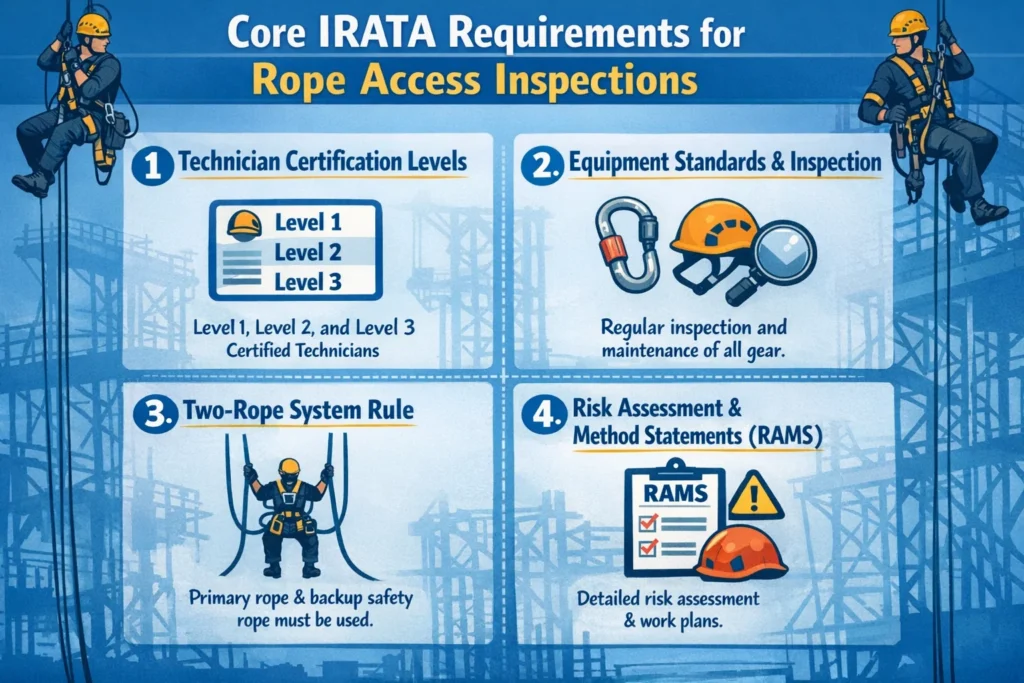
IRATA defines three certification levels:
| IRATA Level | Role & Responsibility |
|---|---|
| Level 1 | Performs tasks under supervision |
| Level 2 | Conducts rigging and rescue operations |
| Level 3 | Supervises worksite and ensures compliance |
Only certified technicians should participate in rope access inspections.
All rope access equipment must be:
This includes harnesses, ropes, connectors, anchors, and fall arrest devices.
IRATA mandates:
This dual-rope approach significantly reduces fall risks and ensures redundancy.
Before starting any rope access inspection:
Clear documentation is essential for audit readiness.
Despite strong standards, rope access inspections often face recurring challenges. Let’s look at the most common ones.
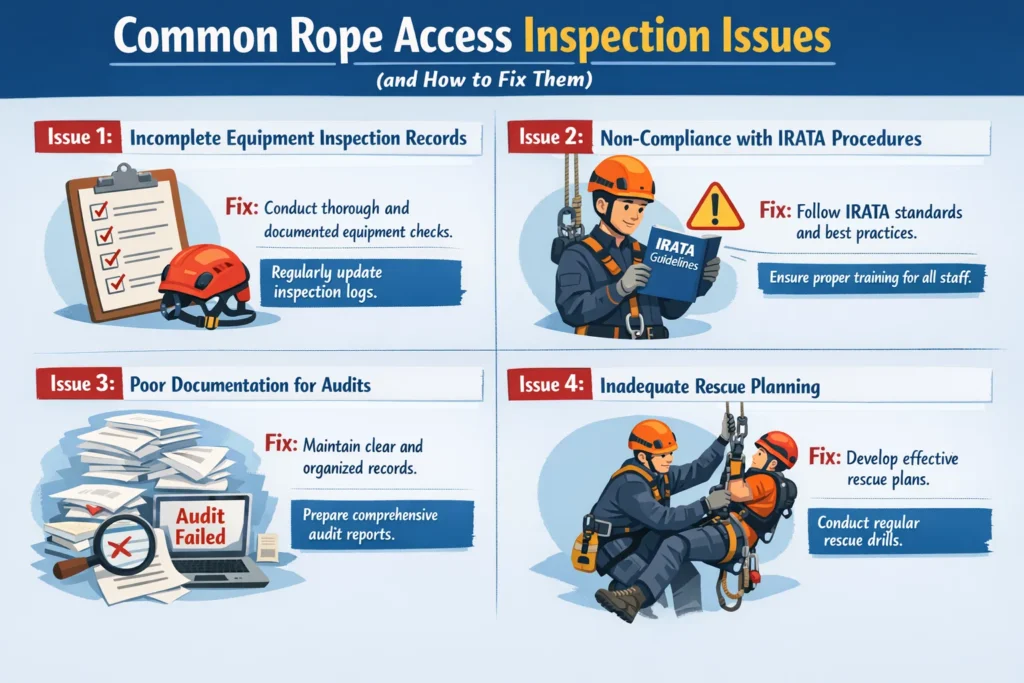
Problem:
Manual logs often lead to missing or outdated inspection records.
Solution:
Digital inspection systems ensure real-time equipment tracking and automated reminders.
Problem:
Field teams may skip steps due to time pressure or lack of oversight.
Solution:
Standardized digital checklists enforce IRATA-approved workflows.
Problem:
Paper reports are hard to retrieve and easy to lose.
Solution:
Cloud-based inspection platforms centralize reports and make audits stress-free.
Problem:
Emergency plans are sometimes generic or outdated.
Solution:
Dynamic risk assessments and job-specific rescue plans improve response time.
Modern rope access inspections demand more than clipboards and spreadsheets. Inspections Track software is designed specifically for oil and gas inspection operations, including rope access activities.
As a result, inspection teams maintain compliance while increasing productivity.
Read more : rope access equipment inspection safety guide
| Inspection Stage | How Inspections Track Helps |
|---|---|
| Pre-job planning | Digital RAMS and job setup |
| Equipment checks | Automated equipment logs |
| Field inspection | Mobile inspection forms |
| Issue reporting | Real-time defect logging |
| Final reporting | Instant professional reports |
To maintain safety and efficiency, follow these proven practices:
Additionally, continuous training and digital transformation play a key role in long-term compliance.
Oil and gas inspections often involve:
Therefore, combining IRATA standards with inspection management software significantly reduces risks while improving operational control.
Inspections Track bridges the gap between field execution and compliance reporting, making rope access inspections safer and smarter.
Rope access inspections are an essential part of modern oil and gas asset integrity programs. However, without strict adherence to IRATA standards, risks quickly escalate.
By following best practices, addressing common issues, and adopting digital solutions like Inspections Track software, companies can:
Ultimately, compliant rope access inspections protect both people and assets.
Read more : rope access hazards in oil gas top 5 risks
Rope access inspection is a method that uses certified ropes and climbing techniques to safely inspect hard-to-reach structures without scaffolding.
IRATA standards ensure technician competency, equipment safety, and consistent procedures, reducing risks in high-hazard environments like oil and gas.
Only IRATA-certified technicians (Level 1, 2, or 3) are allowed to carry out rope access inspections.
Common issues include poor documentation, equipment non-compliance, inadequate rescue planning, and missed safety checks.
Inspections Track digitizes checklists, equipment logs, risk assessments, and reports, ensuring IRATA compliance and audit readiness.
Introduction In the oil and gas industry, maintaining quality control and safety is paramount. Quarantine and rejected items can pose significant risks if not managed properly. Proper inspection ensures compliance, prevents accidents, and protects your…
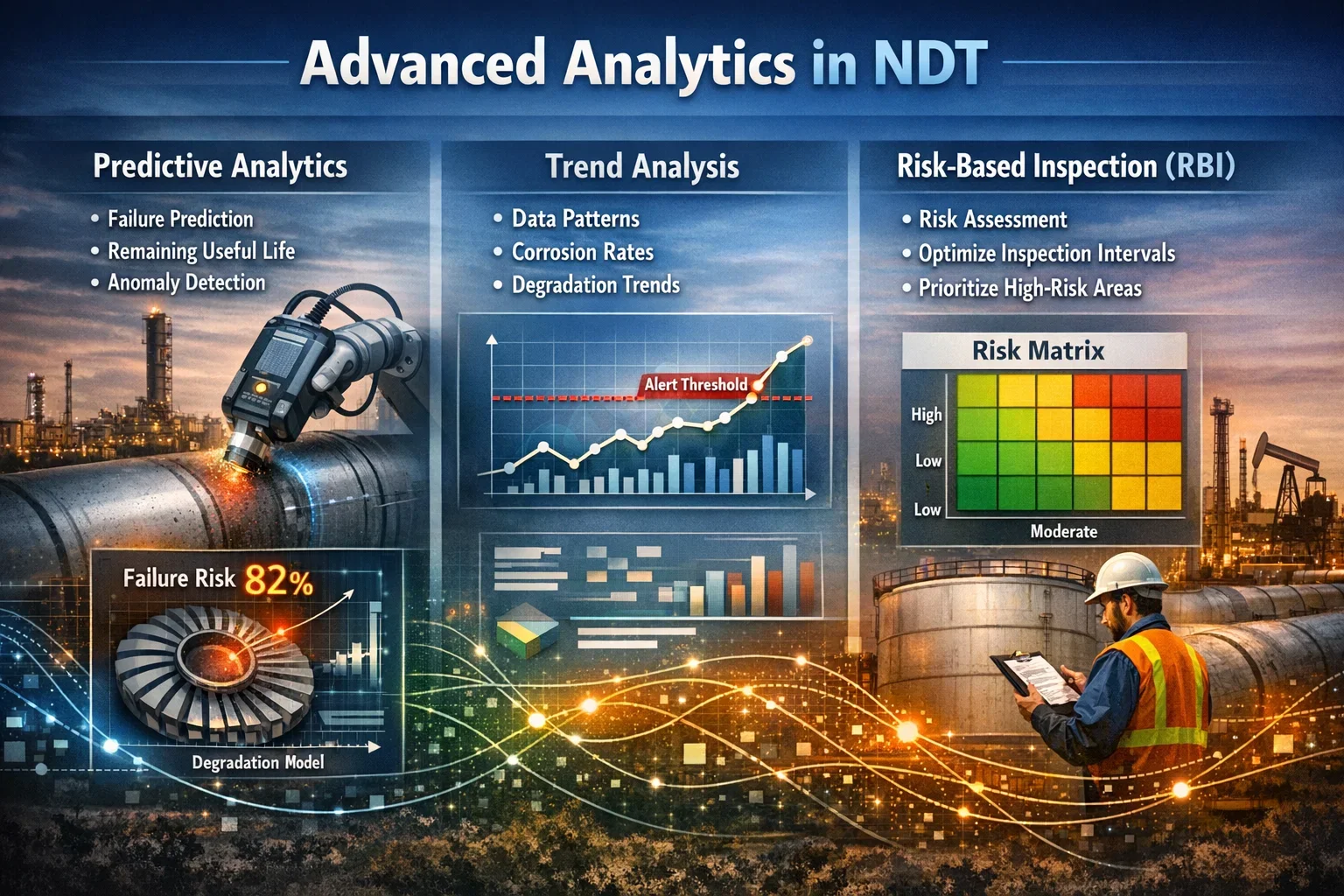
Non-Destructive Testing (NDT) plays a critical role in ensuring the safety, reliability, and compliance of assets in industries like oil and gas. However, simply collecting inspection data is not enough. NDT data analysis is what…


