
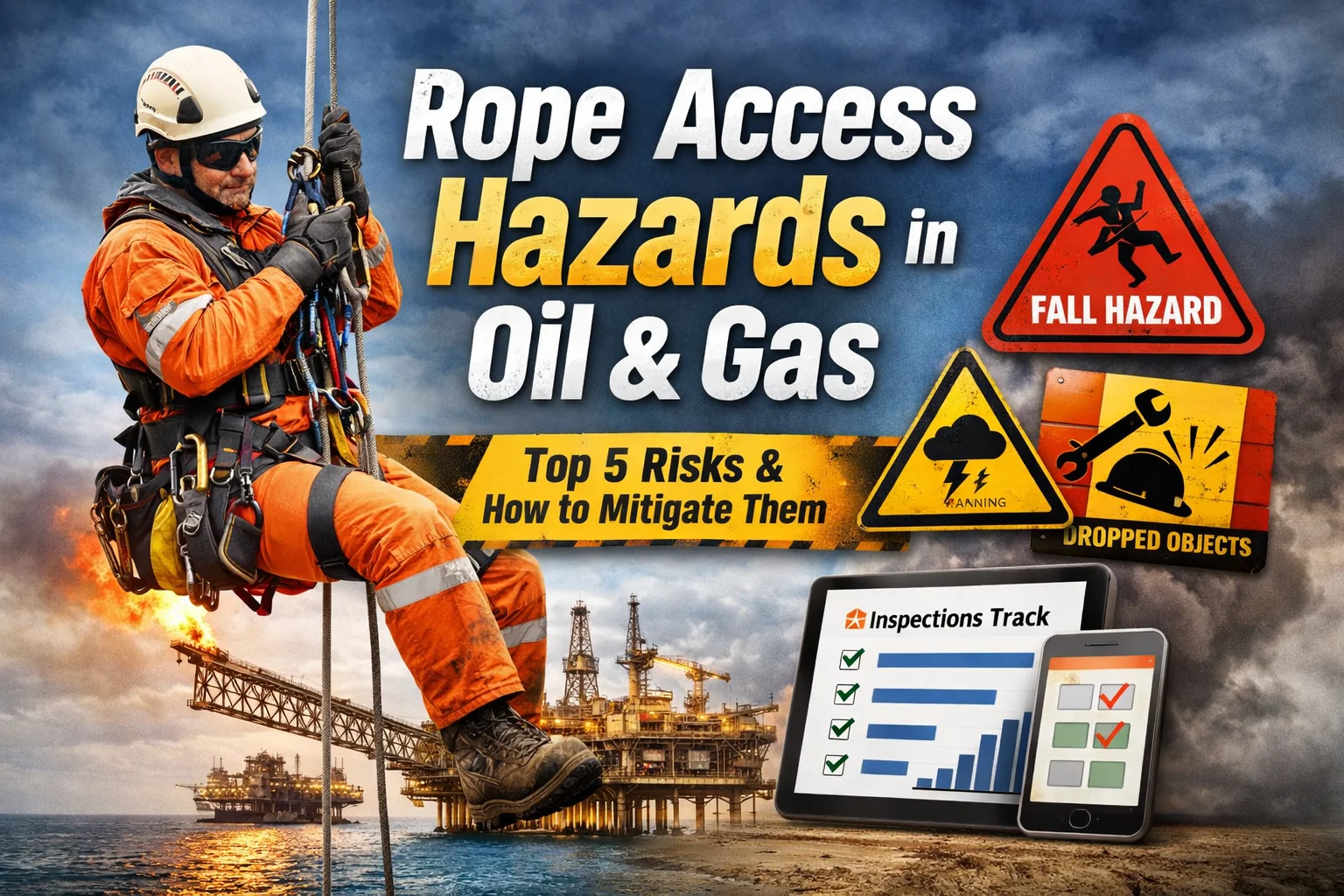
Rope access is widely used in the oil and gas industry for inspection, maintenance, and repair in hard-to-reach areas. It is cost-effective, efficient, and minimizes downtime. However, despite its advantages, rope access work also introduces serious safety hazards if not managed properly.
Therefore, understanding the top rope access hazards in oil & gas—and knowing how to mitigate them—is critical for ensuring worker safety, regulatory compliance, and operational continuity. In this guide, we break down the five most common rope access hazards and explain practical mitigation strategies, supported by digital inspection tools like Inspections Track software.
Rope access activities often take place in high-risk environments, such as offshore platforms, refineries, flare stacks, derricks, and confined spaces. Consequently, even a small oversight can lead to severe injuries, equipment damage, or fatalities.
Moreover, regulatory bodies increasingly require documented inspections, risk assessments, and compliance records. This is where structured inspection systems play a vital role.
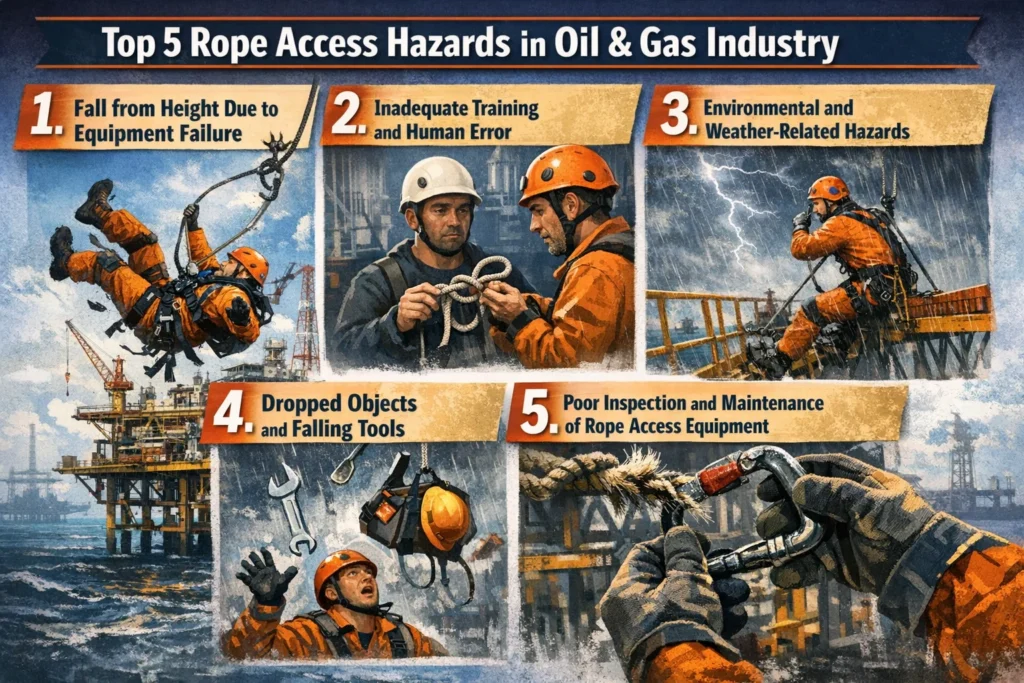
Falls from height remain the leading cause of fatal accidents in rope access operations. This hazard usually occurs due to worn-out ropes, damaged connectors, or incorrect anchoring systems.
Tip: Digital inspection records reduce human error and ensure traceability.
Even with certified equipment, human error remains a major risk factor. Inadequate training can lead to incorrect rigging, unsafe movement, or poor decision-making during critical operations.
Inspections Track allows organizations to link technician competency data with inspection tasks—ensuring only qualified personnel are assigned.
Oil and gas facilities often operate in extreme environments. As a result, weather conditions such as high winds, rain, heat, or corrosive atmospheres can severely impact rope access safety.
Digital checklists in Inspections Track ensure environmental risks are assessed and documented before work begins.
Dropped tools pose a serious threat to workers below, equipment, and critical infrastructure. This hazard is particularly dangerous in multi-level oil and gas facilities.
Pro tip: Inspections Track enables inspectors to log dropped-object prevention checks as part of rope access inspections.
Neglecting regular inspections significantly increases the likelihood of equipment failure. Unfortunately, paper-based systems often lead to missed inspections or incomplete records.
Inspections Track software provides real-time inspection tracking, automated alerts, and audit-ready reports for rope access equipment.
| Hazard | Risk Level | Key Mitigation Actions |
|---|---|---|
| Fall from height | High | Dual rope systems, certified equipment, digital inspections |
| Human error | High | Certified training, competency tracking, JSAs |
| Environmental hazards | Medium–High | Weather monitoring, environmental risk assessments |
| Dropped objects | Medium | Tool tethering, exclusion zones |
| Poor equipment inspection | High | Scheduled inspections, inspection software |
Inspections Track is purpose-built for the oil and gas inspections industry, including rope access operations. It helps companies move beyond spreadsheets by offering:
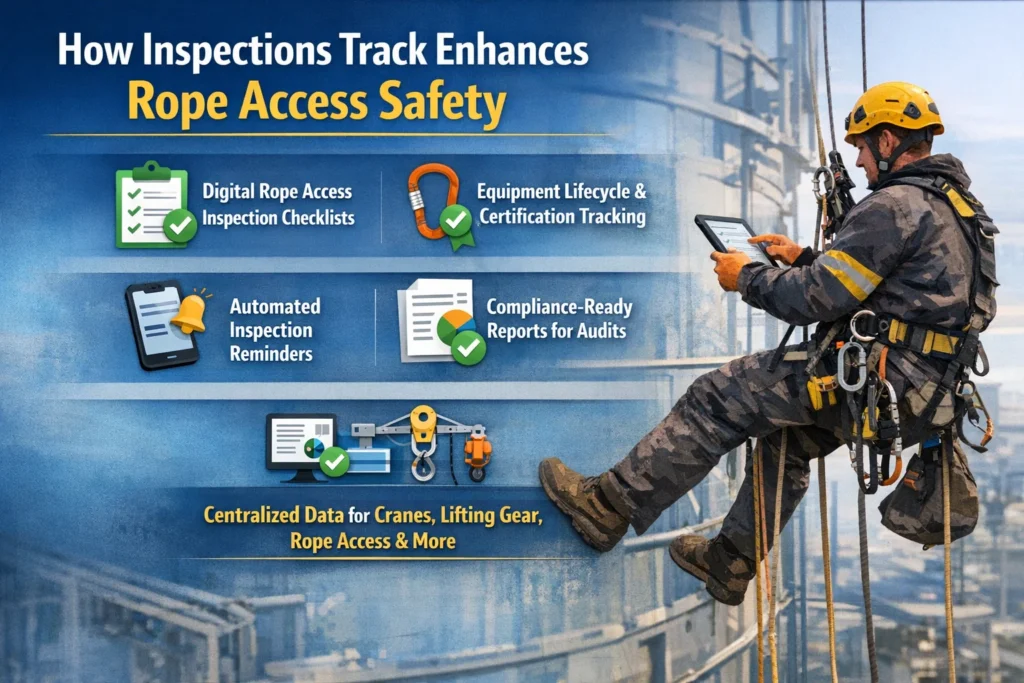
As a result, organizations can significantly reduce risk, improve compliance, and enhance operational efficiency.
Rope access is indispensable in oil and gas operations. However, without proper hazard identification and mitigation, it can become extremely dangerous. By addressing the top five rope access hazards—and supporting safety processes with digital tools like Inspections Track—companies can protect their workforce while meeting regulatory requirements.
Ultimately, safe rope access is not just about equipment—it’s about systems, processes, and accountability.
Discover how Inspections Track software can transform your rope access inspections and compliance management in the oil and gas industry.
Read more : destructive and non destructive testing explained
Rope access is a specialized technique used to safely perform inspections, maintenance, and repairs at height or in confined areas within oil and gas facilities, using ropes instead of scaffolding.
The main rope access hazards include falls from height, equipment failure, human error, environmental conditions, and dropped objects during operations.
Rope access hazards can be reduced through certified training, regular equipment inspections, proper risk assessments, and the use of digital inspection management software.
Inspections Track supports rope access safety by providing digital inspection checklists, automated reminders, compliance reports, and centralized tracking for rope access equipment in oil and gas operations.
Introduction In the oil and gas industry, maintaining quality control and safety is paramount. Quarantine and rejected items can pose significant risks if not managed properly. Proper inspection ensures compliance, prevents accidents, and protects your…
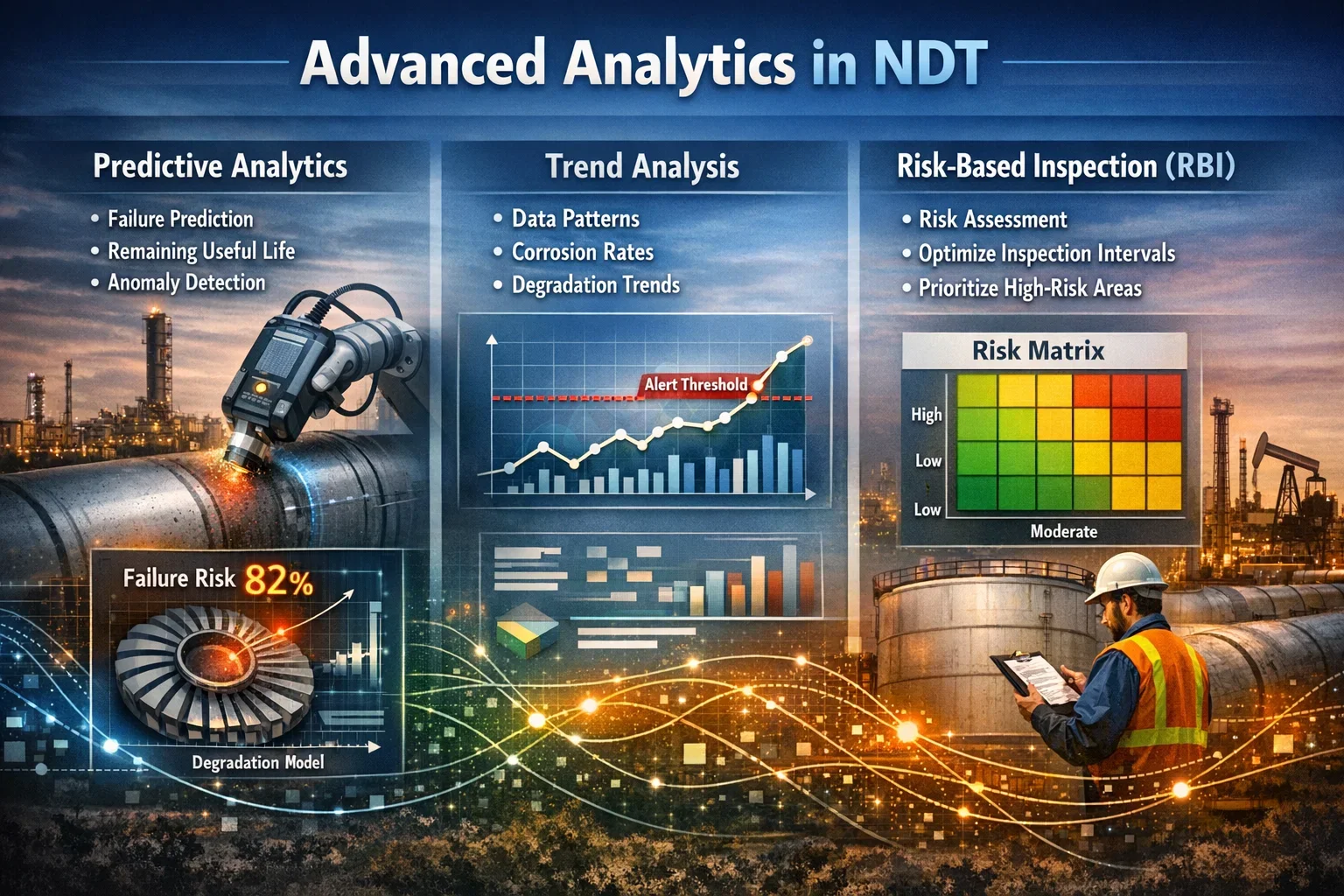
Non-Destructive Testing (NDT) plays a critical role in ensuring the safety, reliability, and compliance of assets in industries like oil and gas. However, simply collecting inspection data is not enough. NDT data analysis is what…


