
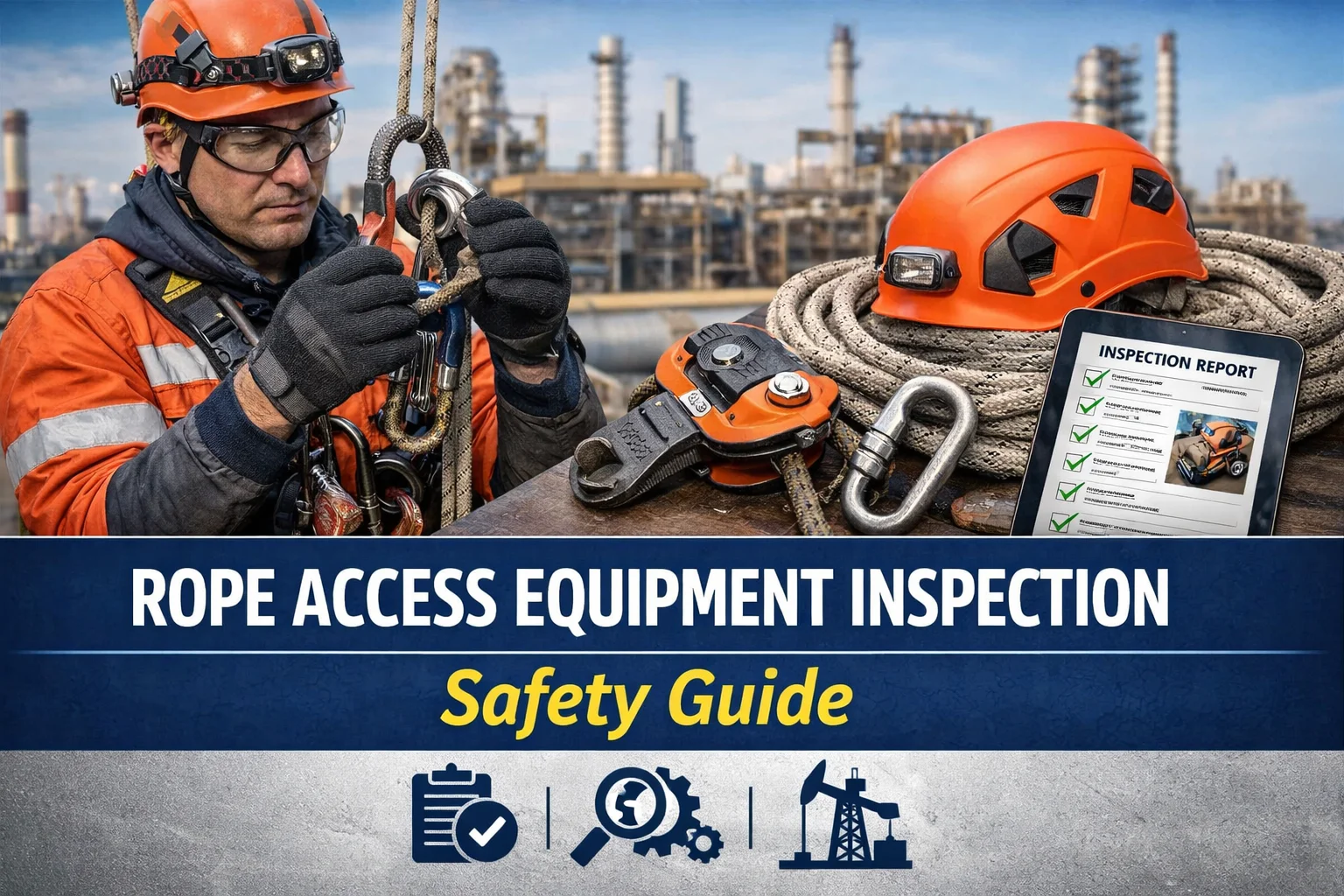
Rope access equipment inspection is a critical safety requirement in oil & gas, construction, offshore, and industrial maintenance environments. Because technicians work at height in high-risk conditions, even a minor equipment fault can lead to serious incidents.
In this guide, you’ll learn how to inspect rope access equipment properly, what standards to follow, common inspection mistakes to avoid, and how digital inspection software like InspectionsTrack helps oil & gas companies stay compliant and audit-ready.
Rope access systems operate under extreme loads and harsh environments. Therefore, regular inspections are not optional — they are mandatory under international safety standards.
More importantly, inspections help to:
As a result, inspection quality directly impacts operational safety and business continuity.
Before starting, it’s important to know what equipment requires inspection.
Each component must be inspected individually, not as a single system.
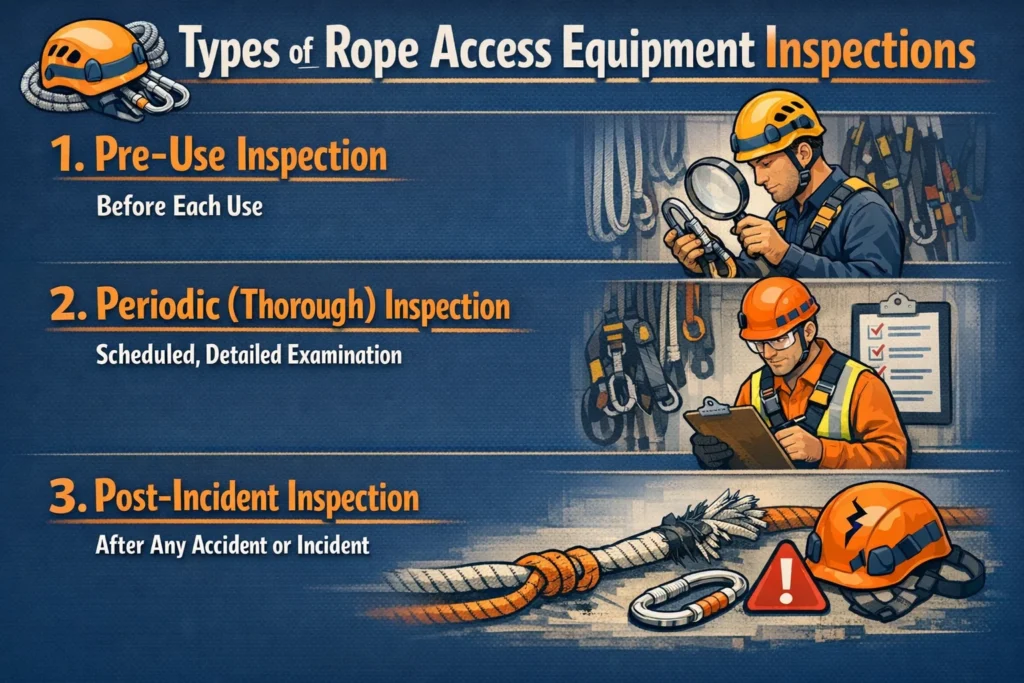
To meet safety and compliance requirements, rope access equipment inspections are usually divided into three categories.
This inspection is carried out before every use by the rope access technician.
It focuses on:
Although quick, it is the first line of defense against failure.
This is a formal inspection conducted by a competent person at defined intervals (usually every 6 or 12 months).
It includes:
Most regulatory bodies require documented proof of this inspection.
If equipment has been:
Then it must be immediately removed from service and re-inspected.
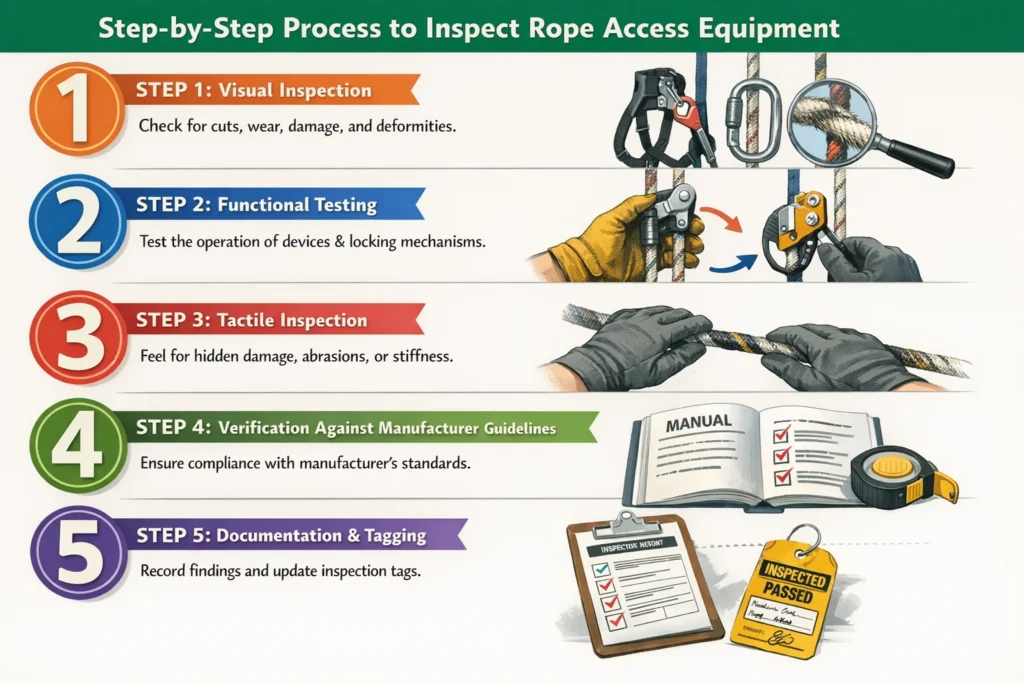
Start by visually checking for:
If identification markings are unreadable, the equipment should be rejected.
Next, test moving parts:
Any stiffness, slippage, or delay is a warning sign.
Run your hands along ropes and webbing to feel:
This step is often overlooked, yet it reveals hidden faults.
Always compare findings with:
Using equipment beyond its recommended lifespan is a major compliance violation.
Finally, record:
Without documentation, the inspection legally does not exist.
| Equipment Type | Key Inspection Points | Action if Defective |
|---|---|---|
| Harness | Webbing wear, stitching, buckles | Remove from service |
| Rope | Cuts, glazing, chemical damage | Discard immediately |
| Carabiner | Locking action, cracks | Replace |
| Descender | Smooth operation, wear | Service or replace |
| Anchor Slings | Abrasion, label visibility | Reject if damaged |
Even experienced teams make errors. However, these mistakes can be costly.
Fortunately, digital inspection systems help eliminate many of these issues.
For oil & gas inspection companies, managing rope access inspections manually is inefficient and risky. This is where InspectionsTrack software becomes essential.
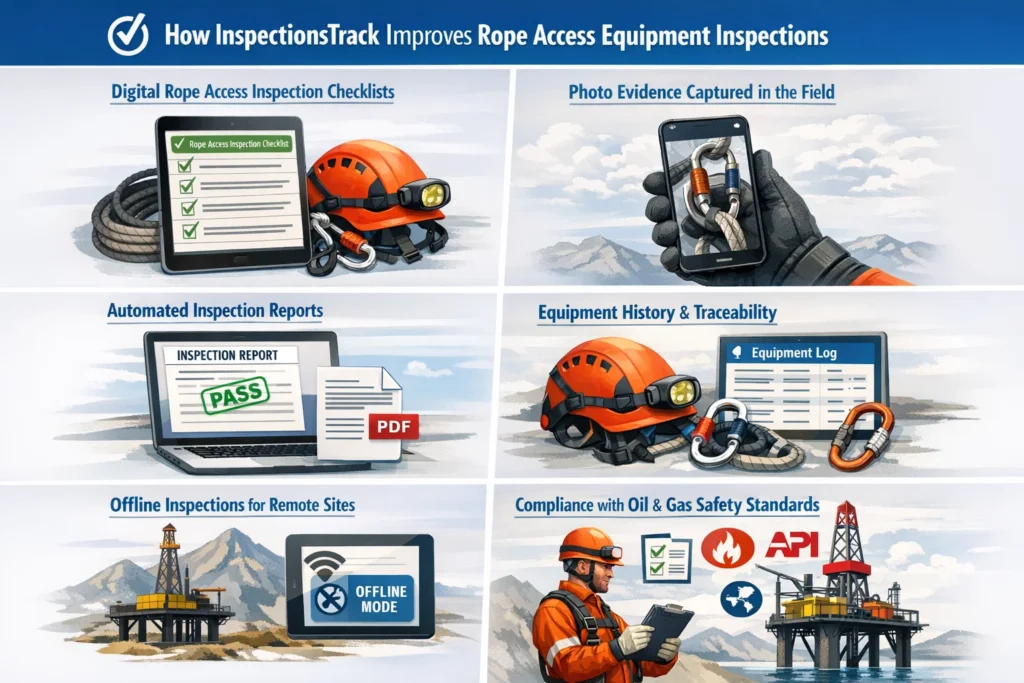
As a result, inspections become faster, more accurate, and audit-ready.
In oil & gas environments, inspections often take place:
InspectionsTrack allows inspectors to record inspections in real time, even without internet access. Once connected, data syncs automatically reducing delays and errors.
To maintain high safety standards, follow these best practices:
Consistency is the key to long-term safety and compliance.
Inspecting rope access equipment is not just about ticking boxes — it’s about protecting lives, assets, and operations. When inspections are done correctly and documented digitally, companies reduce risks and improve efficiency.
By combining proper inspection procedures with a digital inspection platform like InspectionsTrack, oil & gas companies can confidently meet safety regulations and operational demands.
Inspections Track helps oil & gas inspection companies digitize rope access inspections, improve compliance, and simplify reporting all from one platform.
Read more : managing inspections in remote areas oil fields
Rope access equipment should be visually inspected before each use and thoroughly inspected by a competent person every 6 or 12 months, depending on regulations and manufacturer guidelines.
Only a trained and competent inspector with knowledge of rope access systems, safety standards, and manufacturer instructions should perform formal equipment inspections.
Common signs include frayed ropes, damaged stitching, corrosion on metal components, malfunctioning connectors, and missing or unreadable identification labels.
Digital inspection software like InspectionsTrack allows inspectors to record findings digitally, attach photos, track equipment history, and generate compliant reports instantly, improving accuracy and safety.
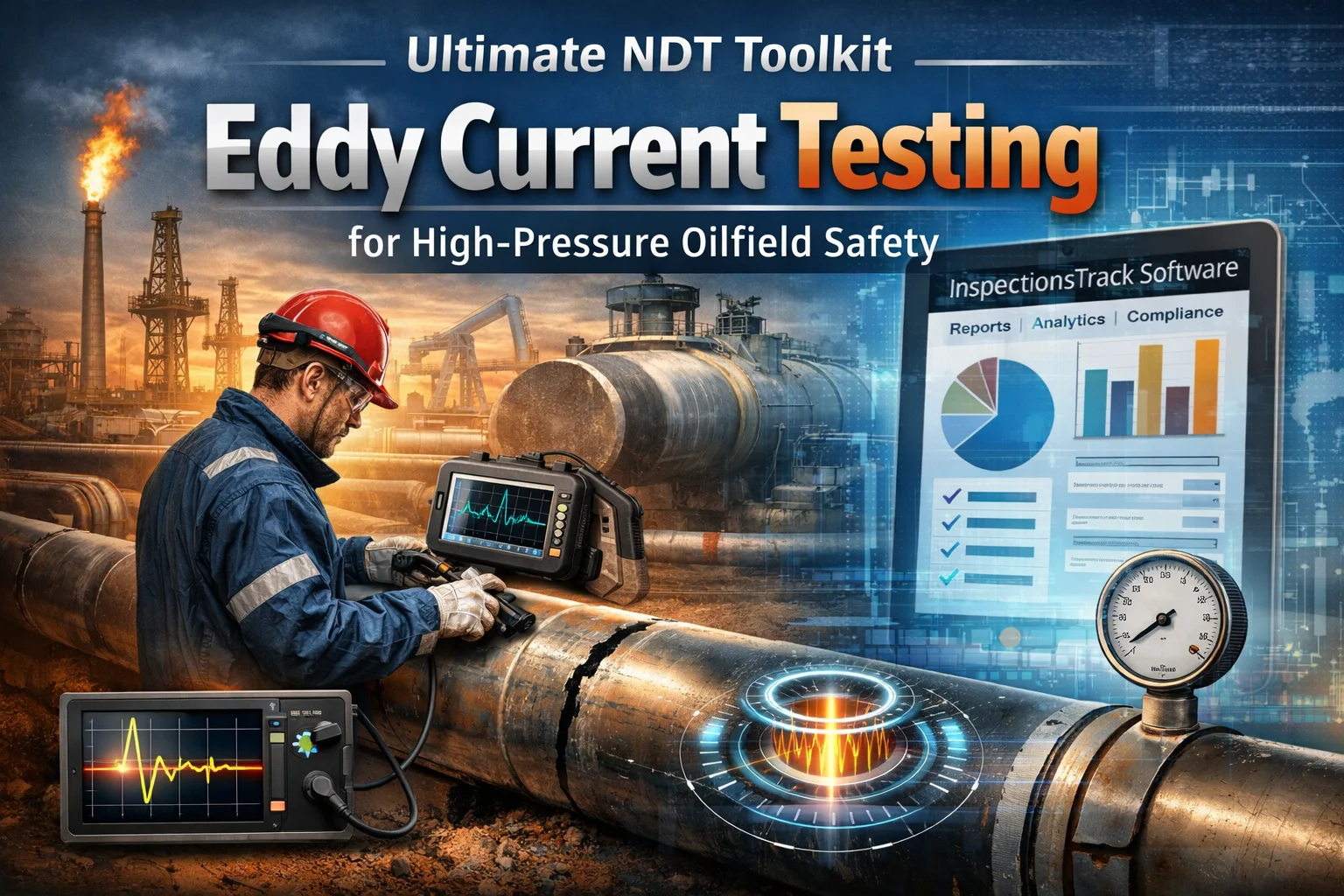
In high-pressure oilfield environments, safety is not optional—it’s critical. Equipment failure can lead to costly downtime, environmental hazards, and even loss of life. That’s why Eddy Current Testing (ECT) has become an essential part of…

Corrosion Under Insulation (CUI) is one of the most costly and difficult-to-detect challenges in upstream oil and gas operations. Because it develops beneath insulation layers, it often goes unnoticed until severe damage occurs. However, with…


Comment (1)
Rope Access Inspections: IRATA Standards Explained - inspectionstrack
Feb 04, 2026[…] Read more : rope access equipment inspection safety guide […]
Comments are closed.