
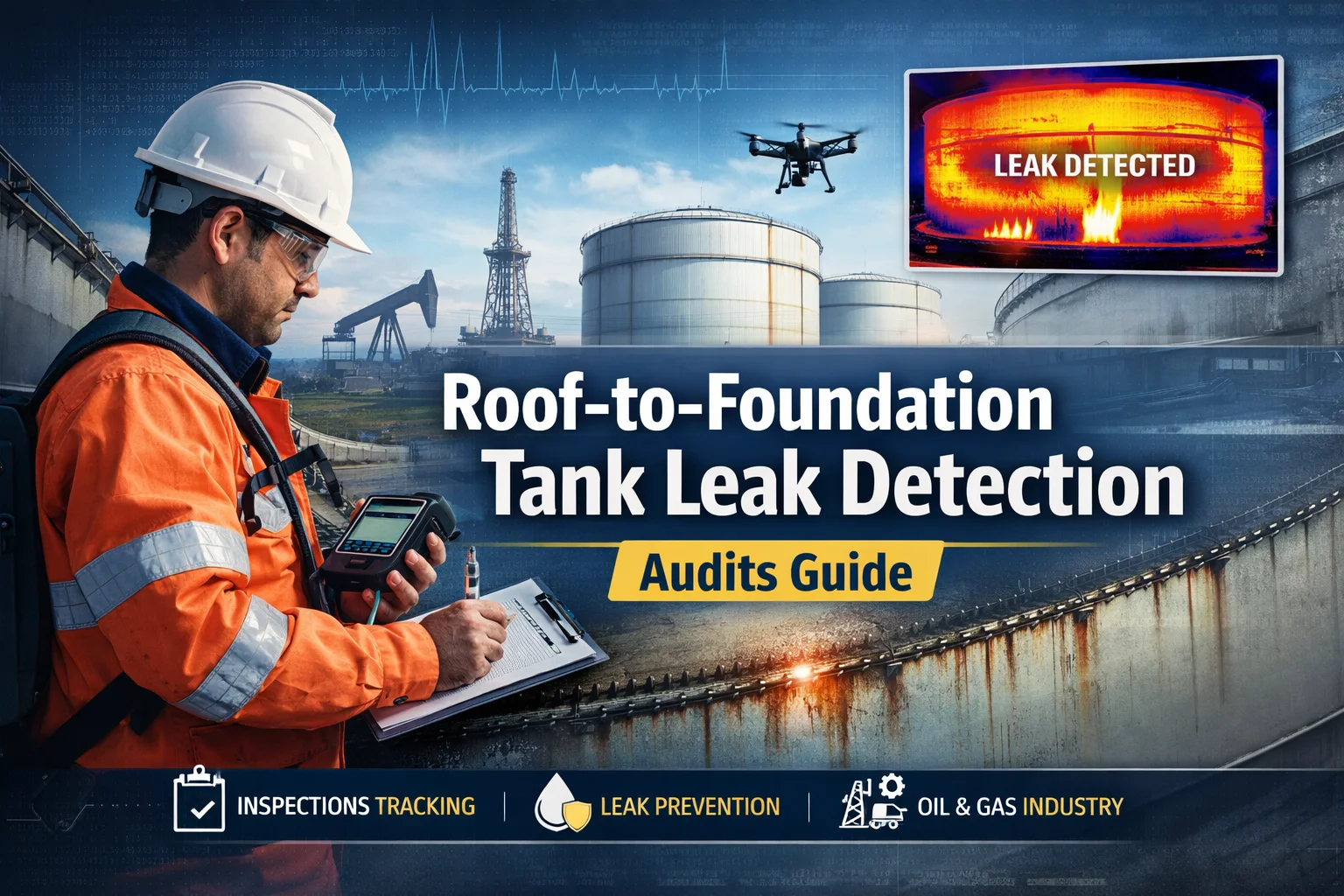
Industrial storage tanks are critical assets in industries such as oil & gas, petrochemicals, and energy production. However, even a small leak can lead to product loss, environmental damage, safety hazards, and costly downtime. Therefore, organizations must implement a structured inspection strategy to detect leaks before they escalate into major failures.
One of the most effective approaches is the roof-to-foundation audit. Instead of inspecting only one part of the tank, this method evaluates the entire tank structure—from the roof system to the foundation base—to identify leak risks and structural weaknesses.
In this guide, we will explore how roof-to-foundation tank audits work, why they are essential, and how digital inspection tools like Inspectionstrack software help oil and gas companies improve leak detection and compliance.
A roof-to-foundation audit is a comprehensive inspection process that examines every component of a storage tank system. Because leaks can originate in multiple locations, inspectors analyze the tank structure from top to bottom.
By evaluating each structural element, inspectors can detect leaks early and identify the root cause rather than just the visible symptom.
A complete tank leak inspection typically includes the following areas:
Since leaks often travel through structural paths, inspecting every component ensures accurate leak source identification.
Storage tanks handle large volumes of liquids such as crude oil, chemicals, and refined petroleum products. Consequently, even minor leaks can create significant operational and environmental challenges.
Therefore, proactive leak detection through roof-to-foundation audits is essential for maintaining safety, compliance, and operational efficiency.
Leaks do not always originate where they appear. Often, the visible leak is only a symptom of a deeper structural issue.
| Tank Component | Common Issue | Leak Risk Level |
|---|---|---|
| Roof seals | Seal degradation | High |
| Shell welds | Corrosion or cracking | High |
| Nozzles and manways | Gasket failures | Medium |
| Tank bottom plates | Corrosion or pitting | Very High |
| Foundation joints | Settlement damage | Medium |
Because of these potential vulnerabilities, comprehensive inspections must evaluate all structural levels of the tank.
A systematic inspection process ensures no component is overlooked. Modern inspections typically follow a structured workflow.

Inspectors first evaluate the tank roof to identify potential water or vapor leak entry points.
Key inspection checks include:
If leaks originate at the roof level, they may travel downward and appear elsewhere.
Next, inspectors examine the tank shell and weld seams, which are common failure points due to corrosion or mechanical stress.
Inspection techniques may include:
These methods help identify hidden cracks and corrosion.
Manways and nozzles often develop leaks due to gasket deterioration or improper sealing.
Inspectors verify:
Although these components seem minor, they are frequent sources of leaks.
The tank bottom is one of the most vulnerable areas for leaks. Over time, corrosion, soil moisture, and chemical exposure can weaken the metal plates.
Common inspection methods include:
These techniques help detect corrosion before leaks reach the surface.
Finally, inspectors analyze the tank foundation and surrounding ground conditions.
Foundation issues can cause:
Consequently, monitoring foundation stability is essential for long-term tank safety.
Modern inspections rely on advanced technologies to improve accuracy and efficiency.
By combining these technologies, inspectors can identify leaks faster and with greater precision.
Implementing comprehensive tank inspections provides several operational advantages.
Moreover, proactive inspections help companies avoid emergency repairs and unplanned shutdowns.
Traditional inspection processes often rely on paper-based reports and manual data entry. However, these methods can lead to delays, data loss, and reporting inconsistencies.
Digital inspection platforms solve these challenges by centralizing inspection data and automating workflows.
As a result, organizations can detect leaks faster and respond more effectively.
For companies operating in the oil and gas sector, specialized inspection tools are essential. Inspectionstrack software is designed specifically for managing complex industrial inspections, including tank audits.
The platform helps inspection teams digitize roof-to-foundation tank inspections, ensuring accurate reporting and improved asset management.
By using Inspectionstrack, oil and gas companies can streamline inspection workflows, improve leak detection accuracy, and maintain regulatory compliance.
To maximize inspection effectiveness, organizations should follow industry best practices.
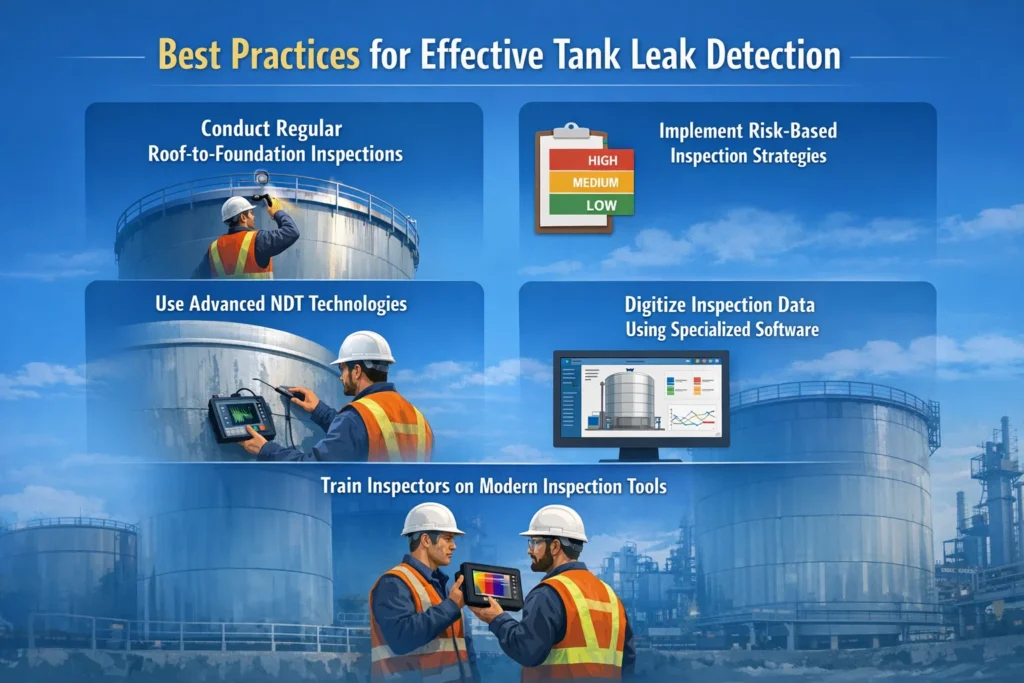
When these strategies are combined, companies can significantly reduce leak risks and improve operational safety.
Storage tank leaks pose serious risks to safety, environmental protection, and operational efficiency. Therefore, relying on limited inspections is no longer sufficient for modern industrial facilities.
A roof-to-foundation audit approach provides a complete assessment of tank integrity, allowing inspectors to detect leaks at every structural level. Furthermore, integrating digital inspection platforms like Inspectionstrack software enables organizations to manage inspections more efficiently, track defects accurately, and maintain regulatory compliance.
By adopting comprehensive inspection strategies and advanced technologies, oil and gas companies can protect critical assets, prevent costly failures, and ensure long-term operational reliability.
Read more : roi of rope access inspections software
A roof-to-foundation tank audit is a comprehensive inspection process that evaluates all components of a storage tank—from the roof system to the foundation—to detect leaks and structural issues.
Leak detection prevents environmental contamination, product loss, and safety hazards while ensuring compliance with industry regulations.
Inspection software digitizes inspection processes, improves reporting accuracy, tracks defects in real time, and helps organizations maintain compliance with regulatory standards.
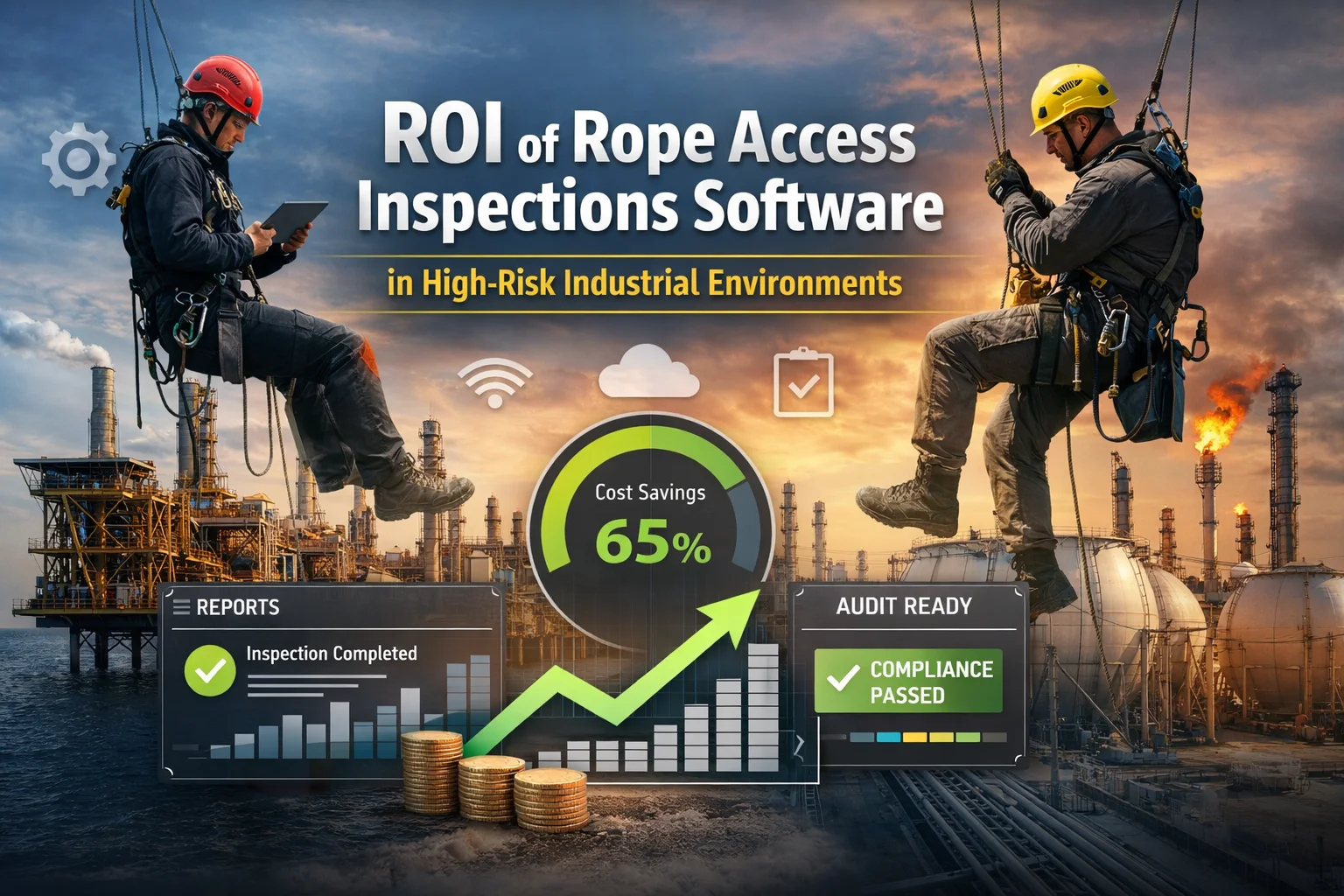
High-risk industrial environments such as oil refineries, offshore platforms, storage tanks, and petrochemical plants demand frequent inspections to maintain safety and compliance. However, traditional inspection methods often involve scaffolding, heavy equipment, and long shutdowns, which…
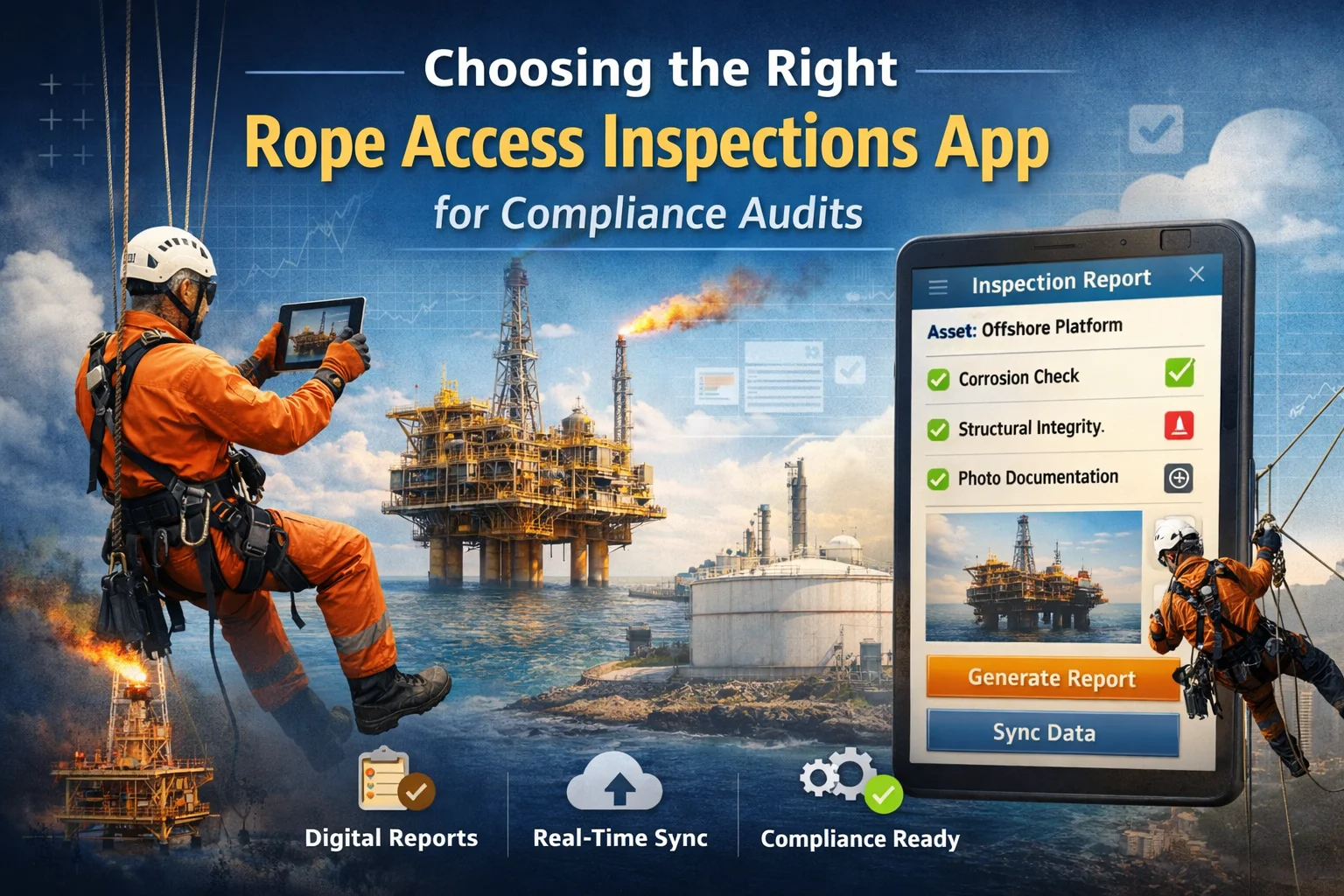
Rope access inspections play a critical role in industries where structures are difficult to reach—especially in the oil and gas sector. Platforms, storage tanks, flare stacks, offshore rigs, and wind towers often require technicians to…


