
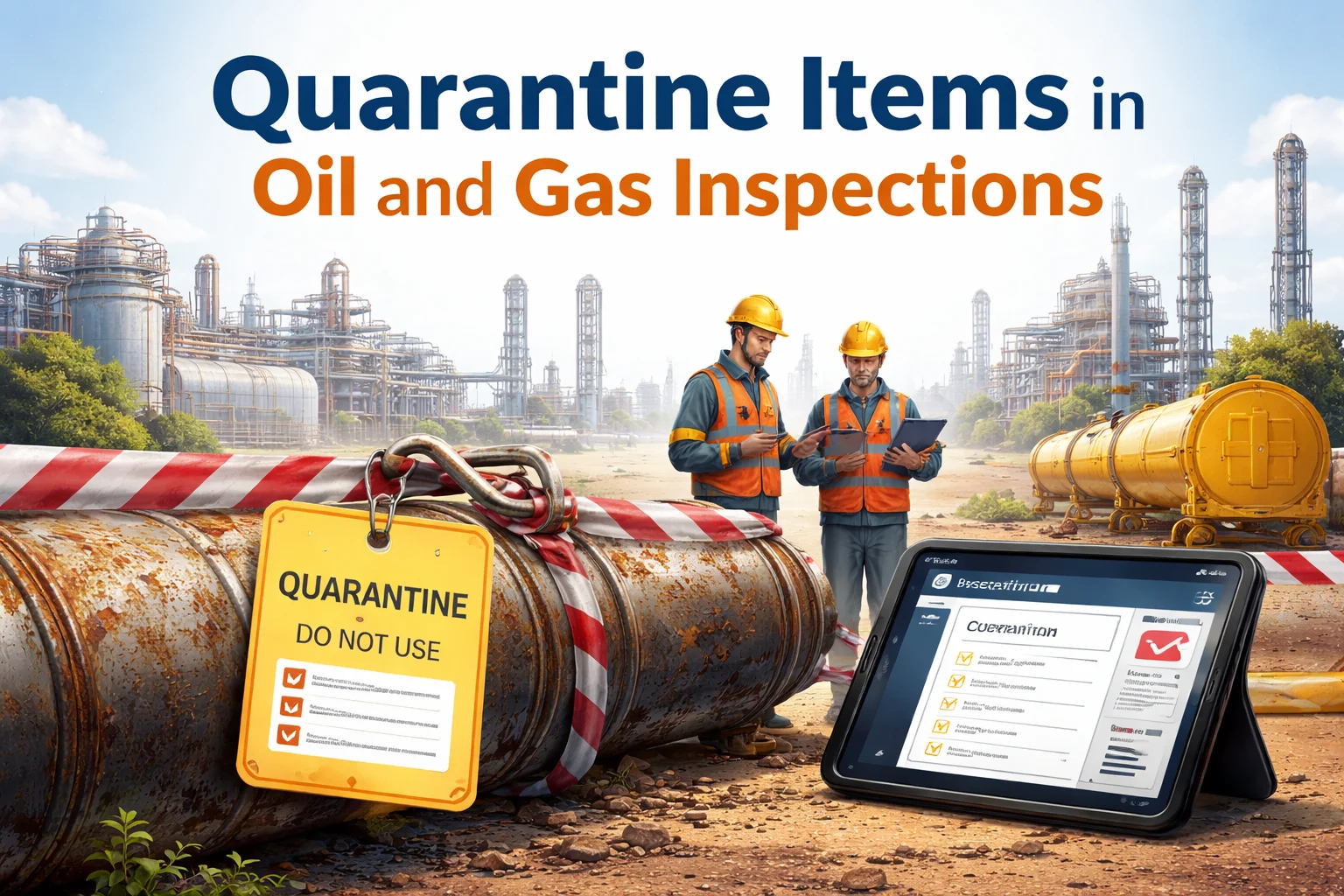
In the oil and gas industry, safety, compliance, and asset integrity are non-negotiable. One critical yet often overlooked aspect of inspection management is the handling of quarantine items. These items, when not properly controlled, can lead to serious operational risks, safety incidents, and regulatory non-compliance.
This guide explains what quarantine items are in oil and gas inspections, why they matter, and how digital inspection systems like Inspection Track software help organizations manage them efficiently.
Quarantine items are equipment, materials, or components that have failed inspection, are suspected to be defective, or are awaiting further evaluation. As a result, these items must be isolated from operational use until corrective actions are completed.

Typically, quarantine items include:
By isolating these assets, organizations prevent unsafe equipment from re-entering operations.
Quarantine management is not just a best practice—it is a regulatory and safety requirement.
Without a structured quarantine process, unsafe assets may accidentally return to service, increasing both financial and safety risks.
Several inspection outcomes can trigger quarantine status. Most commonly, assets are quarantined due to:
As a result, inspectors must act quickly to identify, label, and isolate affected items.
A structured quarantine workflow ensures consistency and traceability.
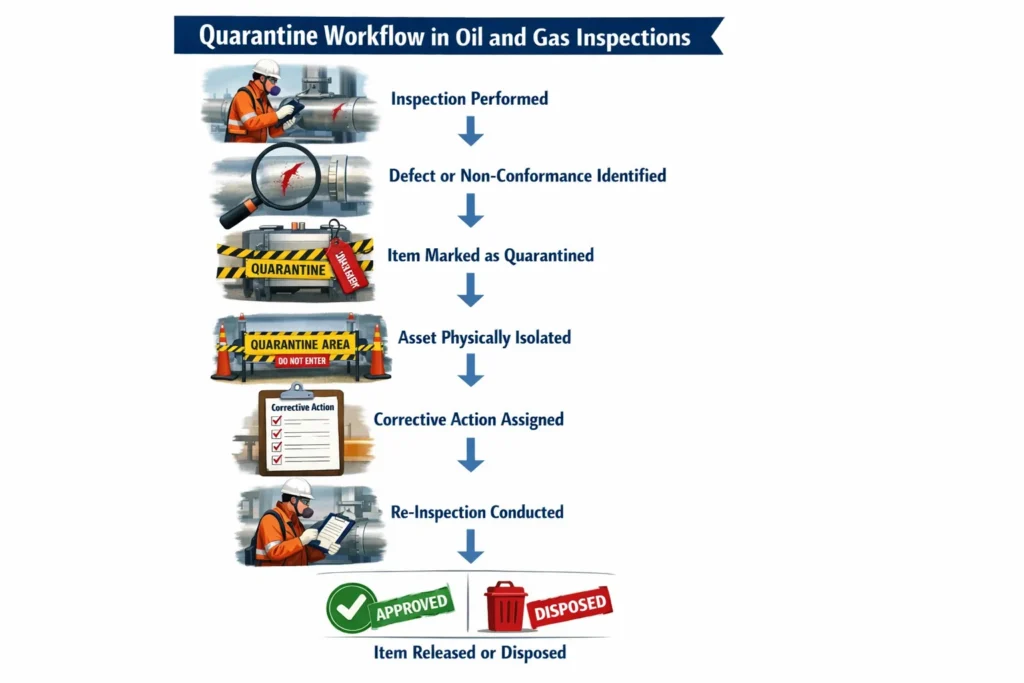
Digital inspection systems significantly improve each step of this process.
Manual quarantine tracking often leads to errors, delays, and lost records. This is where Inspection Track software for oil and gas inspections plays a crucial role.
By digitizing quarantine workflows, Inspection Track ensures full visibility and accountability across inspection teams.
Using Inspection Track software delivers measurable operational advantages.
Moreover, centralized data ensures that quarantined items are never accidentally returned to service.
The table below highlights why digital systems outperform manual methods:
| Aspect | Manual Quarantine Tracking | Inspection Track Software |
|---|---|---|
| Visibility | Limited | Real-time |
| Error Risk | High | Minimal |
| Audit Readiness | Time-consuming | Instant |
| Asset Status | Often unclear | Clearly defined |
| Reporting | Manual effort | Automated |
Clearly, digital inspection platforms provide greater control and reliability.
To strengthen quarantine control, organizations should follow these best practices:
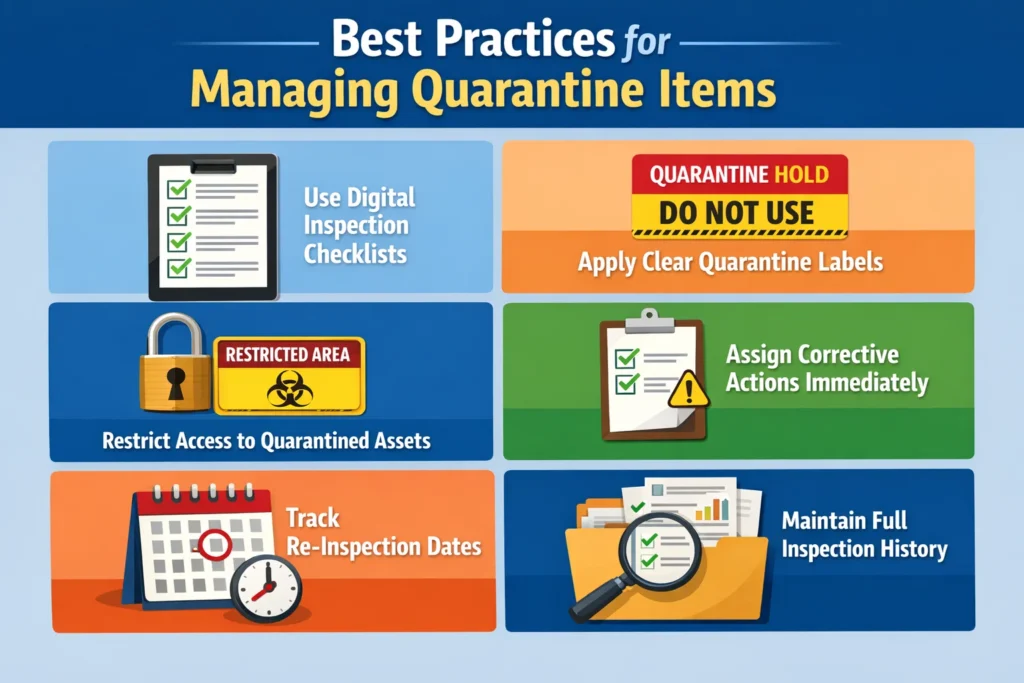
When combined with Inspection Track software, these practices create a robust inspection ecosystem.
Regulatory bodies expect strict quarantine controls. Common standards include:
Inspection Track helps organizations align inspection workflows with these compliance frameworks seamlessly.
As oil and gas operations grow more complex, manual inspection processes are no longer sufficient. Digital solutions provide:
Inspection Track software empowers inspection teams to move from reactive inspection management to proactive risk control.
Managing quarantine items in oil and gas inspections is essential for safety, compliance, and operational efficiency. However, without the right tools, quarantine processes can become fragmented and unreliable.
By leveraging Inspection Track software, organizations gain complete control over quarantine workflows, ensuring unsafe assets are properly isolated, corrected, and verified before returning to service.
In today’s high-risk oil and gas environment, digital inspection management is not optional—it is essential.
Read more : daily meeting record in oil and gas inspections
Quarantine items are equipment or materials that fail inspections or show safety issues and are isolated until corrective actions are completed.
It prevents unsafe equipment from being used, reduces accident risks, and ensures compliance with industry safety and inspection standards.
Inspection Track digitally tracks quarantined assets, records defects, assigns corrective actions, and maintains full audit-ready inspection history.
Introduction In the oil and gas industry, safety and operational efficiency rely heavily on properly maintained lifting gear. While regular inspections are mandated, many organizations overlook subtle indicators like wear, deformation, and deterioration. Understanding these…
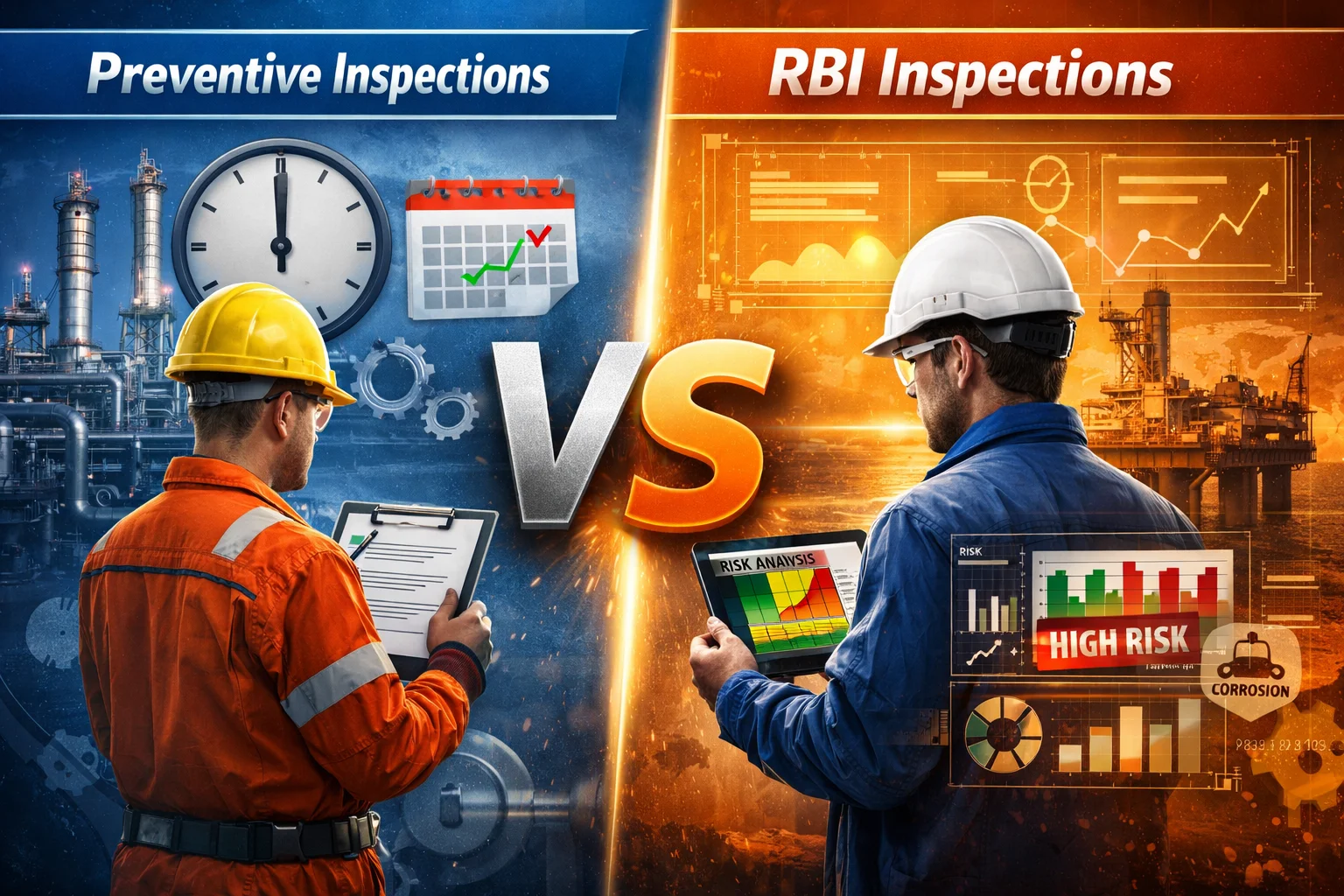
In the oil and gas industry, inspection strategies directly impact asset reliability, regulatory compliance, and operational safety. However, many organizations still struggle to understand the differences between preventive inspections and Risk-Based Inspection (RBI) methodologies. While…


Comment (1)
Inspections Checklist for Rigs – Oil & Gas Safety - inspectionstrack
Jan 07, 2026[…] Read more : quarantine items in oil and gas inspections […]
Comments are closed.