
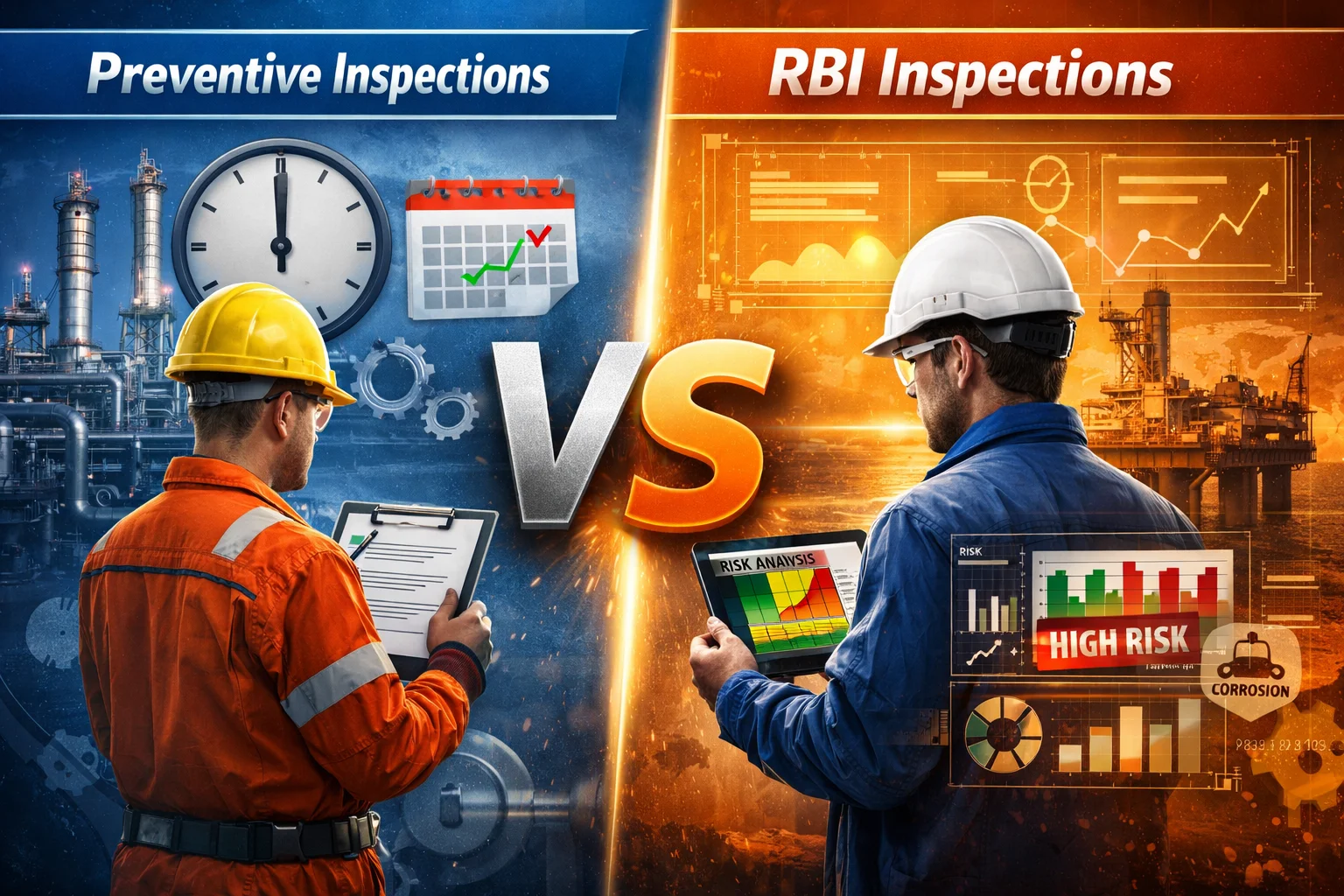
In the oil and gas industry, inspection strategies directly impact asset reliability, regulatory compliance, and operational safety. However, many organizations still struggle to understand the differences between preventive inspections and Risk-Based Inspection (RBI) methodologies.
While both approaches aim to prevent failures, they follow completely different philosophies. Therefore, choosing the right strategy can significantly reduce downtime, maintenance costs, and safety risks.
In this guide, we will clearly explain preventive vs RBI inspections, compare their benefits, and help you determine which approach fits your operational goals.
Preventive inspections, also known as time-based inspections, follow a fixed schedule. In other words, inspections are conducted at regular intervals — regardless of the actual condition of the equipment.
For example, a pressure vessel may be inspected every 12 months, even if there are no visible signs of degradation.
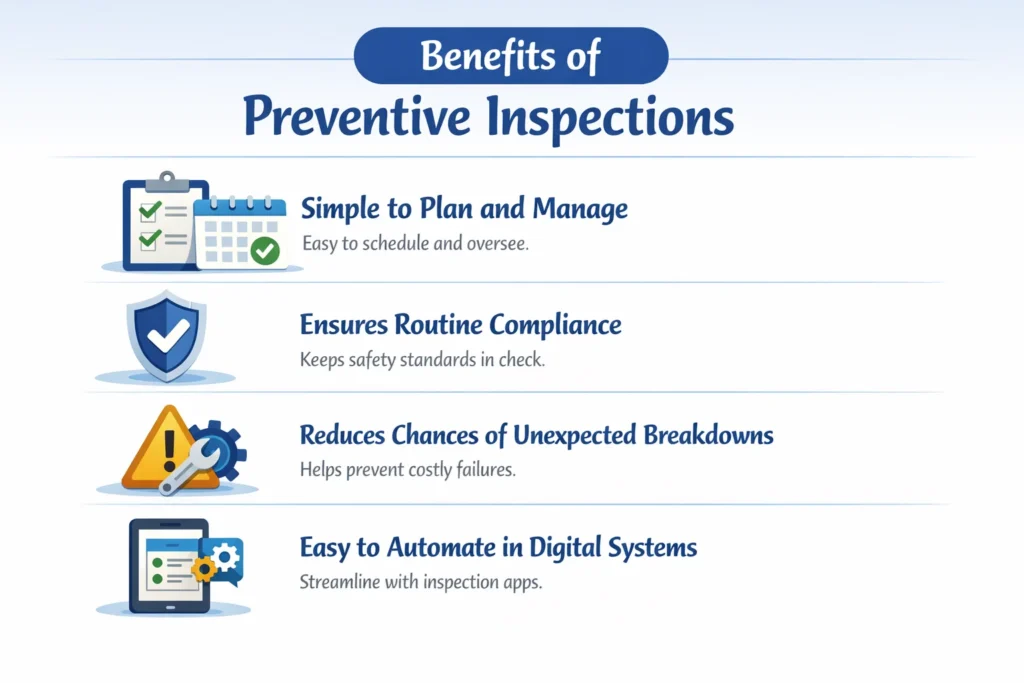
However, although preventive inspections provide consistency, they may lead to over-inspection or under-inspection, since they do not consider real-time risk factors.
Risk-Based Inspection (RBI) is a data-driven methodology that prioritizes inspections based on the probability and consequence of failure. Instead of inspecting everything at fixed intervals, RBI focuses on high-risk assets first.
This approach aligns with international standards such as American Petroleum Institute API 580 and American Petroleum Institute API 581, which define best practices for RBI implementation in the oil and gas sector.
As a result, organizations can allocate resources more efficiently while improving safety outcomes.
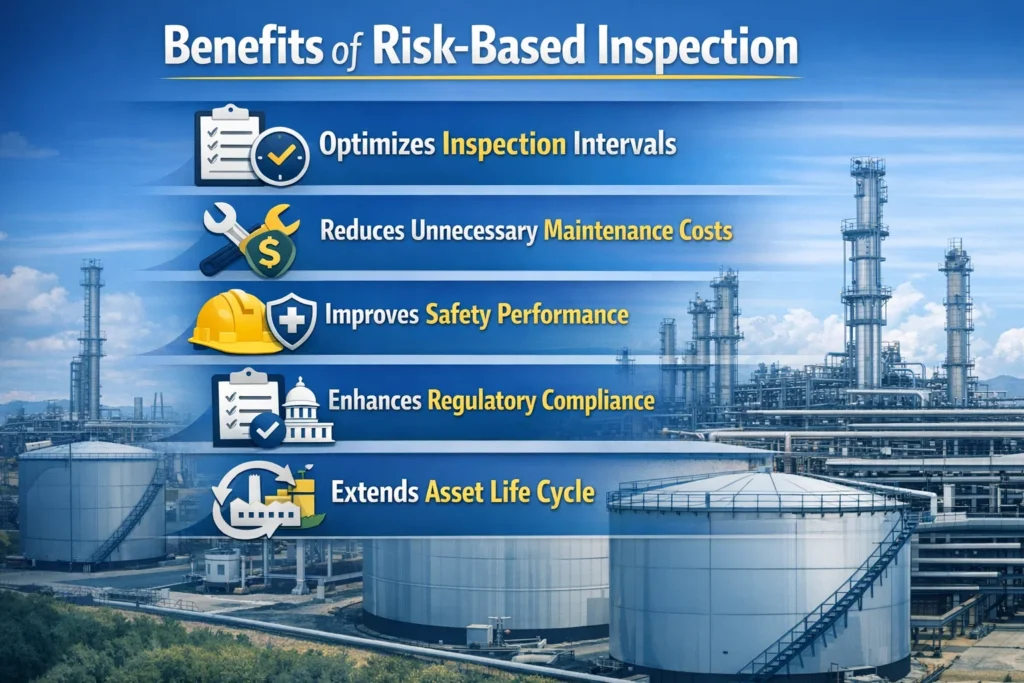
Therefore, RBI inspections are often preferred for complex facilities such as refineries, offshore platforms, and gas processing plants.
| Feature | Preventive Inspection | Risk-Based Inspection (RBI) |
|---|---|---|
| Inspection Basis | Fixed schedule | Risk assessment |
| Data Usage | Minimal | Extensive data analysis |
| Cost Efficiency | Moderate | High (optimized resources) |
| Asset Priority | All assets treated equally | High-risk assets prioritized |
| Flexibility | Low | High |
| Compliance Strategy | Routine compliance | Risk-driven compliance |
Clearly, while preventive inspections focus on routine maintenance, RBI inspections concentrate on minimizing risk exposure.
Preventive inspections are ideal when:
For small facilities, preventive inspection programs are easier to implement and manage.
On the other hand, RBI inspections are better suited when:
Moreover, RBI helps companies transition from reactive maintenance to predictive asset integrity management.
Read more : risk based inspection rbi promise pitfalls explained
Regardless of the chosen methodology, digital transformation plays a critical role in modern inspection management. This is where Inspectionstrack software becomes a game changer for the oil and gas inspection industry.
As a result, inspection teams gain full visibility into asset health. Furthermore, decision-makers can access real-time compliance reports from anywhere.
By combining preventive and RBI methodologies within one centralized system, Inspectionstrack helps organizations achieve both operational efficiency and regulatory excellence.
Preventive inspections may appear less complex initially. However, over time, unnecessary inspections increase labor costs and downtime.
Conversely, RBI reduces inspection frequency for low-risk assets. Consequently, companies can:
Therefore, many oil and gas companies are gradually shifting toward hybrid inspection models supported by intelligent inspection software.
Yes — and in fact, many leading operators use a hybrid strategy.
For example:
This balanced approach ensures safety without overspending on unnecessary inspections.
Understanding the differences between preventive and RBI inspections is essential for building an effective asset integrity program.
To summarize:
Ultimately, the right strategy depends on your facility’s complexity, risk tolerance, and compliance requirements.
If your organization is looking to modernize inspection workflows in the oil and gas sector, Inspectionstrack software provides the tools needed to implement preventive, RBI, or hybrid inspection strategies with precision and confidence.
Read more : real time inspection reporting for safety compliance
Preventive inspections follow fixed schedules, while RBI inspections prioritize assets based on risk analysis.
RBI inspections are usually more cost-effective because they focus on high-risk assets only.
Yes, many oil and gas companies use a hybrid model combining both strategies.
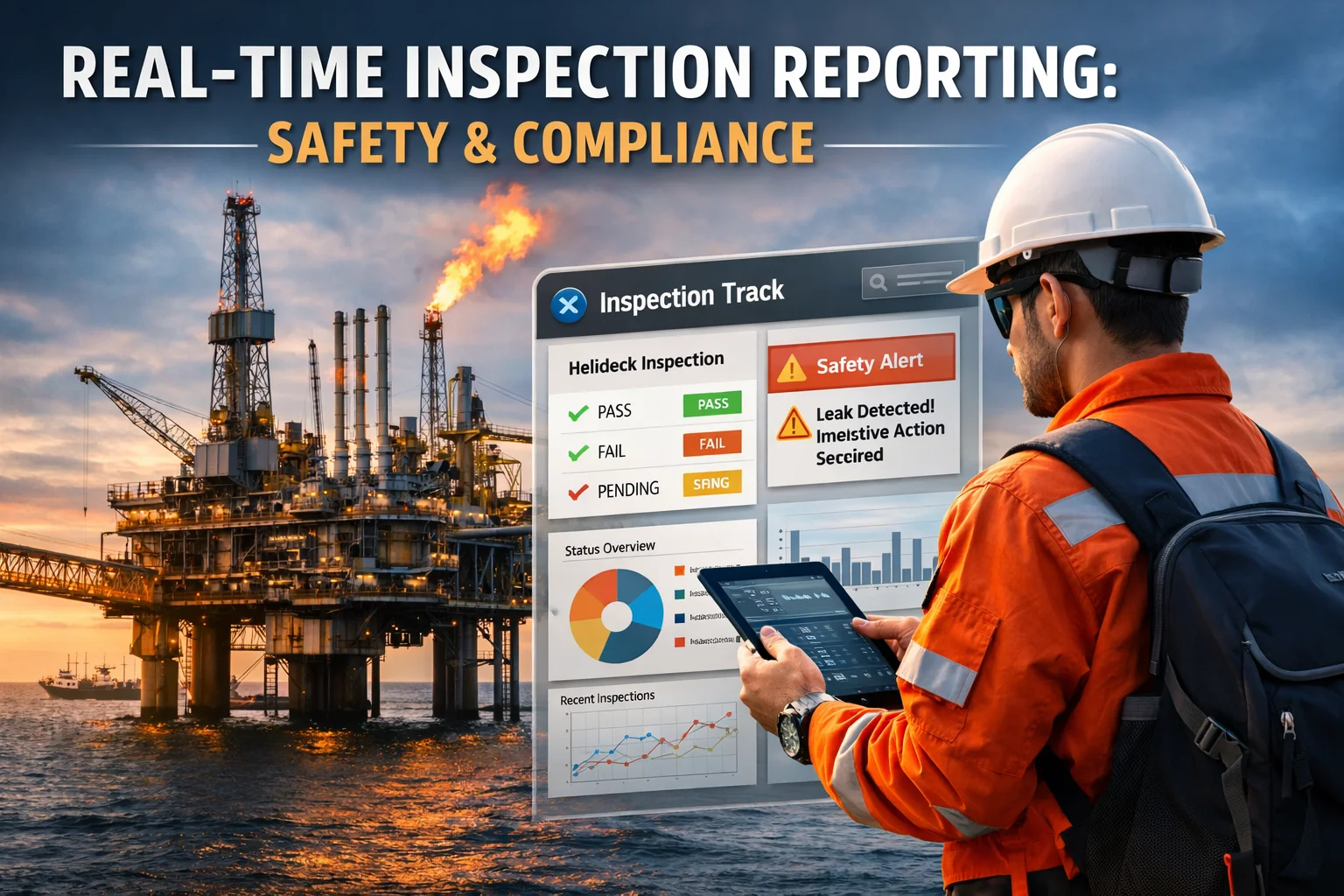
In the fast-paced oil and gas industry, maintaining compliance and ensuring safety are not just priorities—they are non-negotiable requirements. Traditional inspection methods often involve manual paperwork, delayed reporting, and fragmented data, increasing the risk of…
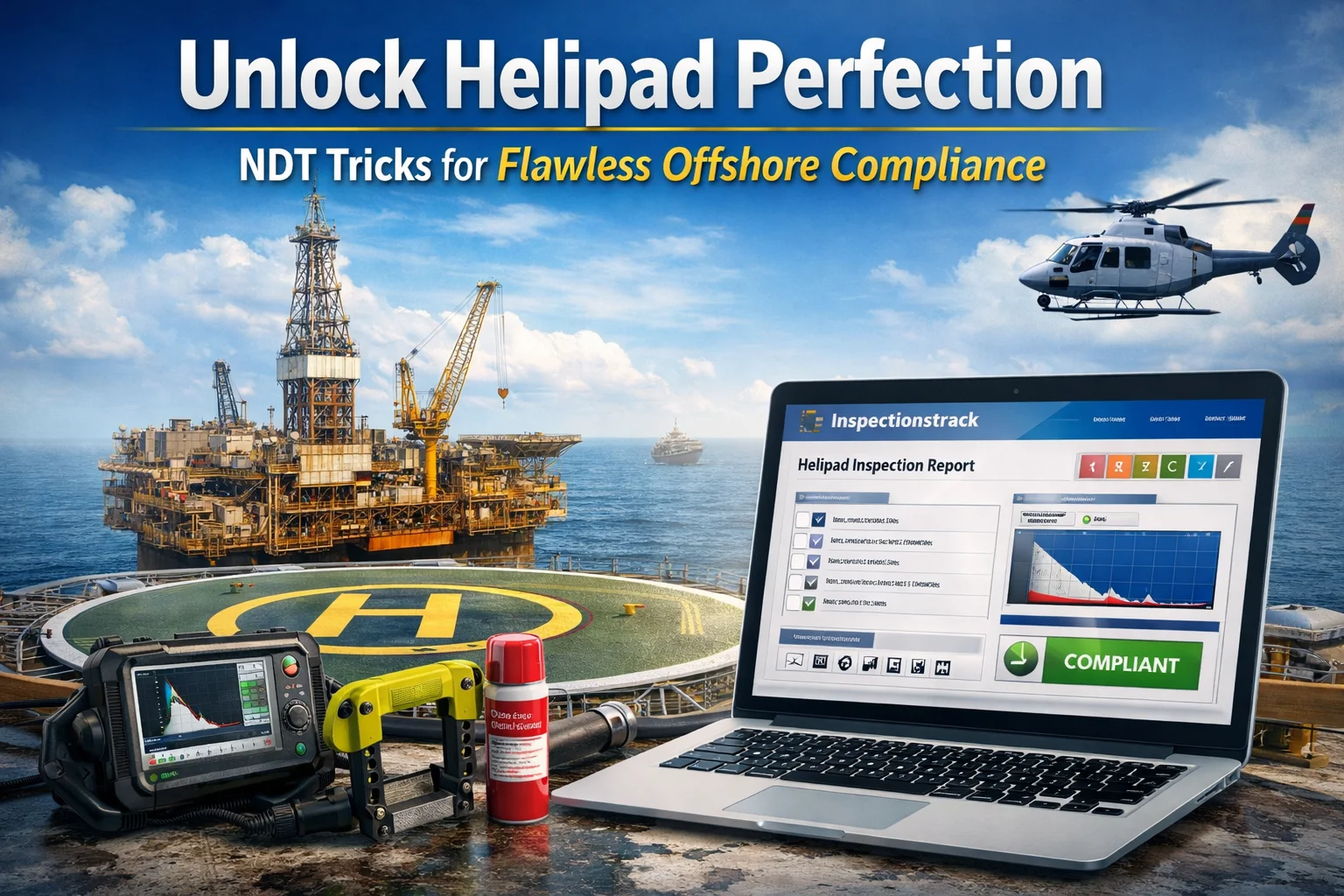
Introduction In the high-stakes world of offshore oil and gas operations, helipad safety is non-negotiable. Even minor structural flaws can compromise operations, risking lives and causing costly downtime. This is where Non-Destructive Testing (NDT) inspections…


