
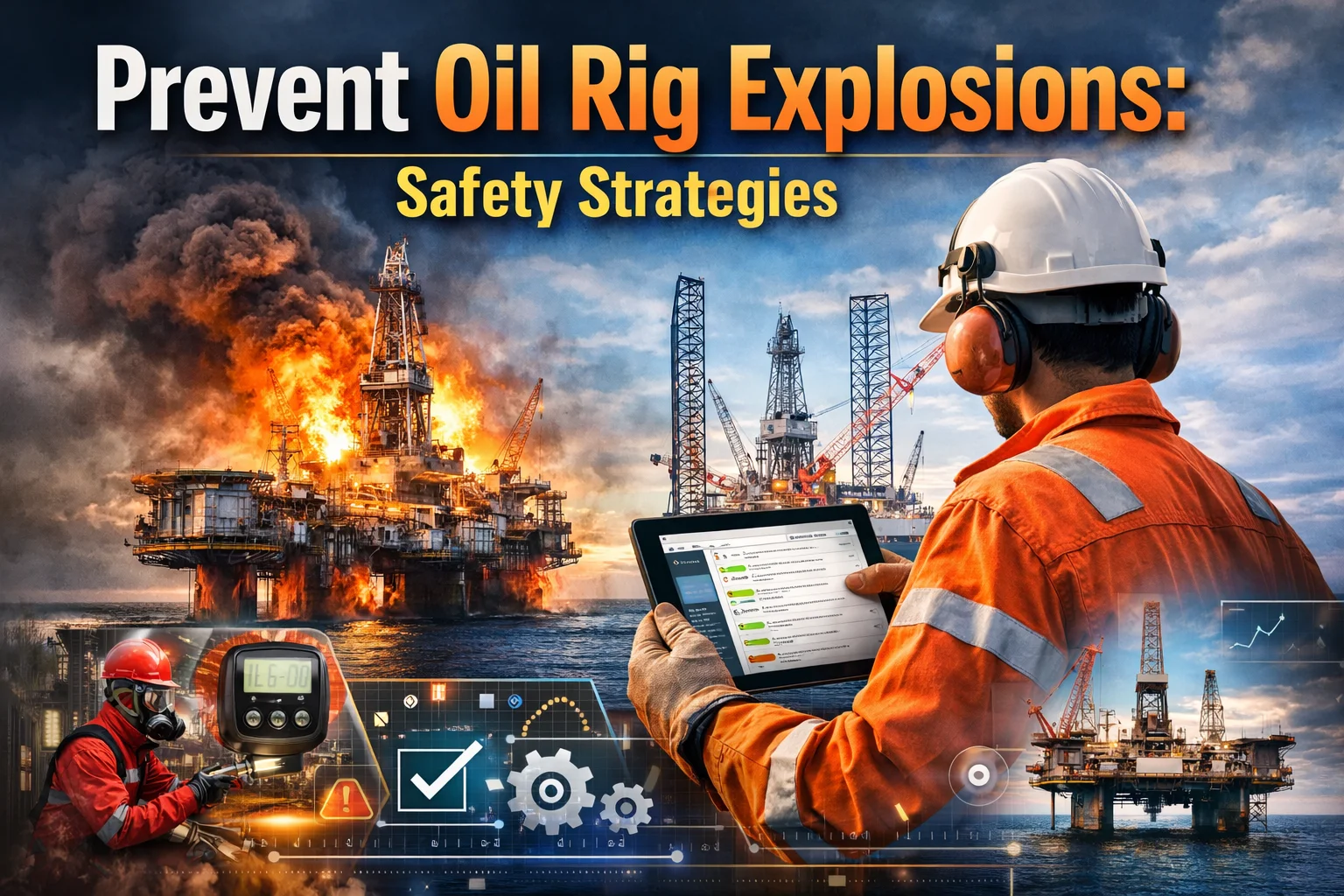
Oil rig explosions are among the most catastrophic incidents in the oil and gas industry. They not only result in loss of life and environmental damage but also cause massive financial and reputational losses. Preventing oil rig explosions requires a combination of strong safety culture, advanced technology, strict inspections, and real-time monitoring.
In this guide, written from the perspective of an oil & gas SEO content expert, we’ll break down practical, industry-proven methods to reduce explosion risks—while aligning with modern inspection and compliance standards.
Before prevention, it’s critical to understand the root causes. Most oil rig explosions are preventable and usually stem from operational or system failures.
However, with the right controls in place, these risks can be significantly reduced.
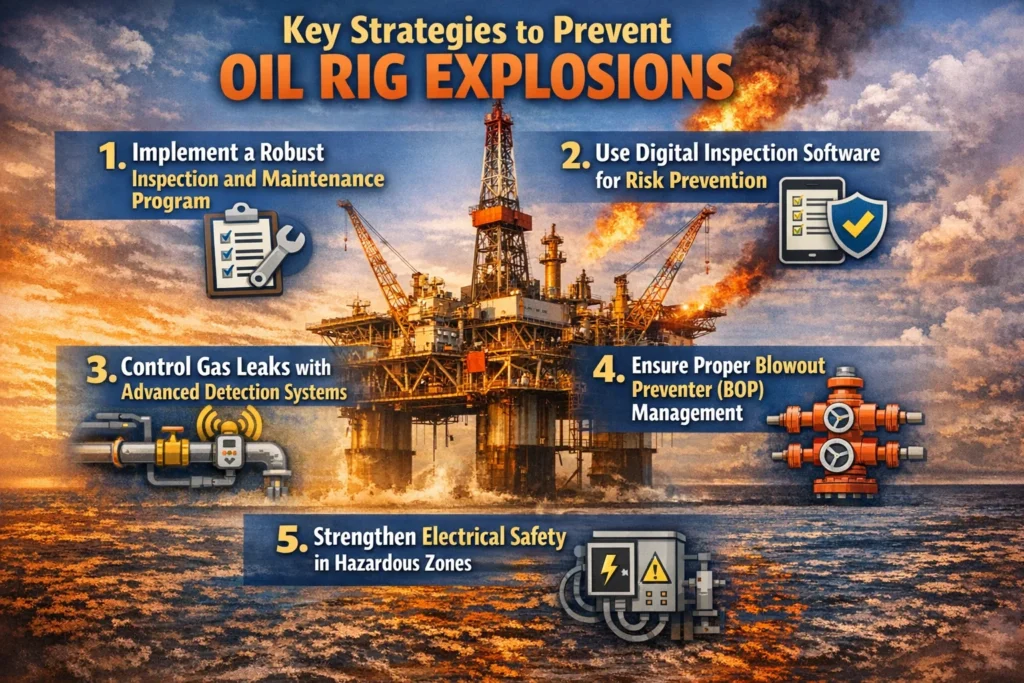
Regular inspections are the first line of defense against explosions. Equipment degradation, corrosion, and mechanical faults must be identified early.
Critical equipment to inspect regularly:
Best practice: Move away from paper-based inspections and adopt digital inspection software for better accuracy and traceability.
Manual inspections often miss early warning signs. That’s where Inspection Track software for oil and gas inspections plays a vital role.
By digitizing inspection regimes, operators can detect risks before they escalate into catastrophic failures.
Gas leaks are one of the leading causes of oil rig explosions. Therefore, continuous gas monitoring is essential.
Additionally, integrating gas detection data with inspection systems improves response time during emergencies.
A malfunctioning BOP can quickly lead to uncontrolled pressure release and explosions.
To reduce BOP-related risks:
Electrical sparks in classified zones are extremely dangerous.
Consequently, consistent electrical inspections significantly lower ignition risks.
Even the most advanced systems fail without trained personnel.
Moreover, organizations that encourage safety-first reporting often experience fewer incidents.
| Explosion Risk Factor | Preventive Measure | Impact on Safety |
|---|---|---|
| Gas leaks | Continuous gas detection & inspections | High risk reduction |
| Equipment failure | Predictive maintenance using inspection software | Significant |
| BOP malfunction | Routine testing & digital tracking | Critical |
| Electrical sparks | ATEX-compliant equipment & inspections | High |
| Human error | Training & standardized procedures | Long-term improvement |
Traditional maintenance reacts to failures. In contrast, predictive maintenance prevents them.
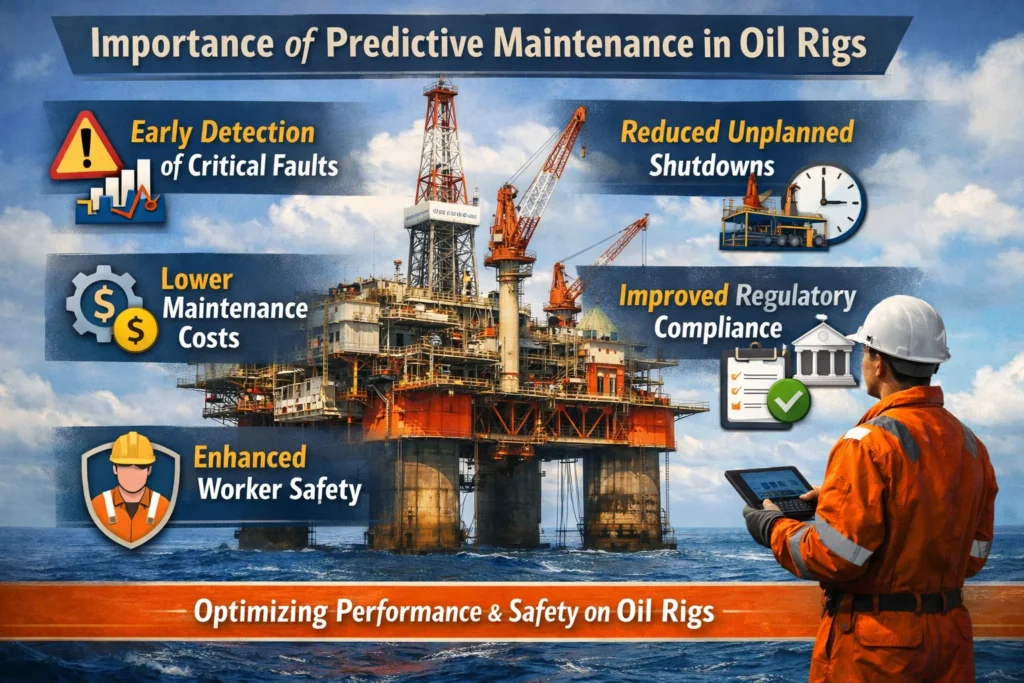
Inspection Track software supports predictive maintenance by analyzing historical inspection data and identifying failure patterns.
Read more : safety precautions on oil rigs
Oil rig operators must comply with:
Digital inspection platforms simplify audits and ensure consistent compliance documentation.
Preventing oil rig explosions is not about a single solution. Instead, it requires a holistic approach that combines:
By adopting modern inspection and maintenance strategies, oil and gas operators can protect lives, assets, and the environment—while maintaining uninterrupted operations.
If your organization wants to modernize inspections and reduce explosion risks, Inspection Track software for the oil and gas inspection industry provides a reliable, scalable, and compliant solution for safer operations.
Read more : drill pipe challenges solutions for modern rigs
The most common causes of oil rig explosions include gas leaks, equipment failure, blowout preventer (BOP) malfunctions, electrical sparks, and human error due to inadequate training or inspections.
Regular inspections identify equipment defects, corrosion, and pressure issues early. This allows operators to fix problems before they escalate into fires or explosions, improving overall rig safety.
Digital inspection software, such as Inspection Track, improves accuracy, enables real-time reporting, supports predictive maintenance, and ensures compliance with oil and gas safety standards.
Yes, predictive maintenance uses inspection data and condition monitoring to detect potential failures early, helping prevent sudden equipment breakdowns that could lead to explosions.
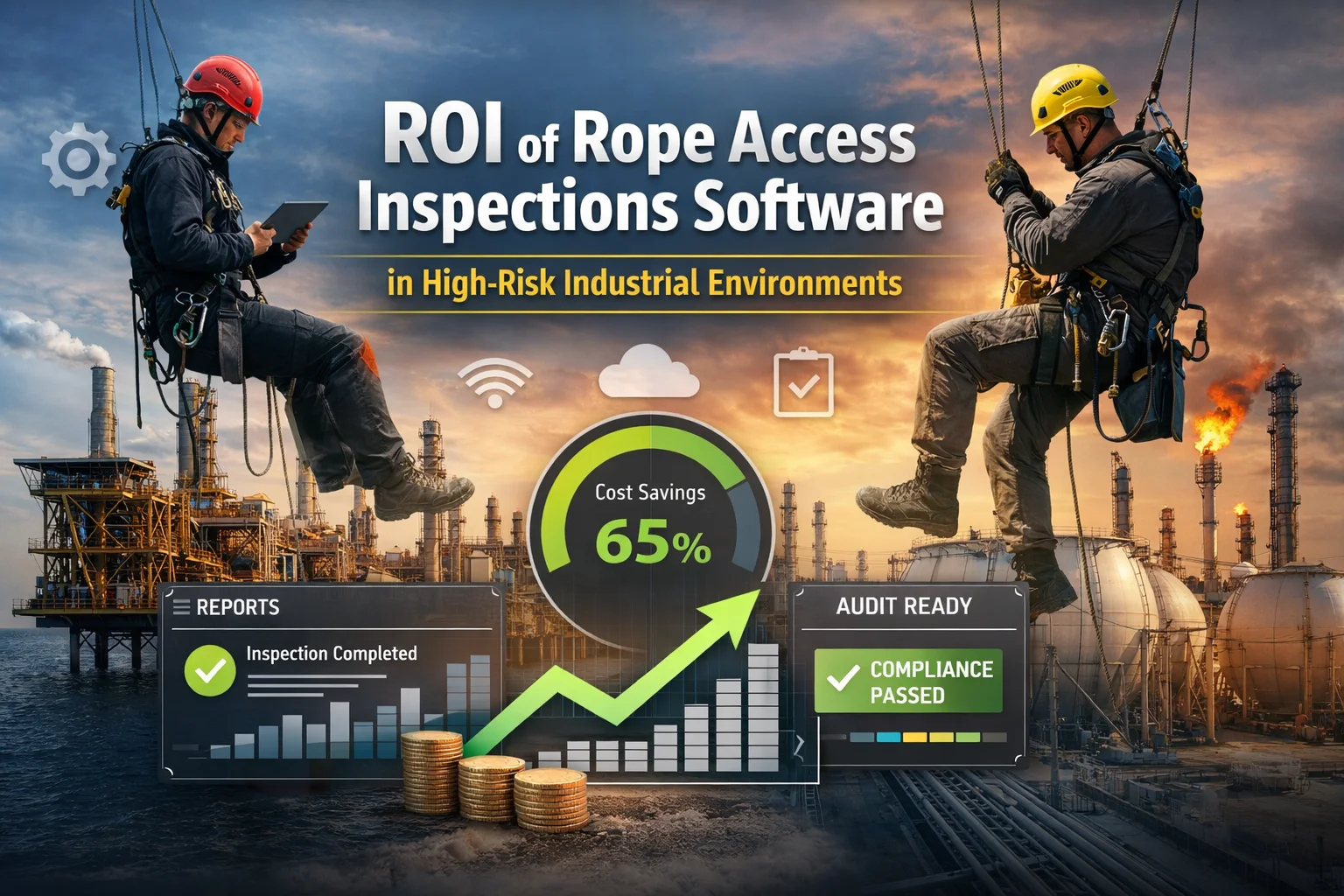
High-risk industrial environments such as oil refineries, offshore platforms, storage tanks, and petrochemical plants demand frequent inspections to maintain safety and compliance. However, traditional inspection methods often involve scaffolding, heavy equipment, and long shutdowns, which…
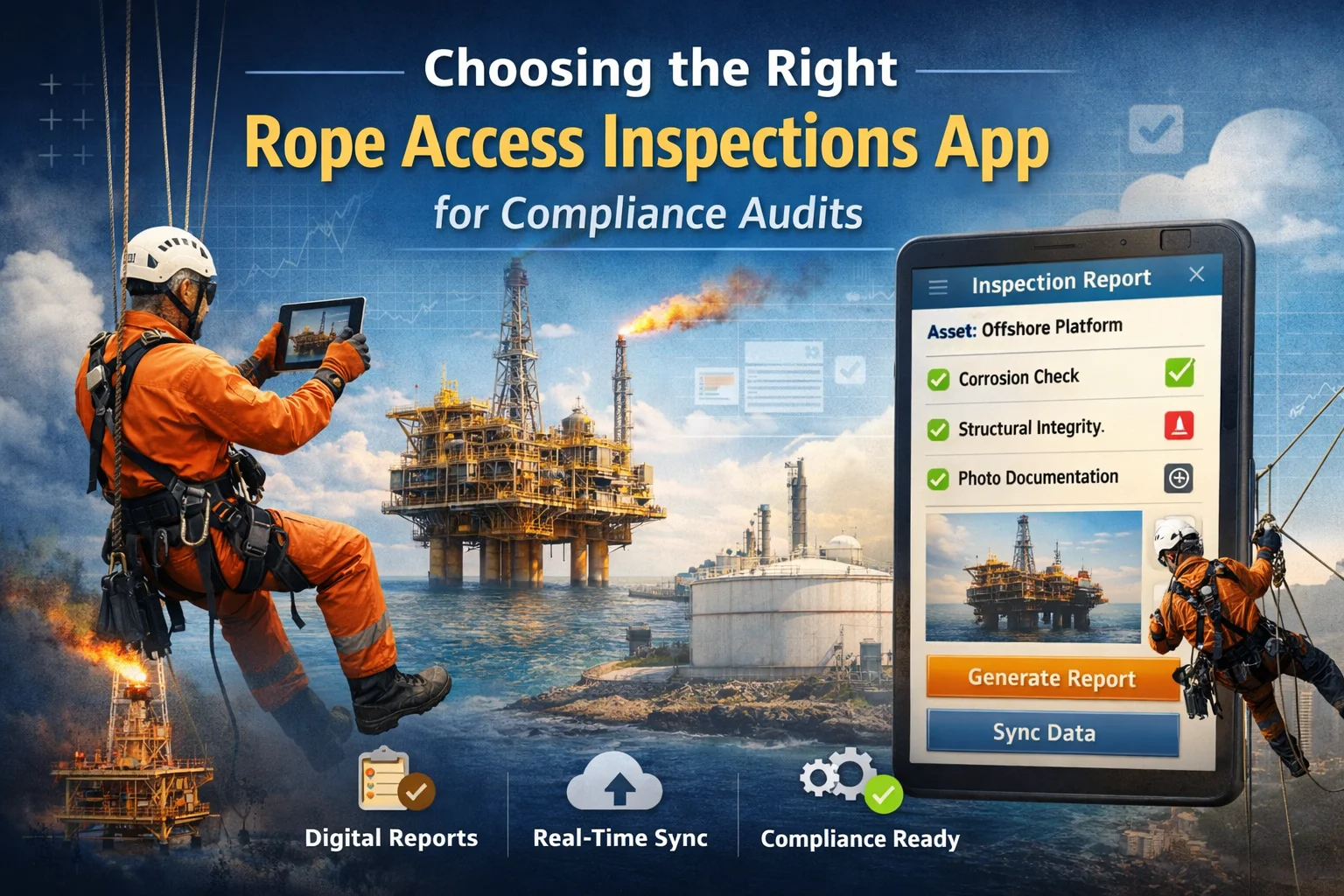
Rope access inspections play a critical role in industries where structures are difficult to reach—especially in the oil and gas sector. Platforms, storage tanks, flare stacks, offshore rigs, and wind towers often require technicians to…


Comment (1)
Oil & Gas Workforce Trends 2026 - inspectionstrack
Jan 22, 2026[…] Read more : prevent oil rig explosions safety strategies […]
Comments are closed.