
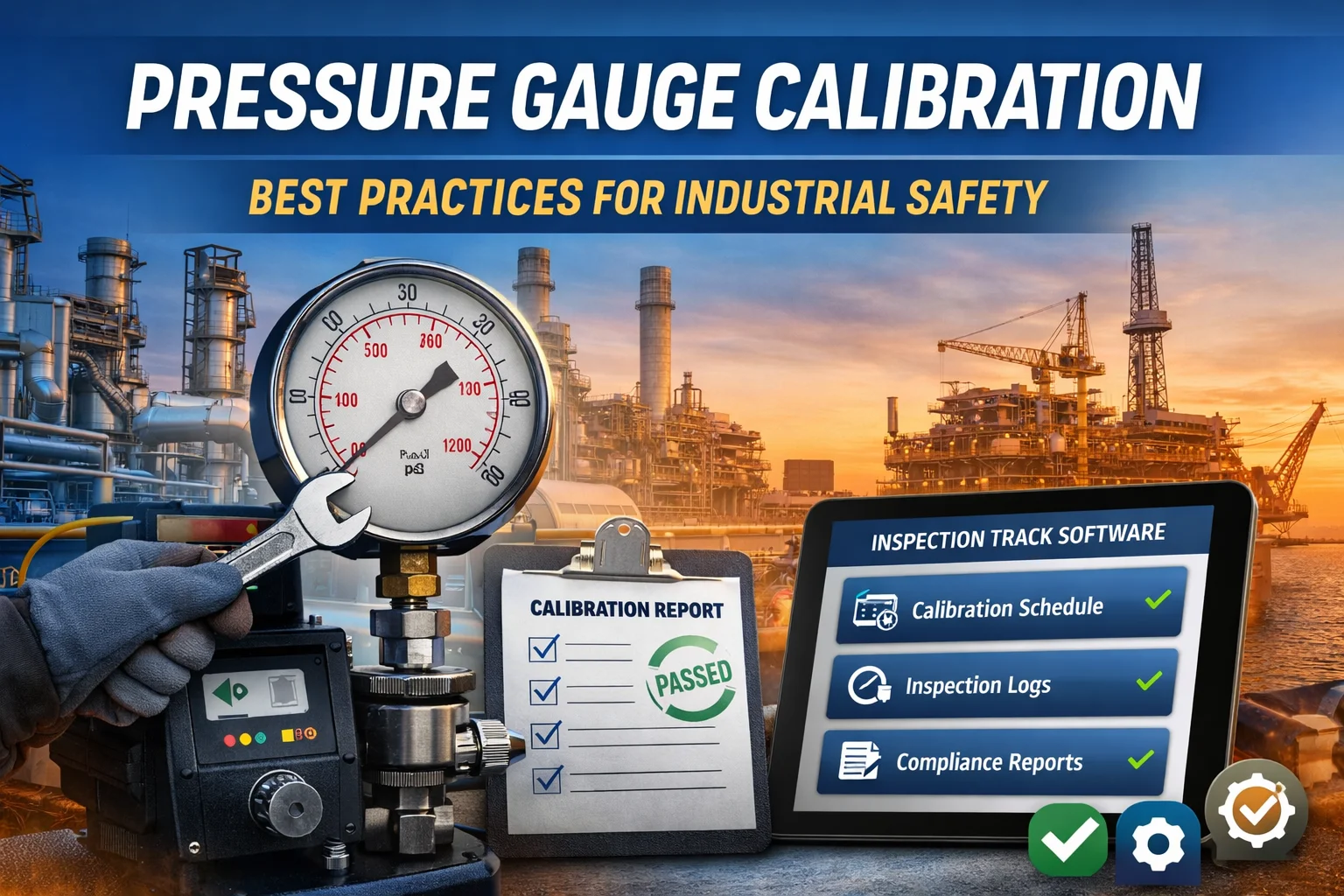
Pressure gauges play a critical role in industrial safety, especially in high-risk sectors like oil & gas, manufacturing, and petrochemicals. When gauges are inaccurate, the consequences can include equipment failure, safety incidents, regulatory violations, and costly downtime. Therefore, following pressure gauge calibration best practices is not optional—it is essential.
In this guide, you’ll learn why pressure gauge calibration matters, how often it should be done, and best practices to ensure compliance and safety. We’ll also explore how digital inspection tools like Inspection Track software help oil & gas companies manage calibration workflows more effectively.
Pressure gauge calibration is the process of comparing a pressure gauge’s readings against a known reference standard to ensure accuracy. If deviations exceed acceptable limits, adjustments or replacements are required.
Because pressure systems operate under extreme conditions, even minor inaccuracies can lead to serious safety risks.
Accurate pressure readings directly impact process integrity and worker safety. For this reason, calibration must never be overlooked.
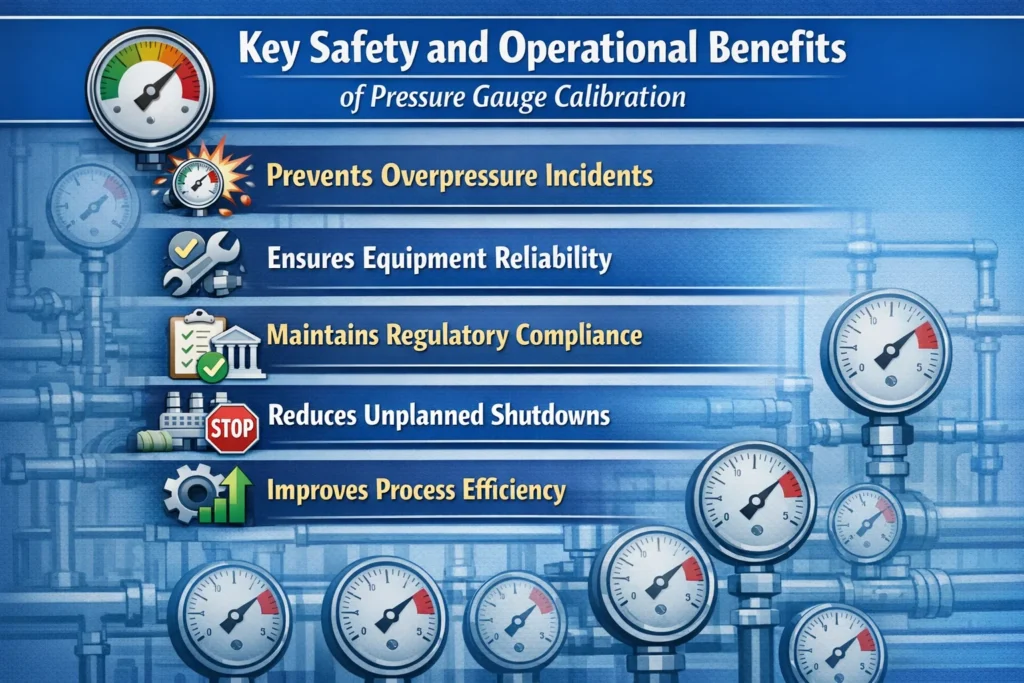
Moreover, consistent calibration builds trust in operational data, allowing teams to make informed decisions with confidence.
Although calibration is important across industries, it is especially critical in:
In oil & gas environments, pressure gauges are exposed to harsh temperatures, vibrations, and corrosive substances, making routine calibration even more important.
Calibration frequency depends on operating conditions, industry standards, and usage intensity.
| Operating Environment | Recommended Frequency |
|---|---|
| Normal conditions | Every 6–12 months |
| High vibration or temperature | Every 3–6 months |
| Critical safety systems | Quarterly or before shutdown |
| After repair or replacement | Immediately |
However, digital inspection records help determine real-world calibration trends, making scheduling more precise.
Following standardized best practices ensures accuracy, compliance, and long-term safety.
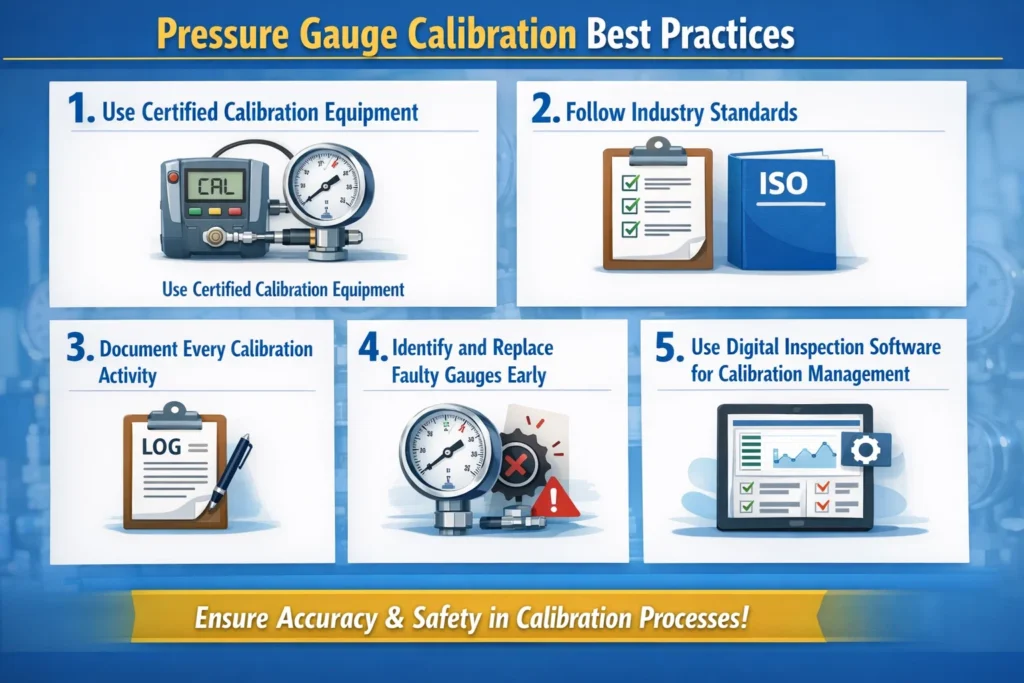
Always calibrate gauges using traceable, certified reference standards. This ensures alignment with international safety regulations.
Calibration should comply with recognized standards such as:
By adhering to these standards, companies reduce compliance risks.
Accurate documentation is essential for audits and safety inspections. Records should include:
Digital documentation significantly improves traceability.
Not all gauges can be recalibrated. Therefore, gauges showing excessive deviation should be replaced immediately to avoid false readings.
Manual tracking increases the risk of missed calibrations. That’s why many oil & gas companies rely on Inspection Track software to streamline the process.
Inspection Track is designed specifically for the oil & gas inspections industry, offering complete visibility and control over calibration tasks.
As a result, safety teams spend less time on paperwork and more time ensuring operational safety.
Read more : pressure gauge calibration checklist
| Feature | Manual Tracking | Inspection Track Software |
|---|---|---|
| Scheduling | Error-prone | Automated |
| Record keeping | Paper-based | Digital & secure |
| Audit readiness | Time-consuming | Instant |
| Compliance alerts | None | Real-time alerts |
Clearly, digital systems reduce risk while improving efficiency.
Even experienced teams can make errors. Avoid these common pitfalls:
Fortunately, most of these issues are easily prevented with structured digital workflows.
Read more : calculation error in pressure gauge calibration guide
Regulatory authorities often require proof of calibration compliance. Without proper records, companies risk fines, shutdowns, or failed audits.
Therefore, maintaining digitally verifiable inspection data using tools like Inspection Track is becoming an industry standard.
Pressure gauge calibration is more than a maintenance task—it is a core safety requirement. When done correctly and consistently, it protects equipment, personnel, and operations.
By following best practices and adopting Inspection Track software for oil & gas inspections, companies can:
In today’s high-risk industrial environments, digital inspection management is no longer optional—it’s essential.
Inspection Track software helps oil & gas companies manage pressure gauge calibration, inspections, and compliance—all from one powerful platform.
Read more : rope access inspections irata standards
Pressure gauges should typically be calibrated every 6–12 months. However, gauges used in critical or harsh environments may require more frequent calibration.
Calibration ensures accurate pressure readings, helping prevent equipment failure, safety incidents, and regulatory non-compliance in industrial operations.
Inspection Track software automates calibration scheduling, stores digital records, and provides audit-ready reports for oil & gas inspection compliance.

Non-Destructive Testing (NDT) plays a critical role in ensuring the safety, reliability, and compliance of assets in industries like oil and gas. However, simply collecting inspection data is not enough. NDT data analysis is what…
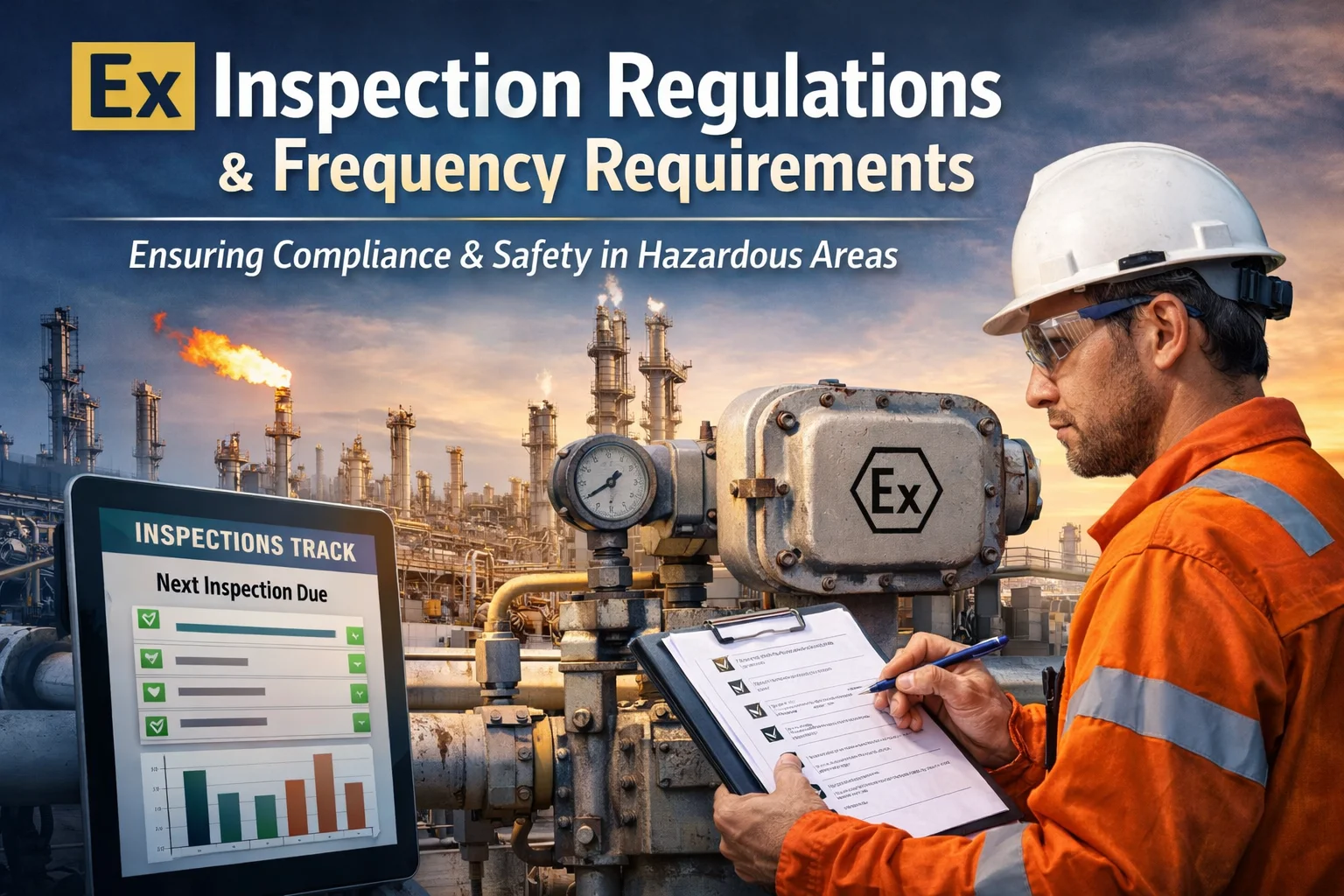
In hazardous environments such as oil and gas facilities, safety is not optional—it is regulated. Ex inspections (Explosion Protection Inspections) ensure that electrical and mechanical equipment installed in explosive atmospheres remains safe, compliant, and operational….


Comment (1)
API 653 Tank Inspection Guide for Oil Storage Safety - inspectionstrack
Feb 10, 2026[…] Read more : pressure gauge calibration safety best practices guide […]
Comments are closed.