
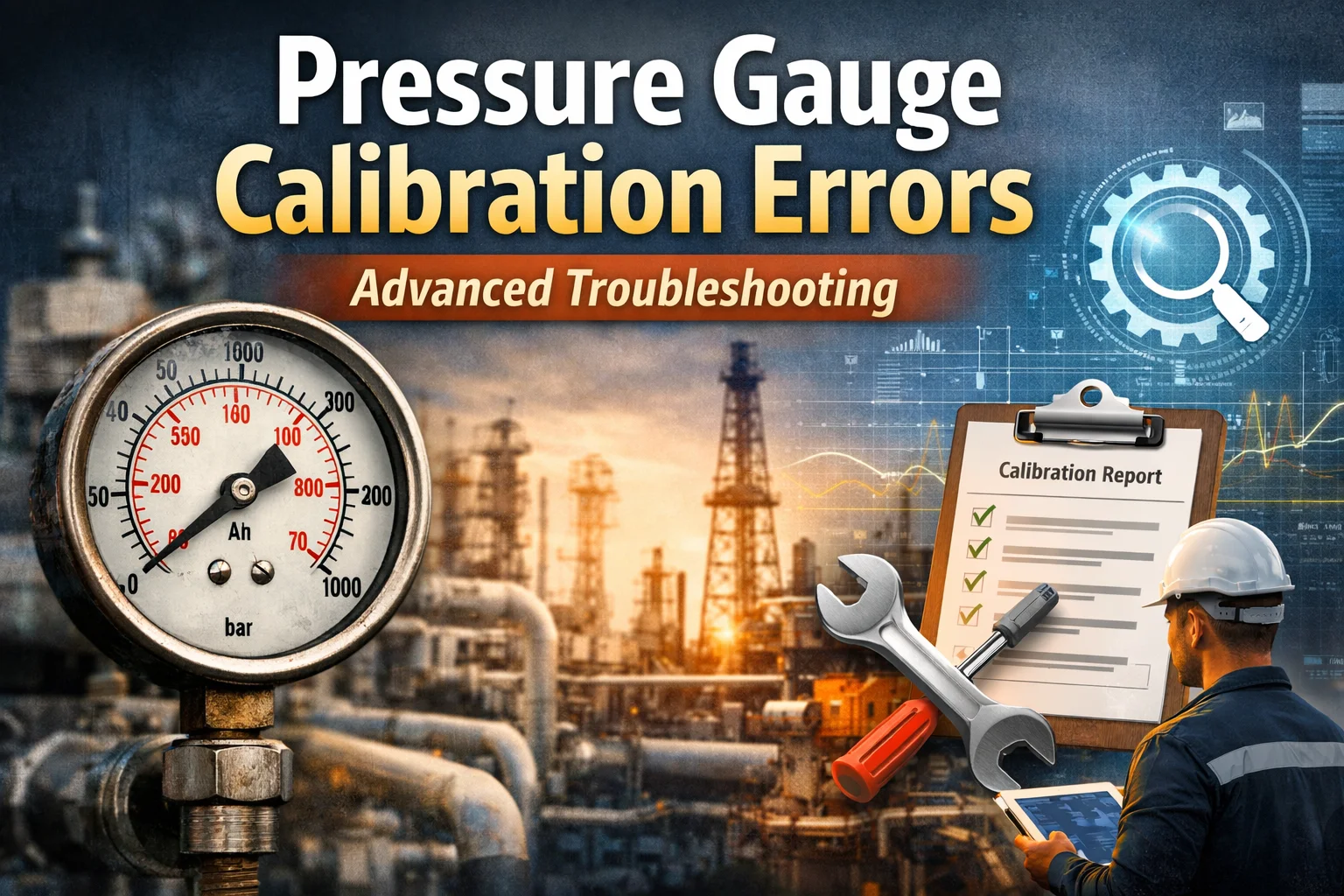
Pressure gauges play a critical role in the oil and gas industry. They help ensure safe operations, accurate process control, and regulatory compliance. However, calibration errors can compromise safety, lead to costly downtime, and even cause equipment failure.
Therefore, understanding advanced troubleshooting techniques for pressure gauge calibration errors is essential for inspectors, maintenance engineers, and HSE professionals.
In this guide, we will explore common calibration issues, root causes, and advanced diagnostic methods, while also explaining how digital inspection platforms like Inspection Track simplify calibration management in oil and gas operations.
Pressure gauges are used across drilling rigs, pipelines, refineries, and production facilities. If readings are inaccurate, decisions based on those readings may be flawed.
As a result, poor calibration can lead to:
Because of this, advanced troubleshooting becomes just as important as routine calibration itself.
Before applying advanced techniques, it is important to understand the most frequent errors encountered during calibration.
Although these issues may seem minor at first, they often indicate deeper problems that require systematic troubleshooting.
Identifying the root cause is the foundation of effective troubleshooting. In many cases, errors are not caused by the gauge alone.
Because multiple factors may contribute simultaneously, a structured approach is required.
Once basic checks are complete, advanced techniques should be applied to isolate and correct persistent errors.
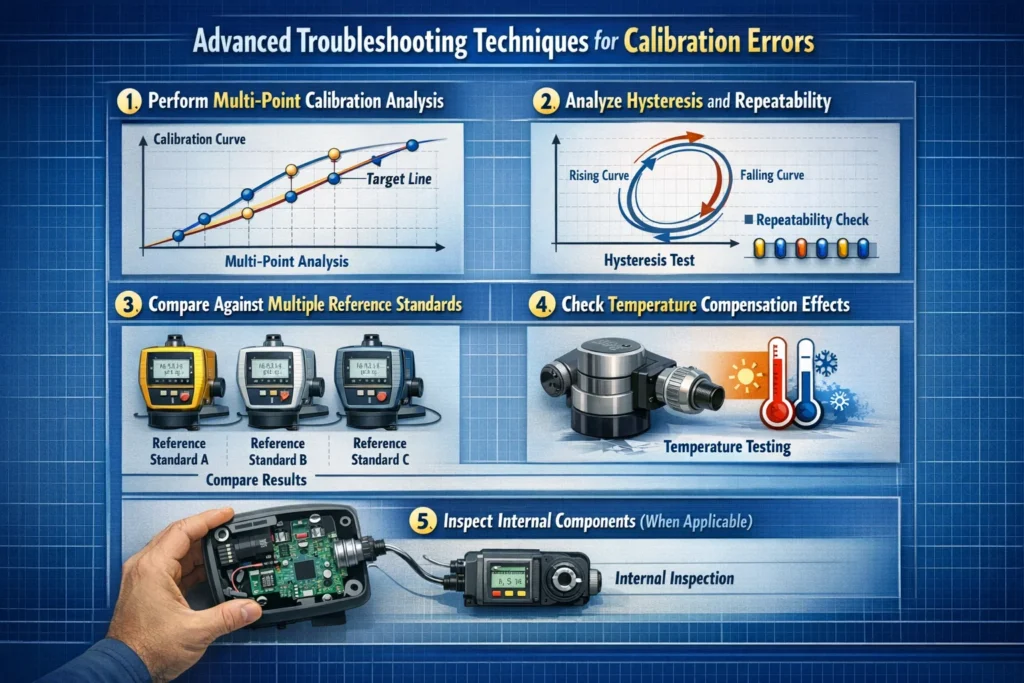
Instead of relying on two-point checks, apply multi-point calibration across the full scale.
This helps identify:
As a result, hidden inaccuracies become easier to detect.
Hysteresis occurs when readings differ between increasing and decreasing pressure cycles.
If the deviation exceeds tolerance, internal friction or mechanical wear is likely the cause.
In critical oil and gas applications, relying on a single reference standard may be risky.
Therefore, compare results using:
If discrepancies appear, the reference itself may require recalibration.
Temperature changes can significantly affect gauge accuracy.
For advanced troubleshooting:
This ensures repeatable and reliable results.
If errors persist, internal inspection may be required.
Look for:
However, this should only be done by qualified personnel to avoid damaging the instrument.
| Error Symptom | Likely Cause | Recommended Action |
|---|---|---|
| Zero offset | Mechanical stress or shock | Re-zero or replace gauge |
| Inconsistent readings | Internal friction | Inspect internal components |
| Non-linearity | Bourdon tube deformation | Replace gauge |
| Slow response | Blocked pressure port | Clean or flush port |
| Drift over time | Temperature or overpressure | Improve protection & monitoring |
This table can be used as a quick diagnostic reference during inspections.
Manual troubleshooting is time-consuming and error-prone. That is why many oil and gas companies are moving toward digital inspection software.
Inspection Track, designed for the oil and gas inspections industry, enhances calibration accuracy by offering:
As a result, recurring errors can be identified faster, and corrective actions can be implemented proactively.
By integrating Inspection Track into calibration workflows, organizations can:
Moreover, inspectors can perform field-ready mobile inspections, even in offline environments, ensuring data consistency across sites.
Although troubleshooting is essential, prevention is always better.
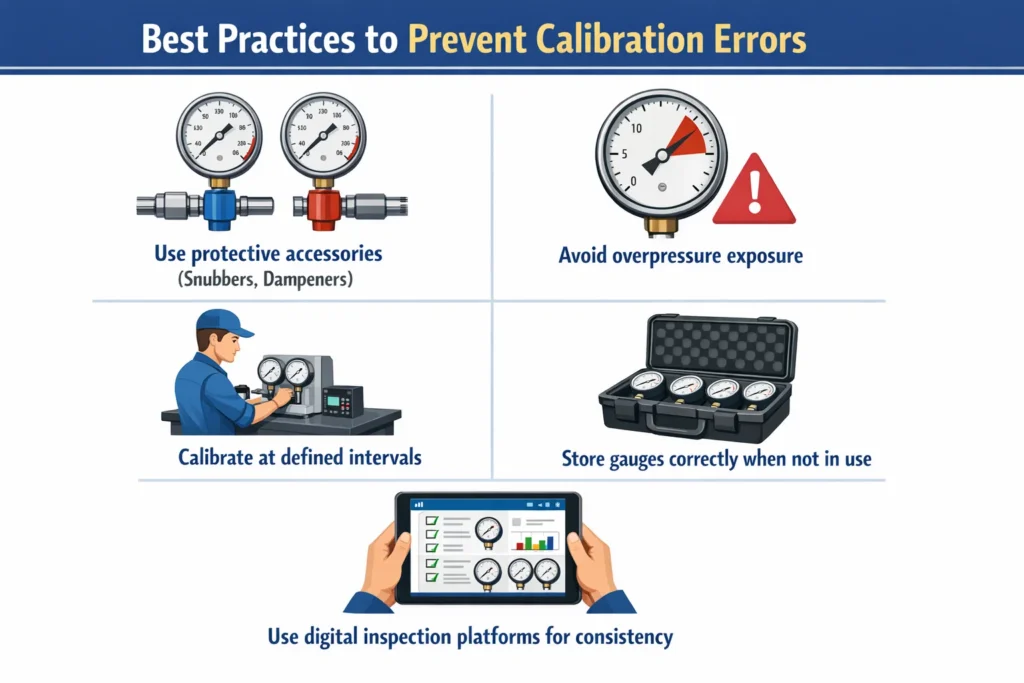
By following these steps, long-term accuracy can be maintained.
Advanced troubleshooting techniques for pressure gauge calibration errors are not optional in the oil and gas industry—they are essential. While basic calibration checks catch obvious issues, advanced diagnostics uncover hidden risks that could otherwise compromise safety and compliance.
When combined with digital solutions like Inspection Track, calibration processes become more accurate, traceable, and audit-ready. Ultimately, this leads to safer operations, improved reliability, and stronger regulatory confidence.
Adopt Inspection Track and transform how you manage calibration, inspections, and compliance in oil and gas operations. Book a Free Trial
Read more : asset inventory in oil and gas
Pressure gauge errors can be caused by mechanical wear, temperature fluctuations, overpressure events, or incorrect calibration procedures.
Use multi-point calibration, check hysteresis, compare against multiple standards, and inspect internal components to identify root causes.
Yes, software like Inspection Track provides digital checklists, historical trends, and automated reports to reduce errors and improve compliance.
Calibration frequency depends on usage, criticality, and environmental conditions, but regular intervals and preventive checks are recommended to maintain accuracy.

In the oil and gas industry, derrick operations rely heavily on lifting gear to move heavy loads safely and efficiently. From wire ropes to shackles and hoists, every component plays a critical role. However, if…
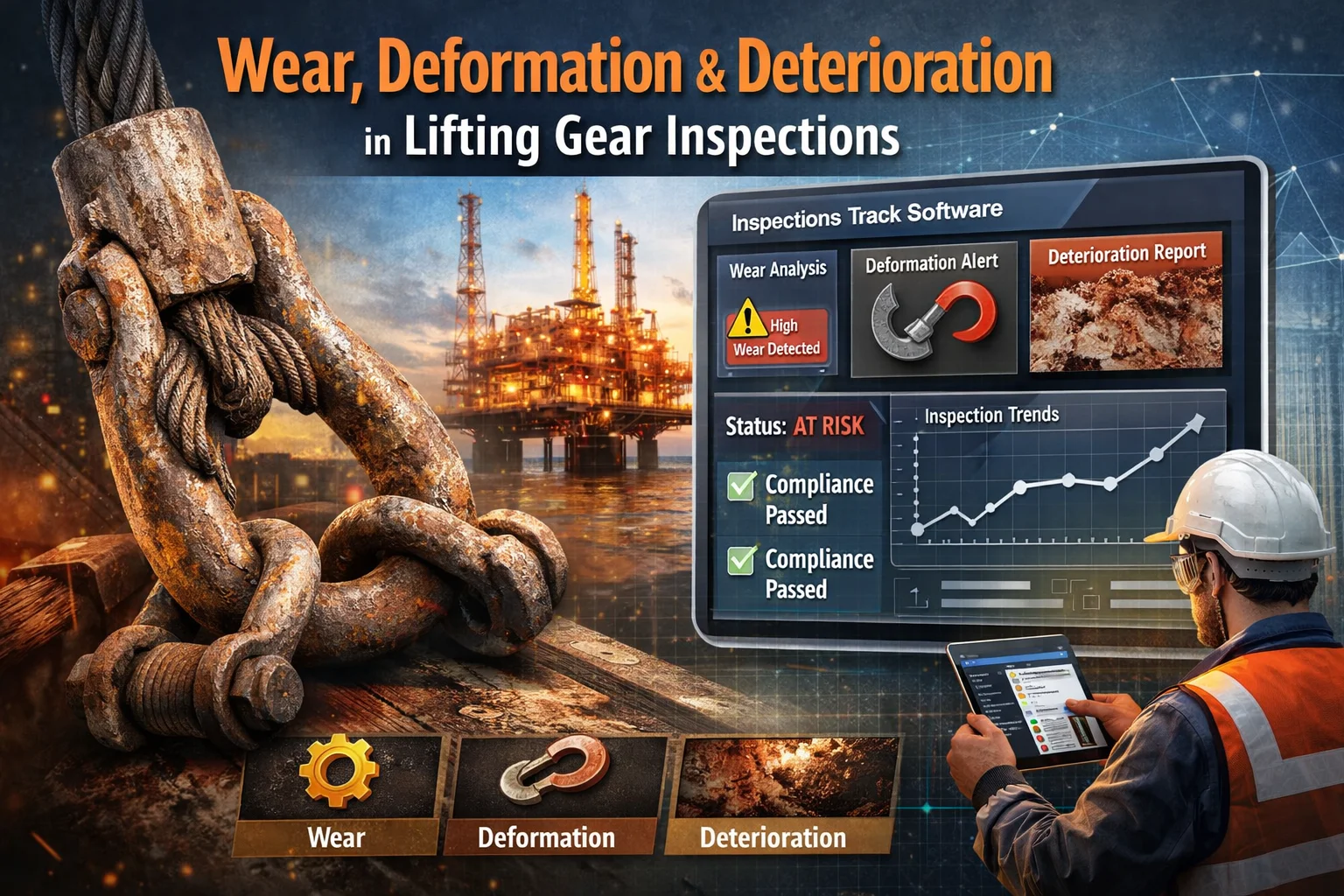
Introduction In the oil and gas industry, safety and operational efficiency rely heavily on properly maintained lifting gear. While regular inspections are mandated, many organizations overlook subtle indicators like wear, deformation, and deterioration. Understanding these…


