

In the oil and gas industry, lifting gear failure is not an option. From offshore rigs to onshore drilling sites, cranes, slings, hoists, and winches operate under extreme conditions. Therefore, thorough examination regimes, combined with predictive analytics, are rapidly transforming how oilfield lifting gear is maintained, inspected, and certified.
Rather than reacting to failures, oilfield operators are now shifting toward data-driven maintenance strategies. As a result, safety improves, downtime decreases, and compliance becomes easier to manage.
This article explains how predictive analytics strengthens thorough examination regimes, why it matters for oilfield lifting gear maintenance, and how Inspections Track software supports this transformation.
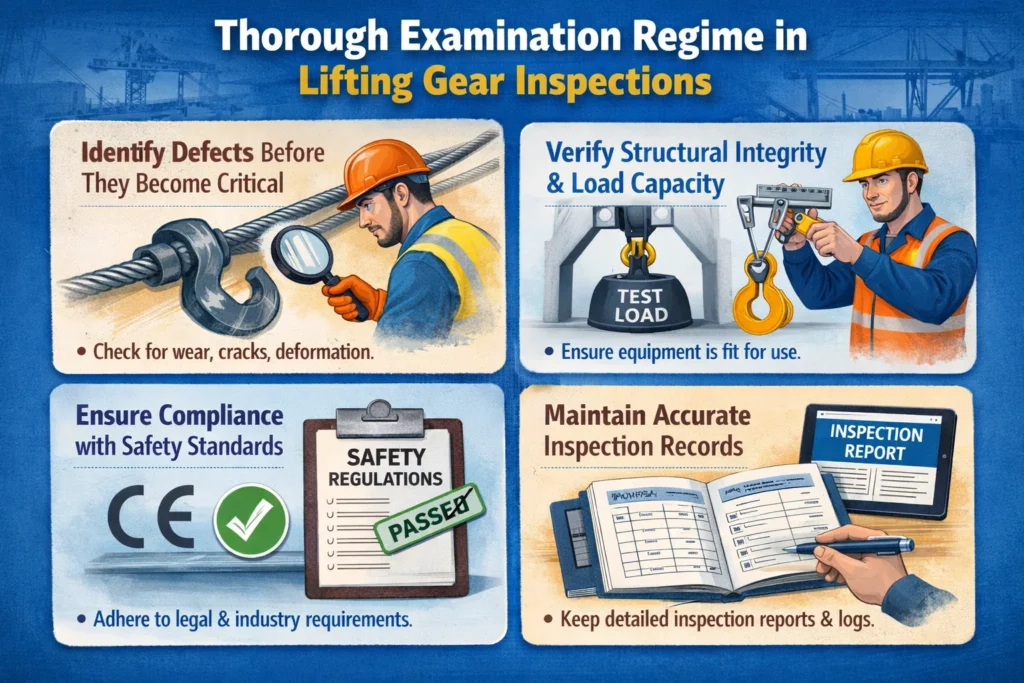
A thorough examination regime is a structured inspection and testing process designed to ensure lifting equipment remains safe, compliant, and fit for purpose.
In oil and gas operations, these regimes are often legally mandated and must be performed by competent personnel at defined intervals.
However, traditional regimes rely heavily on fixed schedules. While effective, they often miss early warning signs of failure.
This is where predictive analytics adds significant value.
Predictive analytics uses historical inspection data, sensor readings, and usage patterns to anticipate failures before they occur.
Instead of asking “When was this last inspected?”, operators can ask “When is this likely to fail?”
| Aspect | Traditional Maintenance | Predictive Maintenance |
|---|---|---|
| Inspection timing | Fixed intervals | Data-driven |
| Failure detection | After damage appears | Before failure |
| Downtime | Often unplanned | Mostly planned |
| Cost efficiency | Moderate | High |
| Safety level | Reactive | Proactive |
As shown above, predictive maintenance delivers better safety and cost control, especially in high-risk oilfield environments.
Predictive analytics does not replace thorough examinations. Instead, it enhances them.
By combining inspection data with analytical models, maintenance teams gain actionable insights.
Consequently, inspection teams focus on high-risk assets first, improving overall operational efficiency.
Predictive analytics is especially effective for critical lifting equipment, including:
Because these assets experience variable loads and harsh conditions, data-driven insights are essential.
Data is the foundation of predictive maintenance. Without reliable data, analytics cannot deliver accurate results.

When this data is centralized and structured, predictive models become significantly more accurate.
This is where digital inspection platforms play a critical role.
Inspections Track software is designed specifically for the oil and gas inspections industry, enabling organizations to modernize their thorough examination regimes.
Instead of relying on paper or disconnected systems, Inspections Track provides a centralized, digital inspection ecosystem.
As a result, inspection data becomes searchable, analyzable, and actionable.
Below is a simplified workflow illustrating how predictive analytics integrates with digital inspection systems:
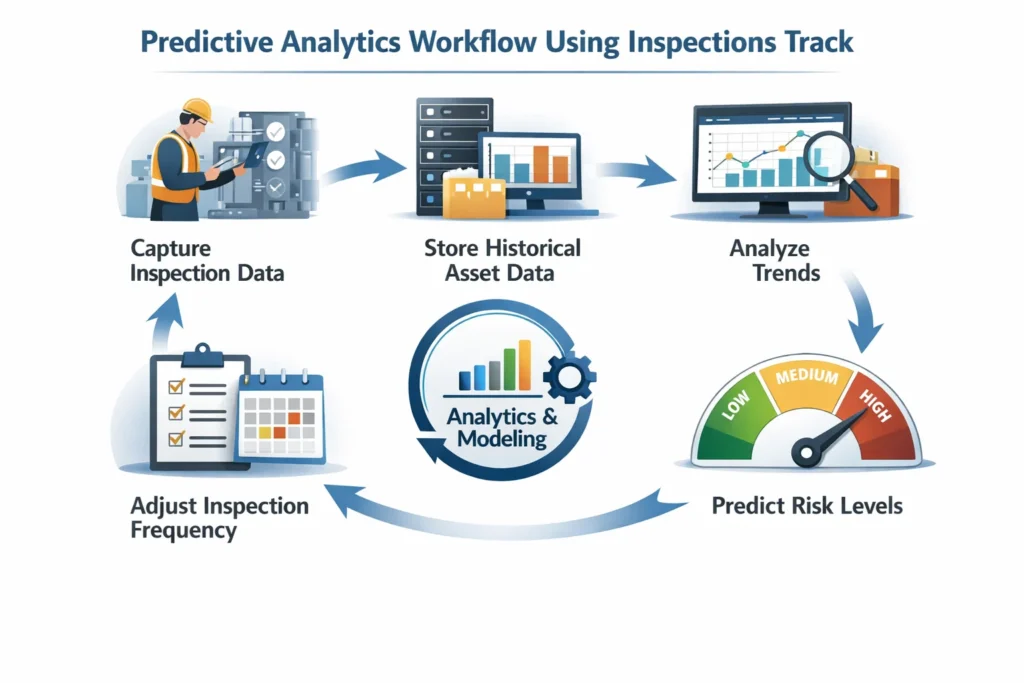
This approach ensures inspections remain thorough, compliant, and future-ready.
Oil and gas regulations demand traceability, accuracy, and accountability.
Predictive analytics, supported by Inspections Track software, helps organizations:
Moreover, digital records significantly reduce human error and data loss.
Beyond safety and compliance, predictive analytics delivers strong commercial value.
Therefore, predictive examination regimes are no longer optional—they are strategic assets.
As oilfield operations become more complex, data-driven inspection strategies will continue to evolve.
In the near future, we can expect:
Organizations that adopt tools like Inspections Track today will be better positioned for this future.
Thorough examination regimes remain the backbone of lifting gear safety in oil and gas. However, when enhanced with predictive analytics, they become smarter, safer, and more efficient.
By leveraging Inspections Track software, oilfield operators can transform inspection data into predictive insights—ensuring compliance, protecting lives, and optimizing asset performance.
In a high-risk industry, predicting failure is far better than reacting to it.
Read more : 7 point inspection in oil and gas
A thorough examination regime is a structured inspection process used to assess the safety, condition, and compliance of oilfield lifting equipment such as cranes, slings, and hoists.
Predictive analytics uses inspection data and usage trends to identify potential failures early, allowing maintenance teams to address issues before equipment breakdown occurs.
Yes. Predictive maintenance enhances compliance by supporting risk-based inspections, maintaining accurate records, and ensuring lifting gear is examined before safety limits are exceeded.
Inspections Track software centralizes inspection data, automates scheduling, and provides analytics-ready records, enabling smarter, data-driven maintenance decisions in the oil and gas industry.

Lifting gear plays a critical role in industrial operations, especially in sectors like oil and gas, offshore drilling, construction, and heavy manufacturing. However, these components operate under immense stress, which makes regular inspections essential for…
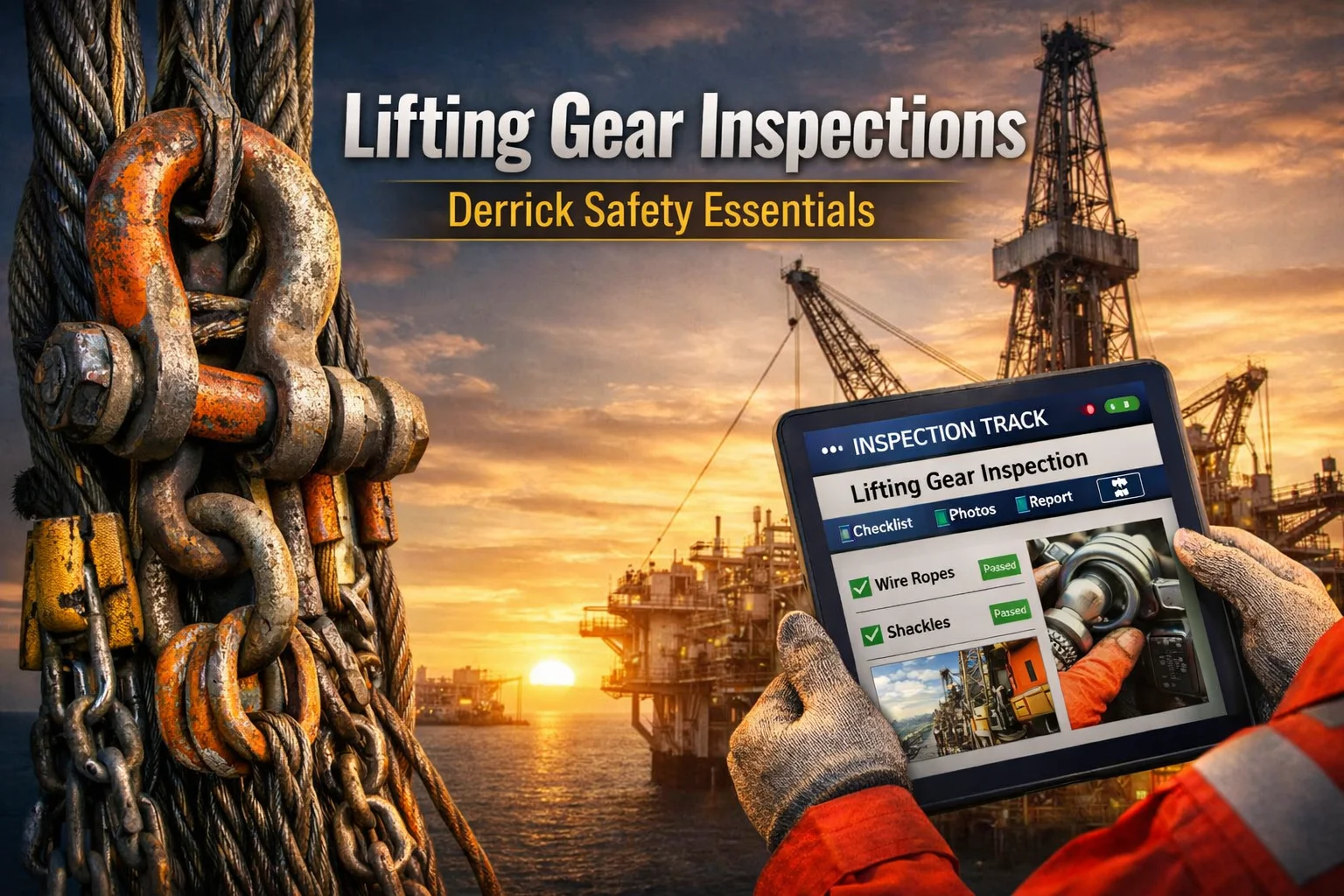
In the oil and gas industry, derrick operations rely heavily on lifting gear to move heavy loads safely and efficiently. From wire ropes to shackles and hoists, every component plays a critical role. However, if…


Comment (1)
Drill Pipe Challenges: Solutions for Modern Rigs - inspectionstrack
Jan 20, 2026[…] Read more : predictive analytics for oilfield lifting gear safety […]
Comments are closed.