
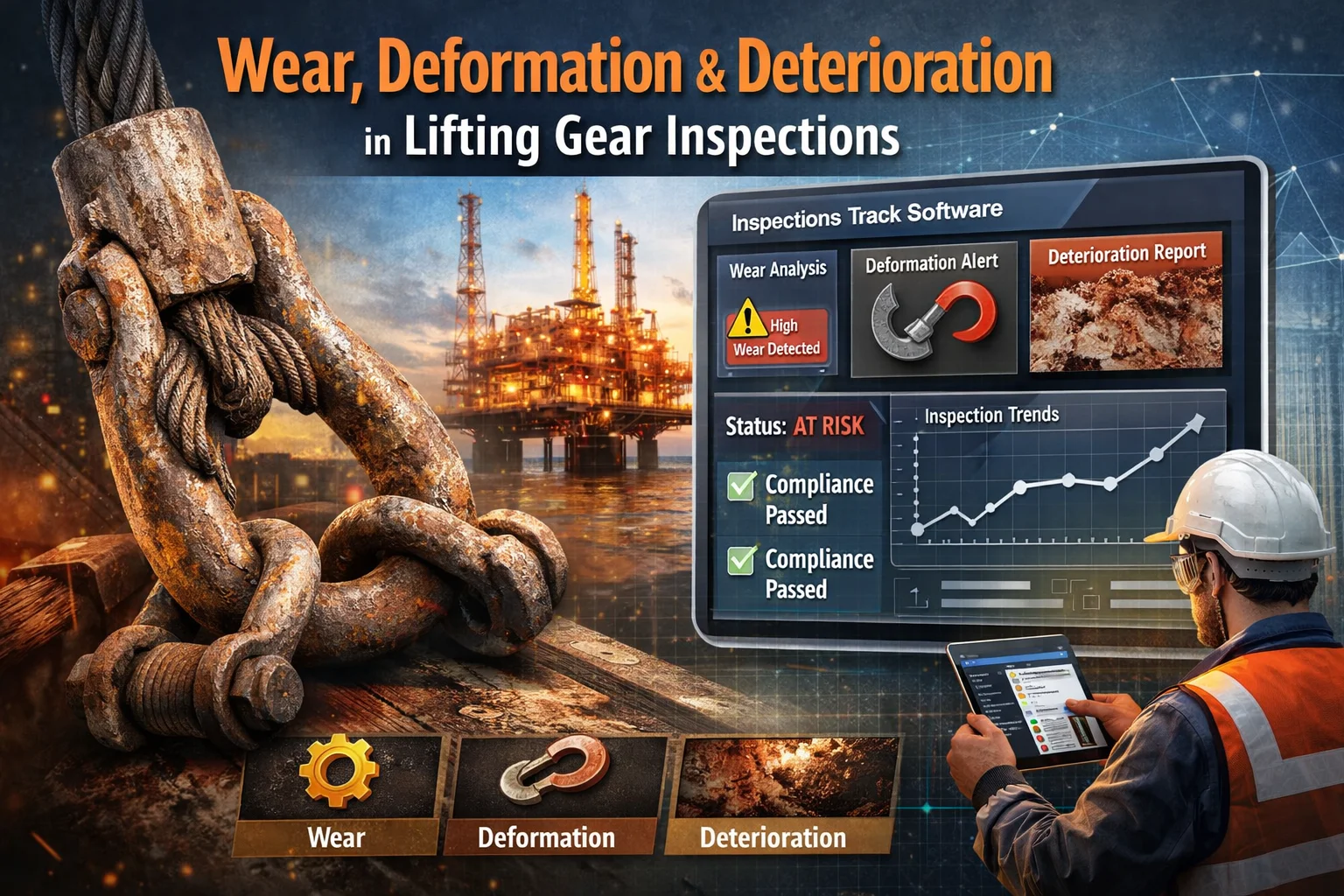
In the oil and gas industry, safety and operational efficiency rely heavily on properly maintained lifting gear. While regular inspections are mandated, many organizations overlook subtle indicators like wear, deformation, and deterioration. Understanding these hidden metrics can prevent costly accidents, downtime, and regulatory penalties.
At Inspections Track Software, we provide advanced digital solutions to streamline lifting gear inspections, ensuring safety and compliance at every level.
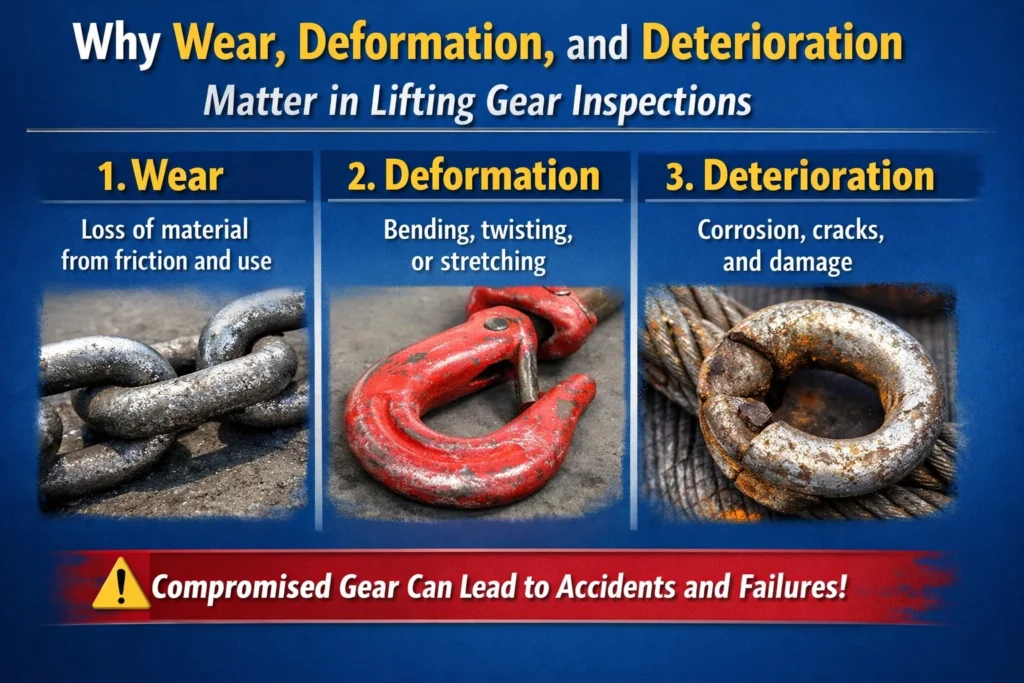
Wear refers to the gradual removal of material from lifting equipment surfaces due to friction, impact, or repetitive use. Over time, wear can compromise load capacity and structural integrity. Common signs include:
Why it matters: Even minor wear can reduce the lifespan of lifting gear and increase the risk of equipment failure under load.
Deformation occurs when lifting equipment loses its original shape due to overloading or accidental impact. Examples include:
Impact on safety: Deformed equipment often cannot bear rated loads safely, which increases the risk of accidents.
Deterioration is a broader term covering corrosion, fatigue, and environmental damage affecting lifting gear. This can manifest as:
Key insight: Deterioration often progresses unnoticed until a critical failure occurs, making proactive inspections vital.
Manual inspections are prone to errors and delays, especially when tracking multiple assets across facilities. Inspections Track Software addresses these challenges by offering:
| Feature | Benefit |
|---|---|
| Digital Asset Records | Maintain a centralized inventory of lifting gear for audit-ready tracking. |
| Wear & Deformation Analytics | Automatically flag high-risk equipment based on inspection trends. |
| Real-Time Reporting | Instant updates on equipment status to reduce downtime. |
| Compliance Management | Ensure inspections meet oil and gas industry standards and regulations. |
By leveraging digital tools, organizations can proactively address wear, deformation, and deterioration before they lead to failures.
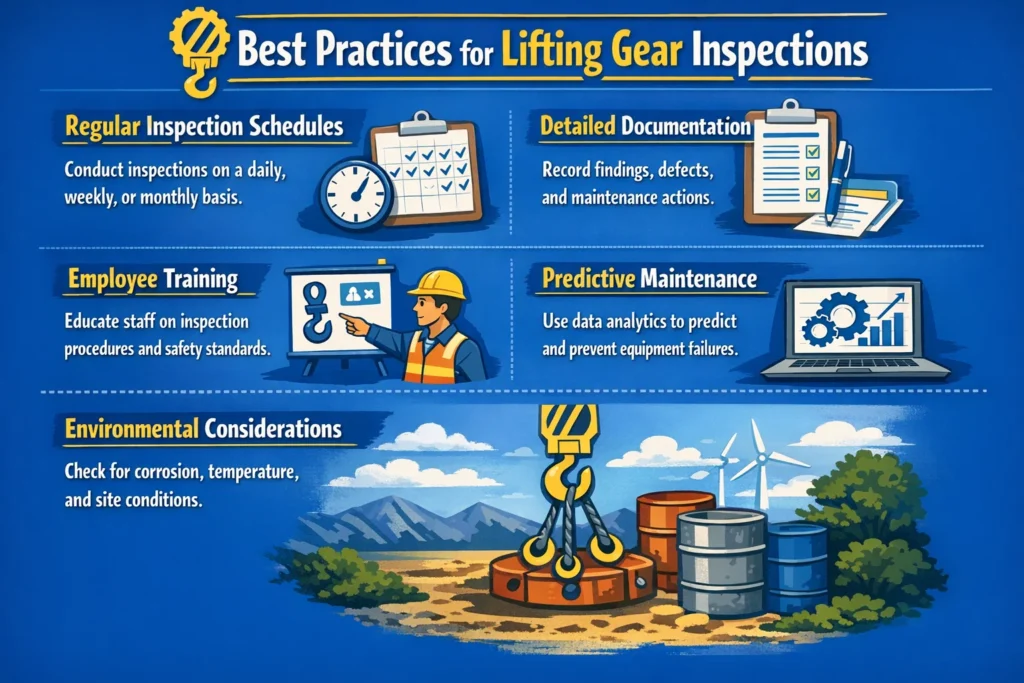
Transitional insight: By combining structured inspection protocols with digital tracking, companies can reduce risk while improving operational efficiency.
Understanding the hidden metrics—wear, deformation, and deterioration—is essential for safe and efficient lifting gear management. By integrating Inspections Track Software, oil and gas companies can streamline inspections, ensure compliance, and prevent costly failures.
Proactive inspections today mean safer operations tomorrow.
Read more : preventive vs rbi inspections
Inspection frequency depends on usage, environmental conditions, and regulatory standards. Daily visual checks combined with periodic detailed inspections are recommended.
Yes, modern inspection software like Inspections Track can track deformation trends over time using recorded measurements.
Corrosion, fatigue cracks, and unusual wear patterns are primary indicators requiring immediate action.
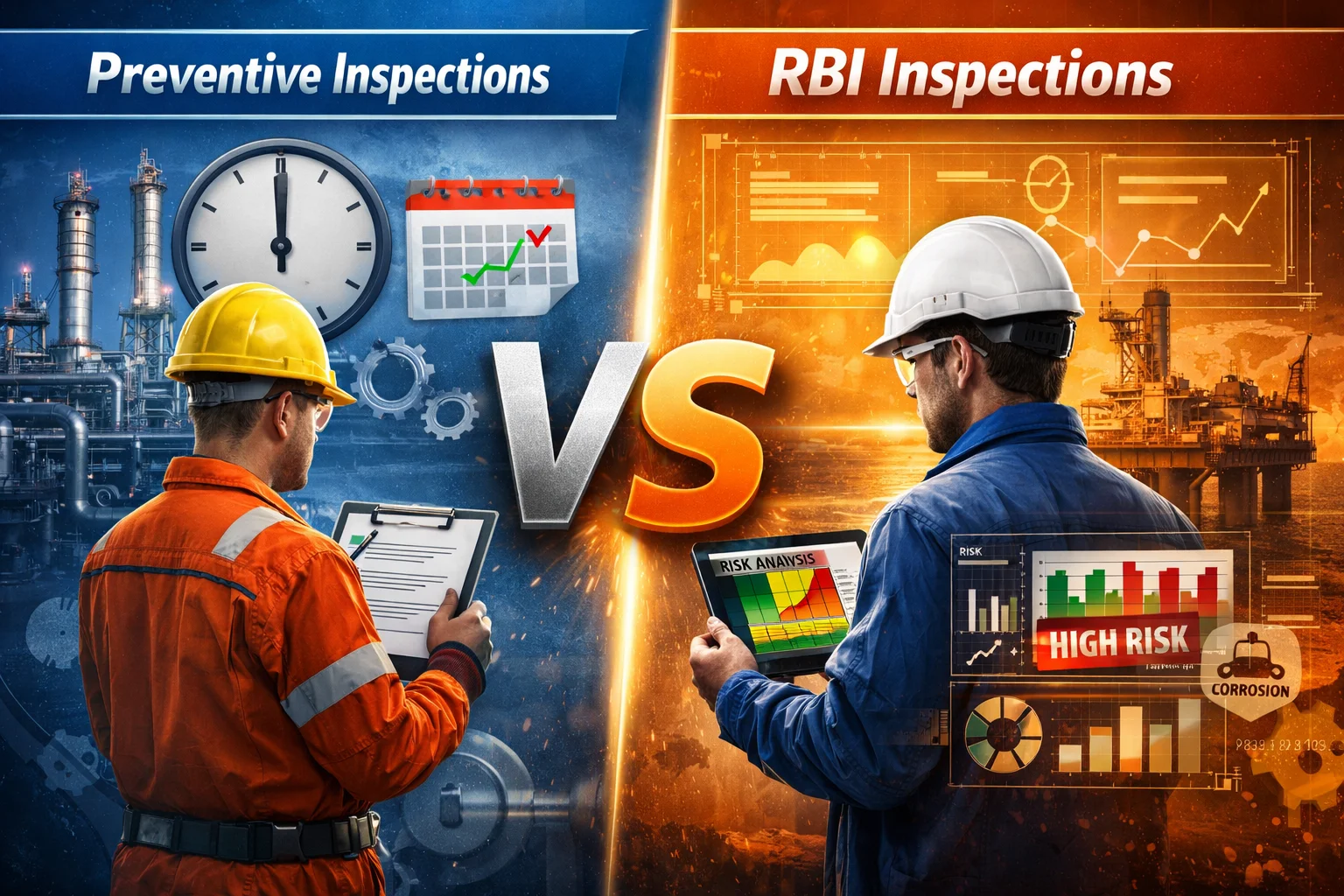
In the oil and gas industry, inspection strategies directly impact asset reliability, regulatory compliance, and operational safety. However, many organizations still struggle to understand the differences between preventive inspections and Risk-Based Inspection (RBI) methodologies. While…
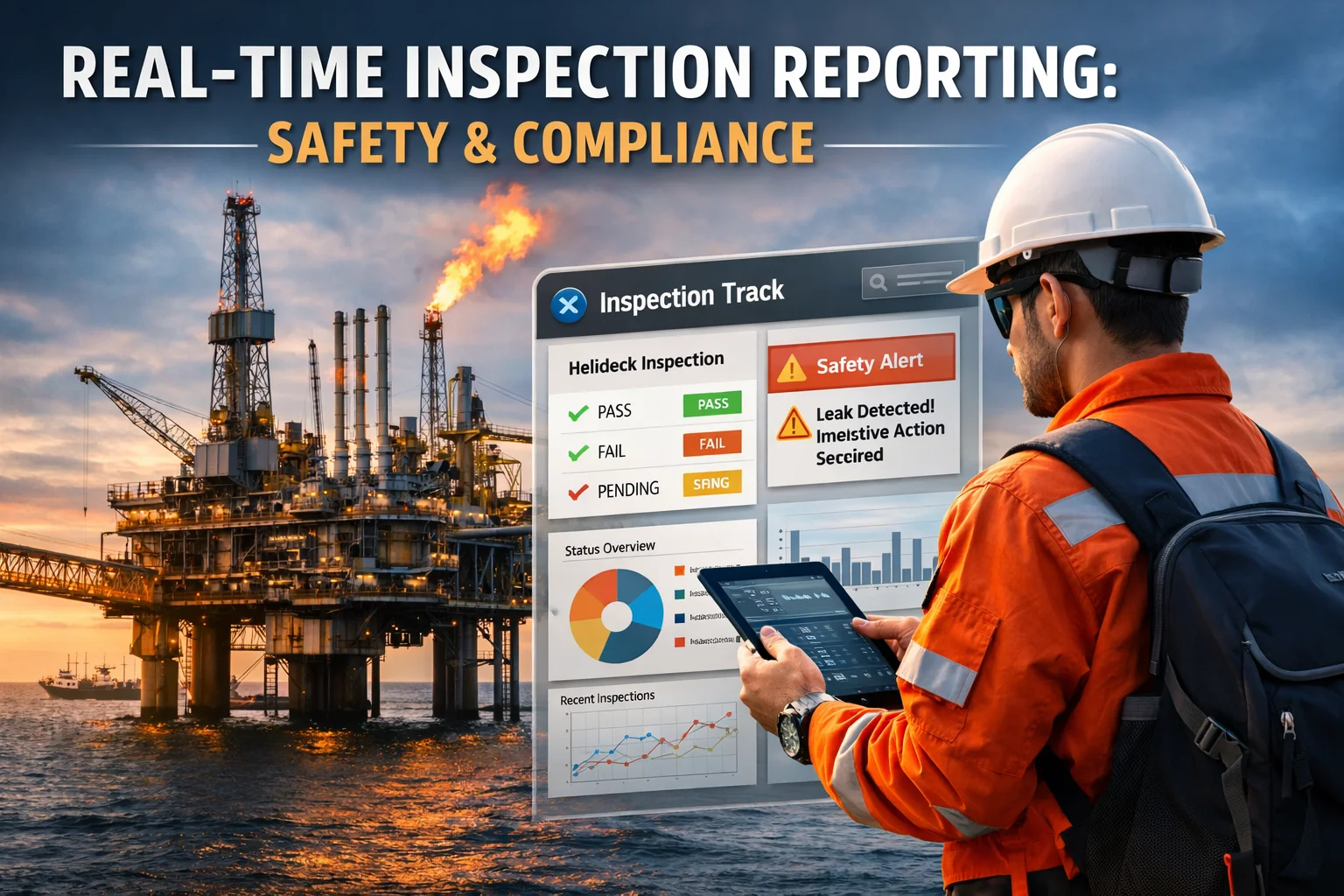
In the fast-paced oil and gas industry, maintaining compliance and ensuring safety are not just priorities—they are non-negotiable requirements. Traditional inspection methods often involve manual paperwork, delayed reporting, and fragmented data, increasing the risk of…


