

In the oil and gas industry, asset inspections don’t end when a defect is identified. In fact, that’s where the real work begins. Moving from defect detection to full compliance requires structured corrective action strategies, strong documentation, and continuous monitoring.
Because regulatory scrutiny is increasing and asset integrity risks are costly, operators must adopt proactive, auditable, and technology-driven corrective action processes. This guide explains how oil and gas companies can transform inspection findings into compliance outcomes—while improving safety, uptime, and operational confidence.
Asset inspections frequently uncover issues such as corrosion, structural fatigue, leaks, or non-conformance with safety standards. However, identifying defects alone does not reduce risk.
Corrective actions ensure that:
As a result, corrective action management has become a core pillar of asset integrity programs.
Before defining corrective strategies, it is important to understand the most common defect categories.
Because these defects vary in severity, not every issue requires the same response. Therefore, prioritization is essential.
A well-defined corrective action lifecycle ensures that inspection findings lead to measurable improvements.
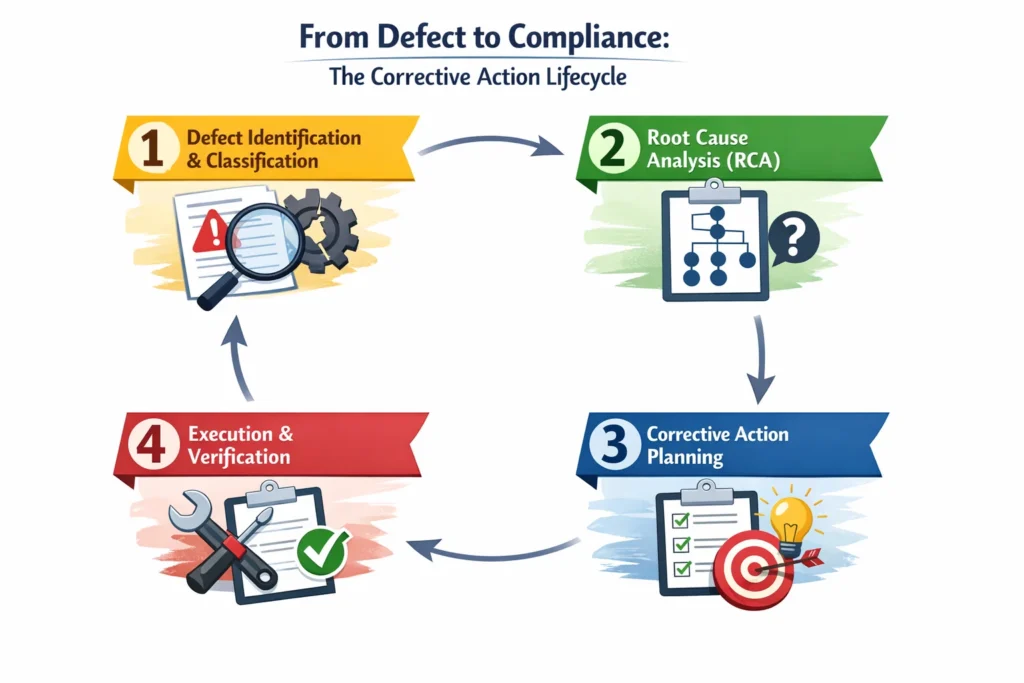
Inspection findings should be:
This step sets the foundation for effective remediation.
Rather than fixing symptoms, organizations must identify why the defect occurred.
Common root causes include:
By performing root cause analysis, companies can prevent recurrence, not just correct a single issue.
Once the root cause is known, a structured corrective action plan should be created.
This ensures accountability while keeping remediation on track.
Corrective actions must be executed and then verified through:
Only after verification can an action be marked as closed and compliant.
Regulators expect complete transparency. Therefore, every step from defect discovery to closure must be recorded.
Proper documentation:
To consistently move from defect to compliance, operators should adopt the following strategies.
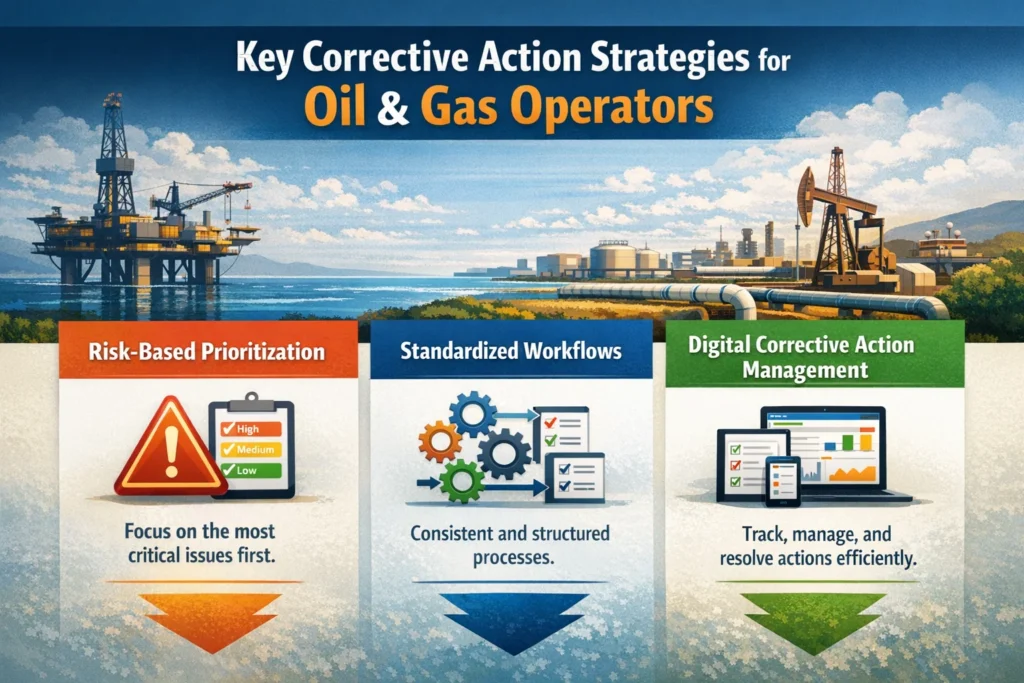
Not all defects carry the same risk. Focus resources on:
This approach improves efficiency while reducing exposure.
Standardized corrective action workflows help teams:
As a result, inspection programs become easier to scale.
Manual tracking using spreadsheets often leads to delays and data gaps. Instead, digital platforms enable:
This is where inspection management software becomes essential.
Inspection Track software, designed specifically for the oil and gas inspections industry, helps organizations manage the full corrective action lifecycle in one system.
Because all inspection and corrective action data lives in one platform, teams can move faster from defect identification to verified compliance.
| Aspect | Manual Tracking | Inspection Track Software |
|---|---|---|
| Visibility | Limited | Real-time dashboards |
| Accountability | Often unclear | Assigned owners & deadlines |
| Audit Readiness | Time-consuming | Instant audit reports |
| Risk Prioritization | Manual | Automated, risk-based |
| Scalability | Low | High |
Clearly, digital corrective action management delivers better control and compliance outcomes.
Corrective actions must align with recognized standards, including:
Using structured workflows ensures that inspection findings are resolved in line with regulatory expectations.
To achieve long-term success, oil and gas operators should:
Over time, these practices help organizations shift from reactive fixes to proactive compliance.
In the oil and gas industry, inspections are only valuable when defects lead to action. By applying structured corrective action strategies—supported by digital tools like Inspection Track software—organizations can confidently move from defect identification to verified compliance.
Ultimately, a well-managed corrective action process improves safety, extends asset life, strengthens regulatory trust, and protects operational performance.
If your goal is to transform inspection findings into measurable compliance outcomes, investing in the right strategy and technology is no longer optional it’s essential.
Read more : dropped object inspections standards guide
A corrective action is a documented step taken to fix a defect identified during an inspection, eliminate its root cause, and ensure the asset meets safety and regulatory requirements.
Digital tracking improves visibility, accountability, and audit readiness by ensuring all inspection findings, actions, and closures are centrally managed and easily traceable.
Inspection Track software helps manage defects, assign corrective actions, track progress, and generate audit-ready reports, enabling faster and more reliable compliance.
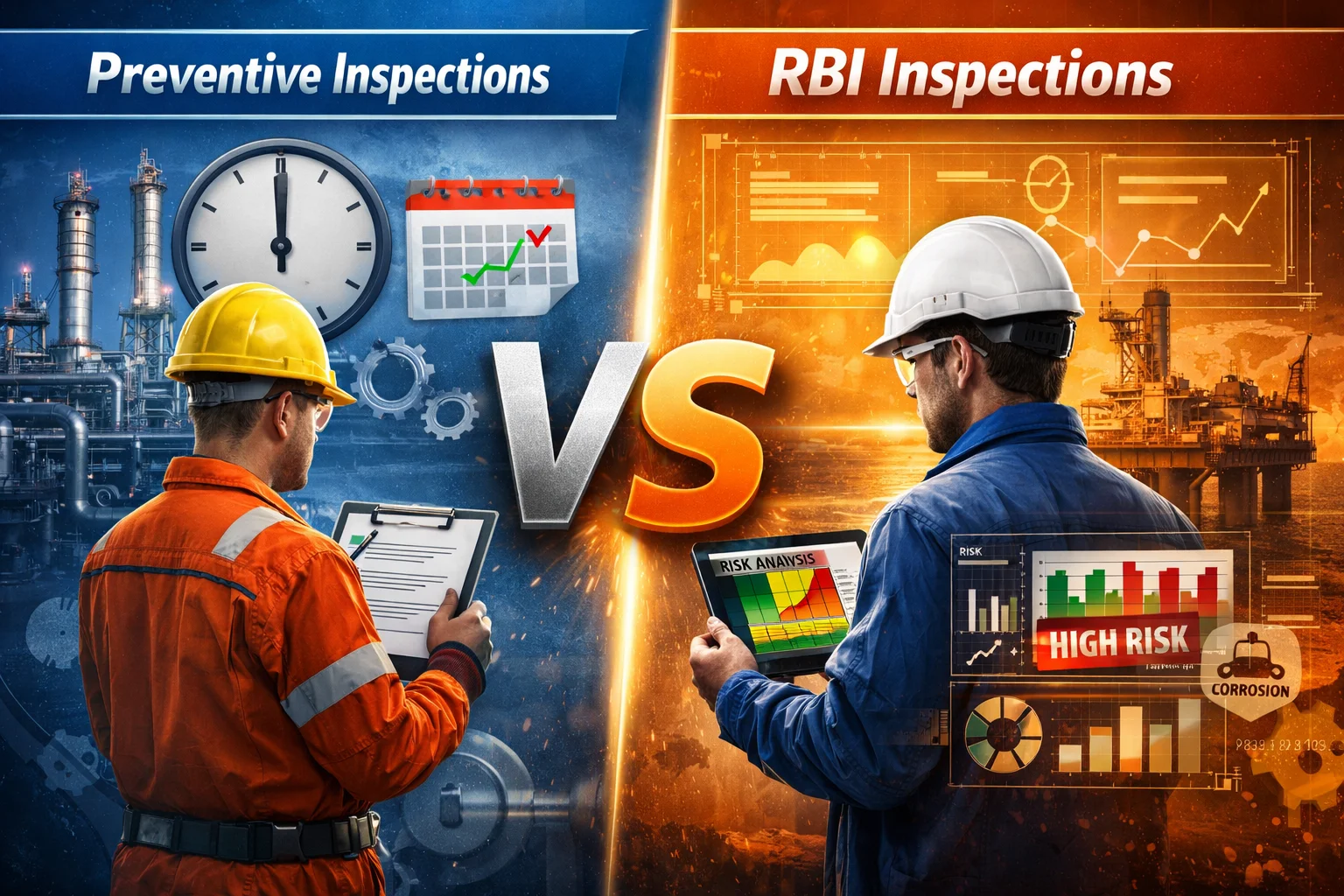
In the oil and gas industry, inspection strategies directly impact asset reliability, regulatory compliance, and operational safety. However, many organizations still struggle to understand the differences between preventive inspections and Risk-Based Inspection (RBI) methodologies. While…
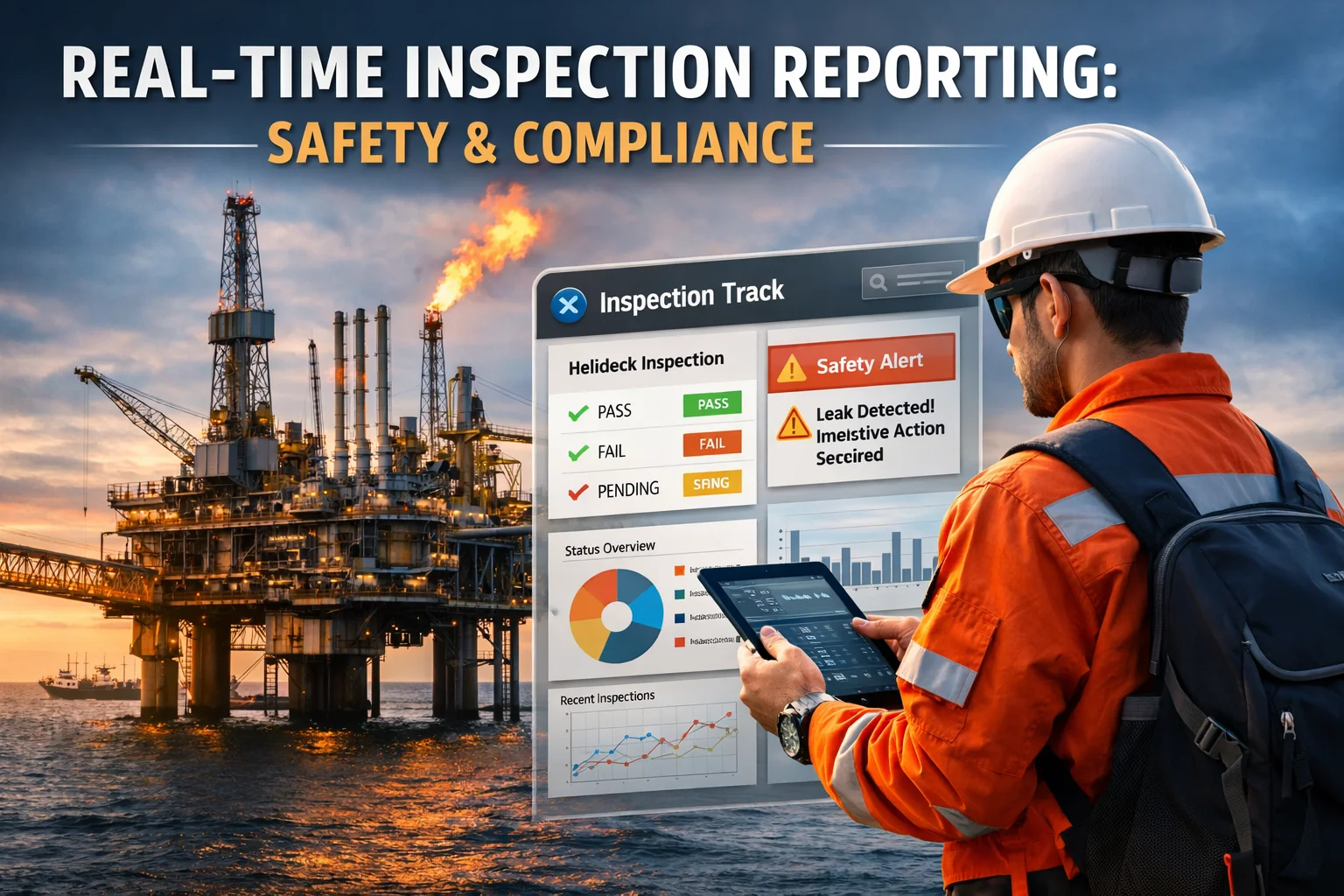
In the fast-paced oil and gas industry, maintaining compliance and ensuring safety are not just priorities—they are non-negotiable requirements. Traditional inspection methods often involve manual paperwork, delayed reporting, and fragmented data, increasing the risk of…


Comment (1)
Dye Penetrant Inspection in Oil and Gas Explained - inspectionstrack
Jan 01, 2026[…] Read more : corrective action strategies for oil gas inspections […]
Comments are closed.