
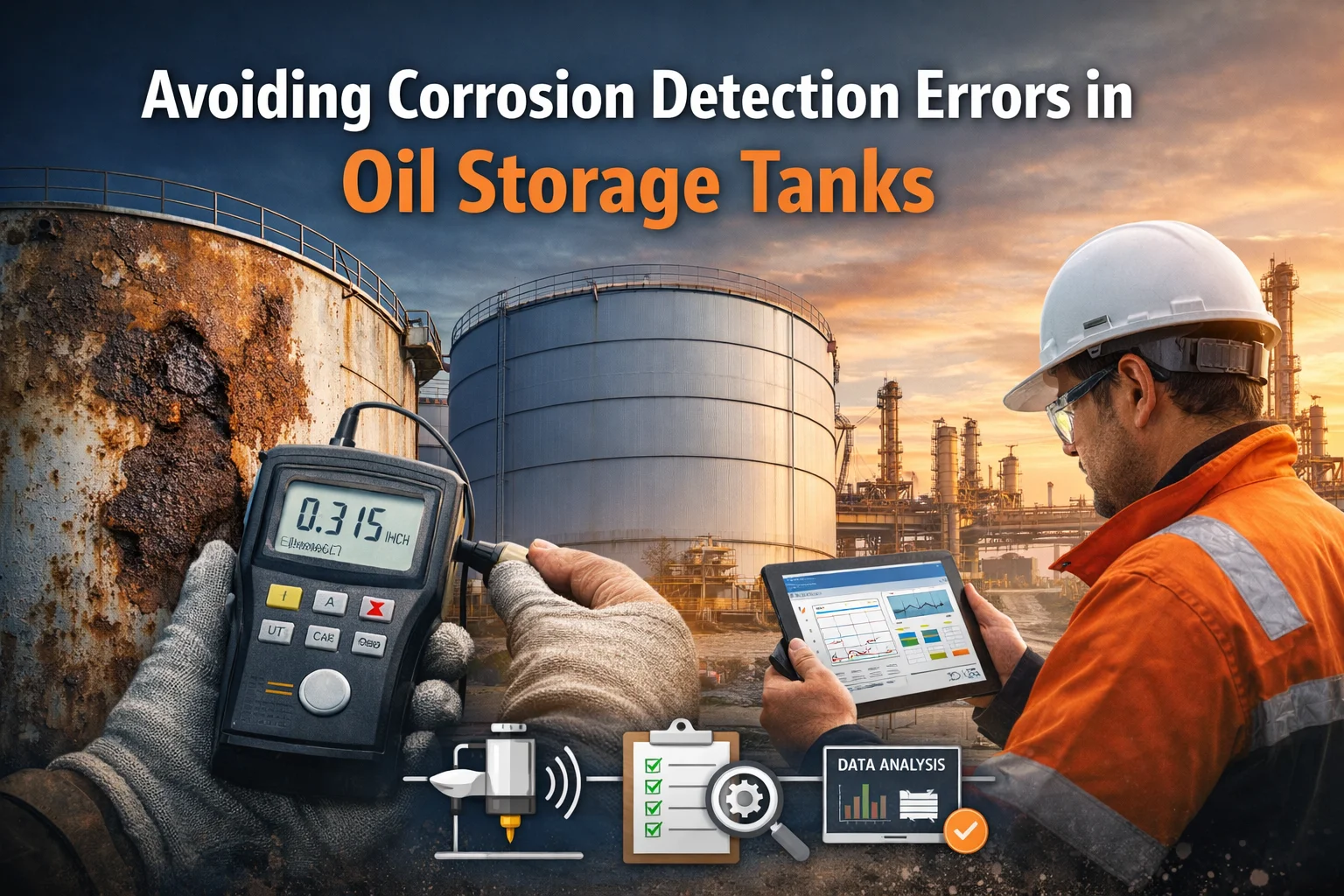
Corrosion detection in oil storage tanks is one of the most critical tasks in the oil and gas industry. However, even small inspection errors can lead to major safety risks, costly repairs, environmental damage, and regulatory non-compliance. Therefore, understanding how to avoid corrosion detection errors is essential for asset integrity and long-term operational efficiency.
In this guide, we will explore common corrosion detection mistakes, best practices to prevent them, and how digital inspection tools like Inspection Track software help improve accuracy and compliance.
Oil storage tanks are constantly exposed to harsh conditions such as moisture, temperature variations, chemical reactions, and microbial activity. As a result, corrosion can develop internally, externally, or at the tank bottom.
Accurate corrosion detection is important because it:
However, despite its importance, corrosion detection errors still occur frequently.
Understanding where inspections fail is the first step toward improvement. Below are the most common corrosion detection errors inspectors encounter.
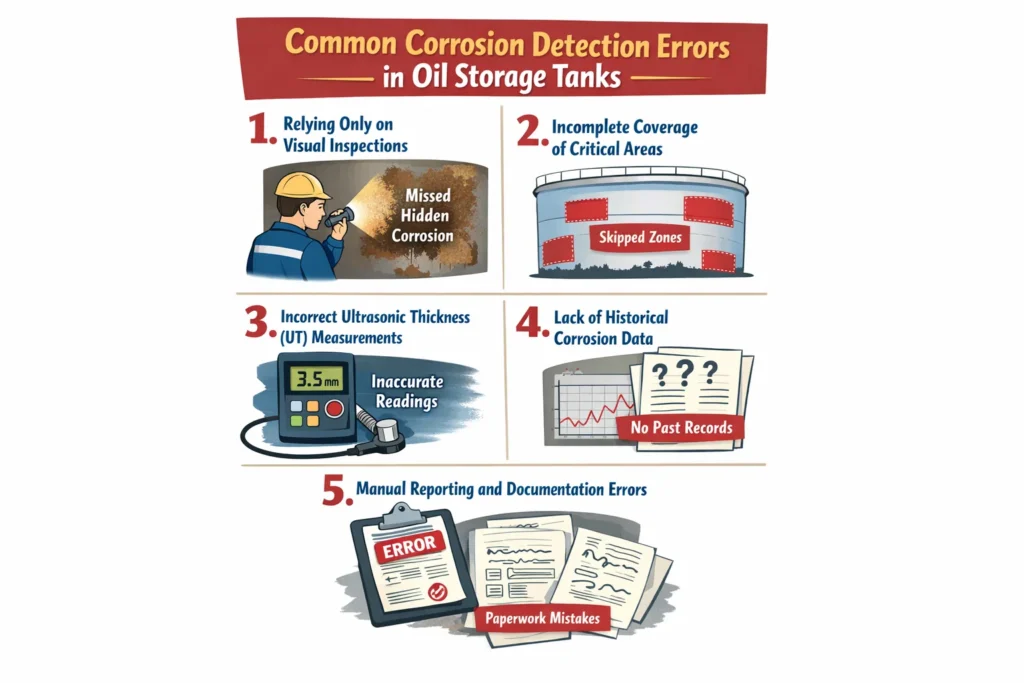
Although visual inspections are useful, they often fail to detect subsurface or internal corrosion. As a result, hidden damage goes unnoticed until it becomes severe.
Key limitation:
Many inspections overlook high-risk zones such as:
Consequently, corrosion progresses silently in these areas.
UT testing is widely used, yet errors occur due to:
Therefore, inaccurate thickness readings lead to false assessments.
Without historical inspection data, inspectors cannot track corrosion rates accurately. As a result, predictions become unreliable.
Paper-based inspections often lead to:
This significantly impacts decision-making and audit readiness.
| Corrosion Type | Commonly Missed Area | Risk Level |
|---|---|---|
| Bottom plate corrosion | Tank floor | High |
| Under-deposit corrosion | Internal surfaces | High |
| Pitting corrosion | Weld joints | Medium |
| MIC (Microbiologically Influenced Corrosion) | Water zones | High |
| External atmospheric corrosion | Shell & roof | Medium |
Fortunately, corrosion detection accuracy can be improved by following proven best practices.
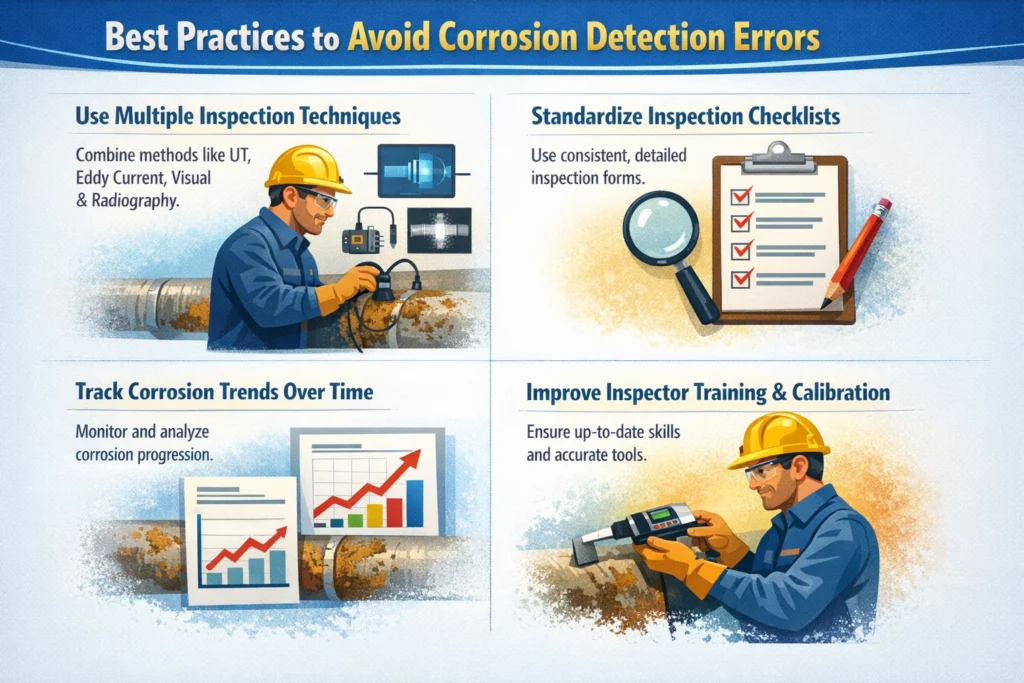
Instead of relying on one method, combine:
This layered approach significantly reduces error risks.
Using standardized digital checklists ensures that:
Corrosion is progressive. Therefore, trend analysis is essential to:
Regular training ensures inspectors remain updated with:
Read more : common tank inspection mistakes fixes
Manual inspections are no longer sufficient for modern oil and gas operations. This is where Inspection Track software makes a significant difference.
As a result, inspection teams achieve higher accuracy and faster decision-making.
| Feature | Manual Inspections | Inspection Track Software |
|---|---|---|
| Data accuracy | Prone to errors | High accuracy |
| Inspection speed | Slow | Faster |
| Historical tracking | Limited | Automated |
| Compliance readiness | Manual effort | Built-in |
| Reporting | Delayed | Instant |
To remain compliant, oil storage tank inspections must align with:
Digital inspection systems simplify compliance by maintaining structured and traceable records.
Avoiding corrosion detection errors in oil storage tanks is not just about better tools—it’s about better processes, data visibility, and consistency. While traditional inspection methods have limitations, digital solutions are transforming how oil and gas companies manage asset integrity.
Inspection Track software for the oil and gas inspections industry enables organizations to detect corrosion early, minimize risk, and ensure full regulatory compliance. By combining advanced inspection techniques with intelligent digital workflows, companies can protect their assets and operate with confidence.
If you’re looking to modernize your oil storage tank inspections, Inspection Track by Sky Soft Connection offers a powerful, field-proven solution tailored for oil and gas operations. From corrosion monitoring to complete inspection lifecycle management, it helps you inspect smarter, safer, and faster.
Read more : pressure gauge calibration errors advanced troubleshooting
Corrosion detection errors often occur due to incomplete inspections, reliance on visual checks, poor UT measurements, and manual reporting.
Using multiple methods such as UT testing, MFL, radiography, and digital inspection tools significantly improves accuracy.
Inspection software provides standardized checklists, historical data tracking, real-time reporting, and reduces human errors.
In the oil and gas industry, derrick operations rely heavily on lifting gear to move heavy loads safely and efficiently. From wire ropes to shackles and hoists, every component plays a critical role. However, if…
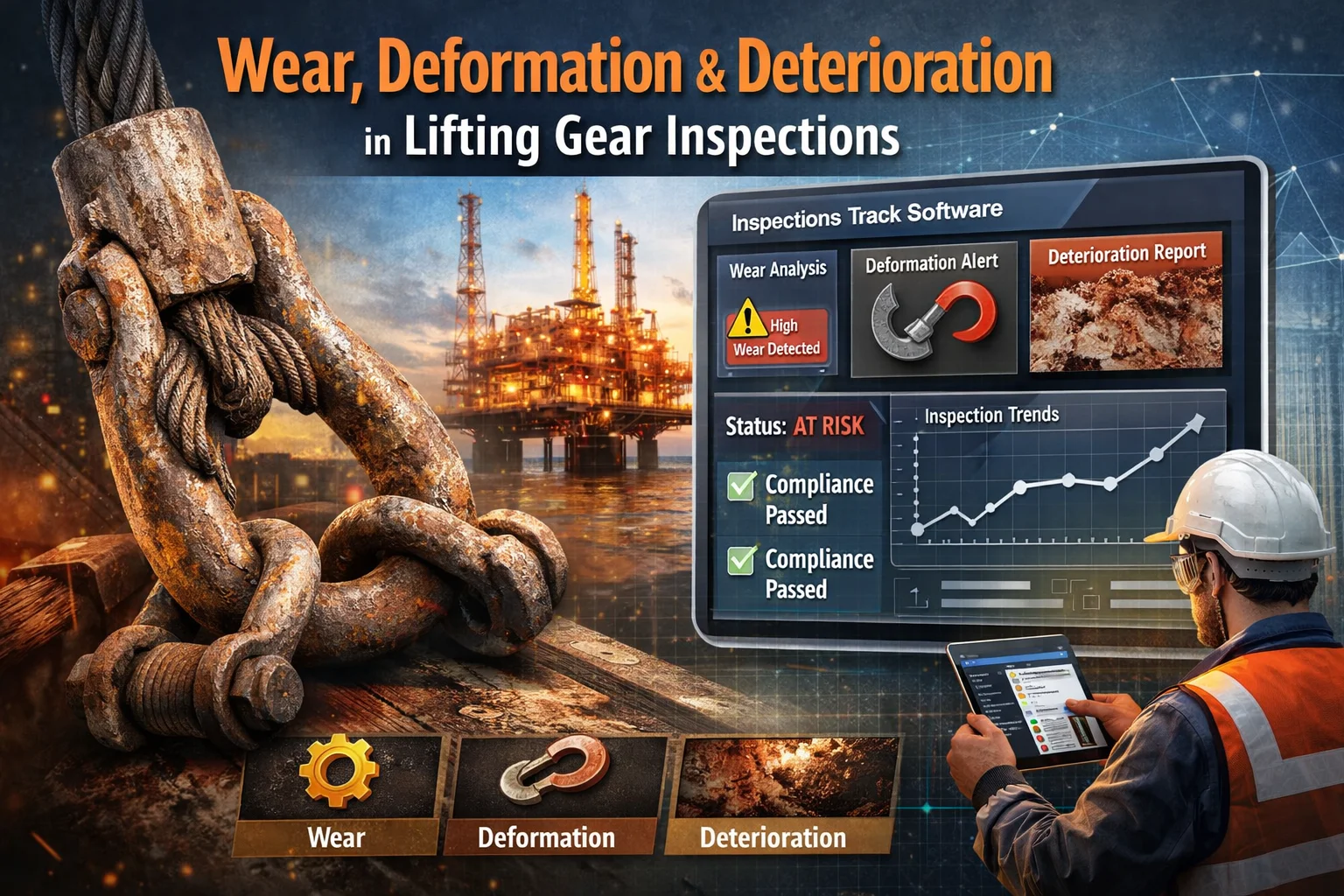
Introduction In the oil and gas industry, safety and operational efficiency rely heavily on properly maintained lifting gear. While regular inspections are mandated, many organizations overlook subtle indicators like wear, deformation, and deterioration. Understanding these…


Comment (1)
Three Types of Energy Audits Explained for Industries - inspectionstrack
Jan 14, 2026[…] Read more : avoiding corrosion detection errors in oil storage tanks […]
Comments are closed.