
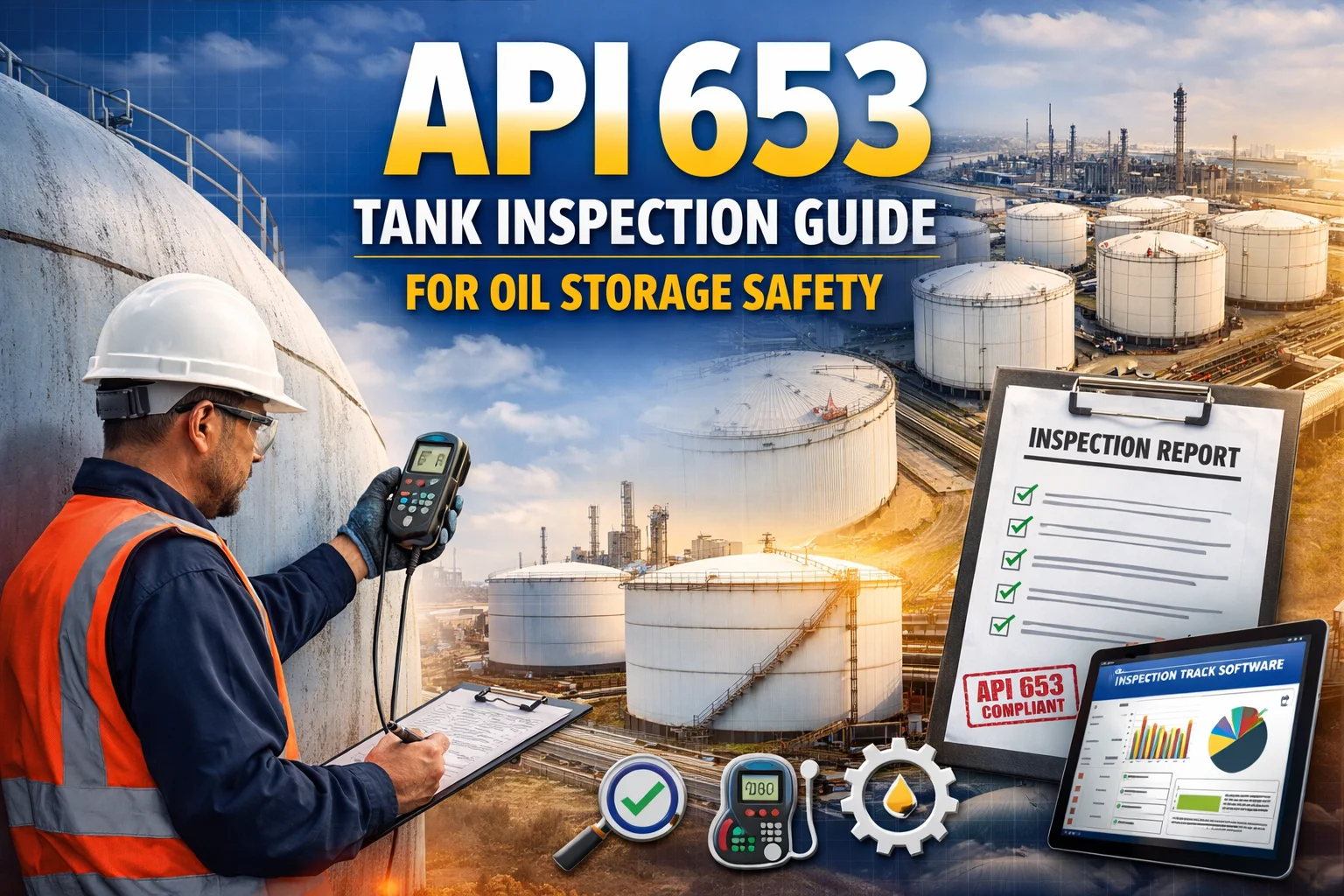
Oil storage tanks are the backbone of the oil and gas industry. However, without proper inspection and maintenance, they can become major safety, environmental, and financial risks. That’s exactly where API 653 tank inspections come in.
In this ultimate guide, we’ll break down what API 653 is, why it matters, inspection requirements, common defects, inspection frequency, and how modern digital tools like Inspection Track software help oil & gas companies stay compliant, efficient, and audit-ready.
API 653 is a standard developed by the American Petroleum Institute (API) for the inspection, repair, alteration, and reconstruction of aboveground storage tanks (ASTs) used in petroleum and chemical services.
The main goal of API 653 inspections is to:
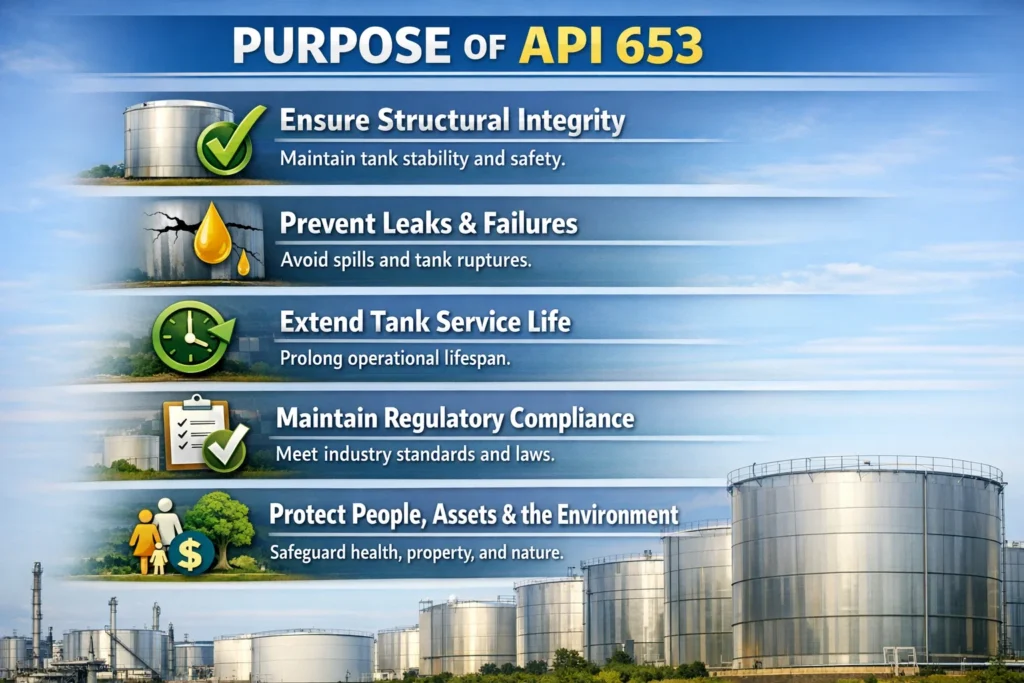
Because tank failures can lead to catastrophic consequences, API 653 is considered mandatory best practice across the oil and gas industry.
Without regular inspections, corrosion, settlement, and mechanical damage can go unnoticed. As a result, risks increase over time.
Most importantly, API 653 inspections protect both operational continuity and environmental responsibility.
API 653 inspections focus on critical tank components that directly affect integrity and safety.
| Tank Component | Inspection Focus |
|---|---|
| Tank Shell | Corrosion, deformation, thickness |
| Tank Bottom | Pitting, leaks, soil-side corrosion |
| Roof (Fixed/Floating) | Structural damage, seals |
| Nozzles & Appurtenances | Cracks, leaks, alignment |
| Foundation | Settlement, cracking |
| Welds | Defects and fatigue |
Each of these elements must meet minimum thickness and safety requirements defined by API 653.
API 653 defines three main inspection types, depending on risk and operating conditions.
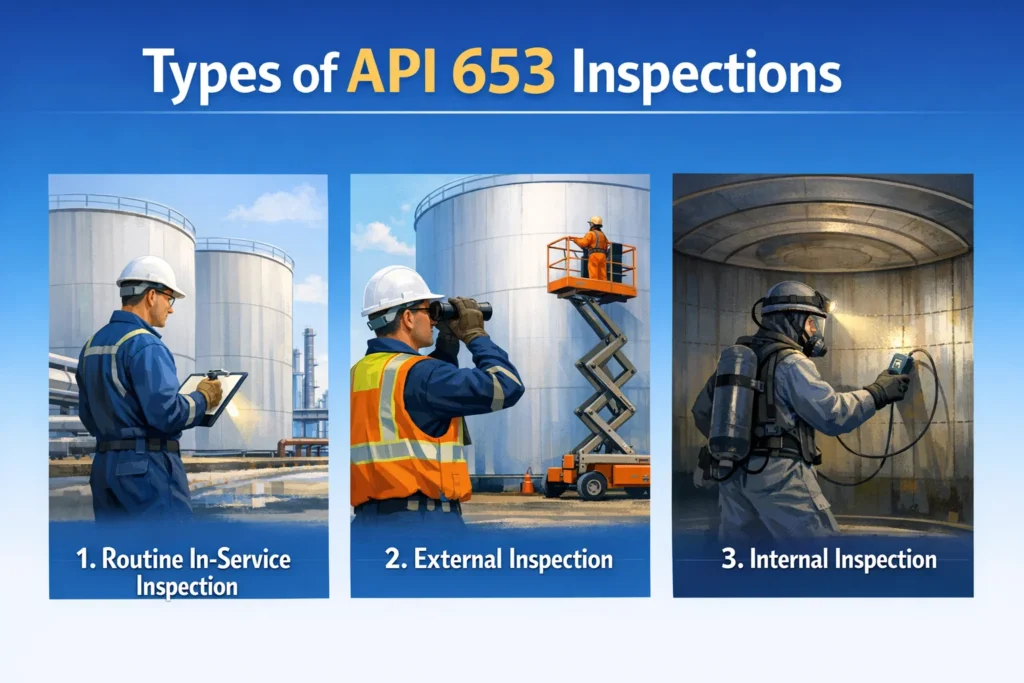
Pro tip: Internal inspections are the most critical and require detailed documentation.
Inspection intervals depend on corrosion rates, service history, and risk assessments.
| Inspection Type | Typical Interval |
|---|---|
| Routine In-Service | Continuous / Daily |
| External Inspection | Every 5 years |
| Internal Inspection | 10 years (or less based on corrosion) |
However, risk-based inspection (RBI) may allow adjusted intervals if supported by reliable inspection data.
During inspections, certified inspectors frequently encounter:
If left untreated, these issues can quickly escalate into tank failures or environmental incidents.
Only API 653 certified inspectors are authorized to:
Because accuracy is critical, inspectors rely heavily on inspection data quality and reporting systems.
Read more : inspection methods for oil and gas storage tanks
Traditional paper-based inspections often lead to missing data, delayed reports, and audit challenges. That’s why many oil & gas companies are switching to Inspection Track software.
Inspection Track is purpose-built for the oil and gas inspections industry, offering:
As a result, inspectors spend less time on paperwork and more time on safety-critical assessments.
Most importantly, Inspection Track ensures nothing slips through the cracks.
To get the most value from API 653 inspections:
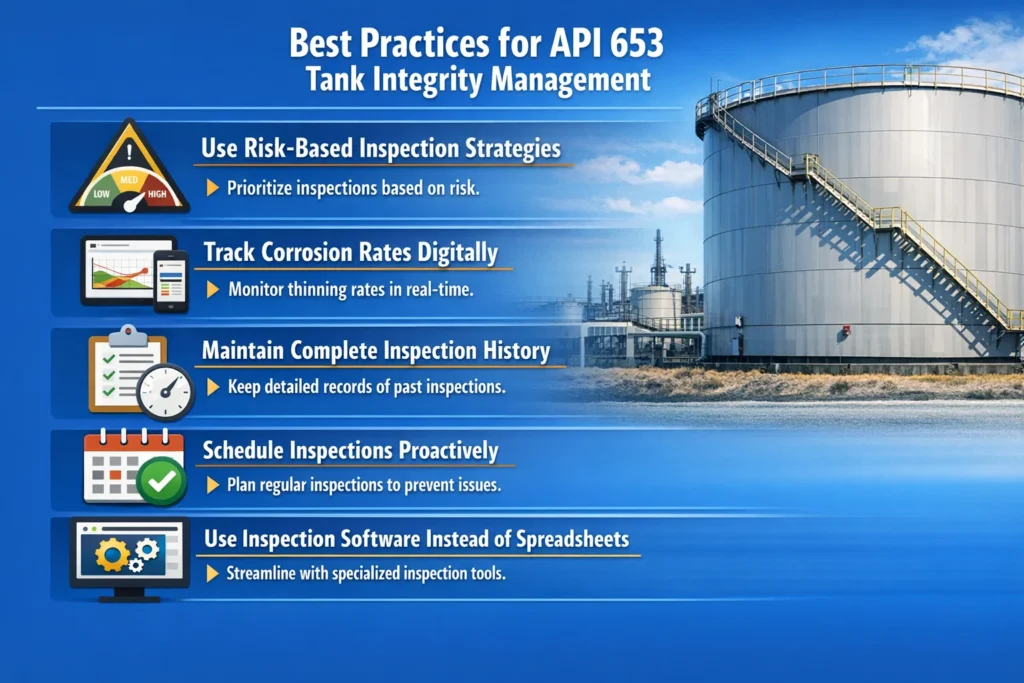
By following these best practices, operators significantly reduce unplanned downtime.
As regulations tighten and assets age, digital inspection management is no longer optional. Companies that adopt modern tools like Inspection Track gain:
In today’s oil and gas landscape, smart inspections mean safer operations.
API 653 inspections are essential for maintaining oil tank integrity, safety, and compliance. However, inspections alone are not enough. To truly master tank integrity checks, companies must combine certified expertise with powerful inspection software.
Inspection Track bridges that gap helping oil and gas operators modernize API 653 inspections, reduce risk, and stay compliant with confidence.
Read more : pressure gauge calibration safety best practices guide
API 653 is used to inspect, repair, and maintain aboveground oil storage tanks. It ensures tank integrity, safety, and compliance with oil and gas industry standards.
External API 653 inspections are typically performed every 5 years, while internal inspections are usually required every 10 years or sooner based on corrosion rates.
Only API 653-certified inspectors are qualified to perform and approve API 653 tank inspections and integrity assessments.
Inspection software like Inspection Track digitizes inspection data, tracks corrosion history, and generates API 653-compliant reports, making audits and compliance easier.
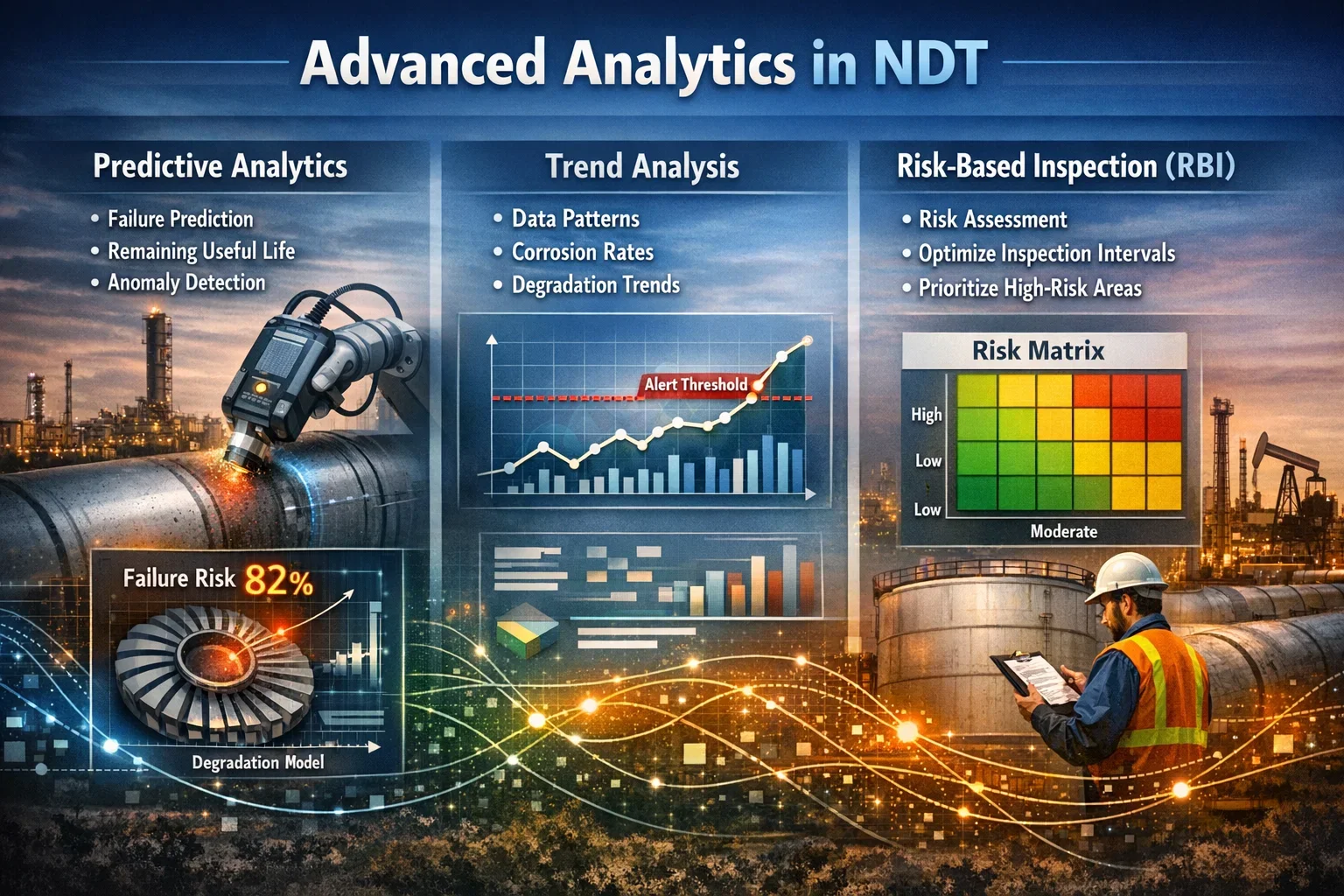
Non-Destructive Testing (NDT) plays a critical role in ensuring the safety, reliability, and compliance of assets in industries like oil and gas. However, simply collecting inspection data is not enough. NDT data analysis is what…
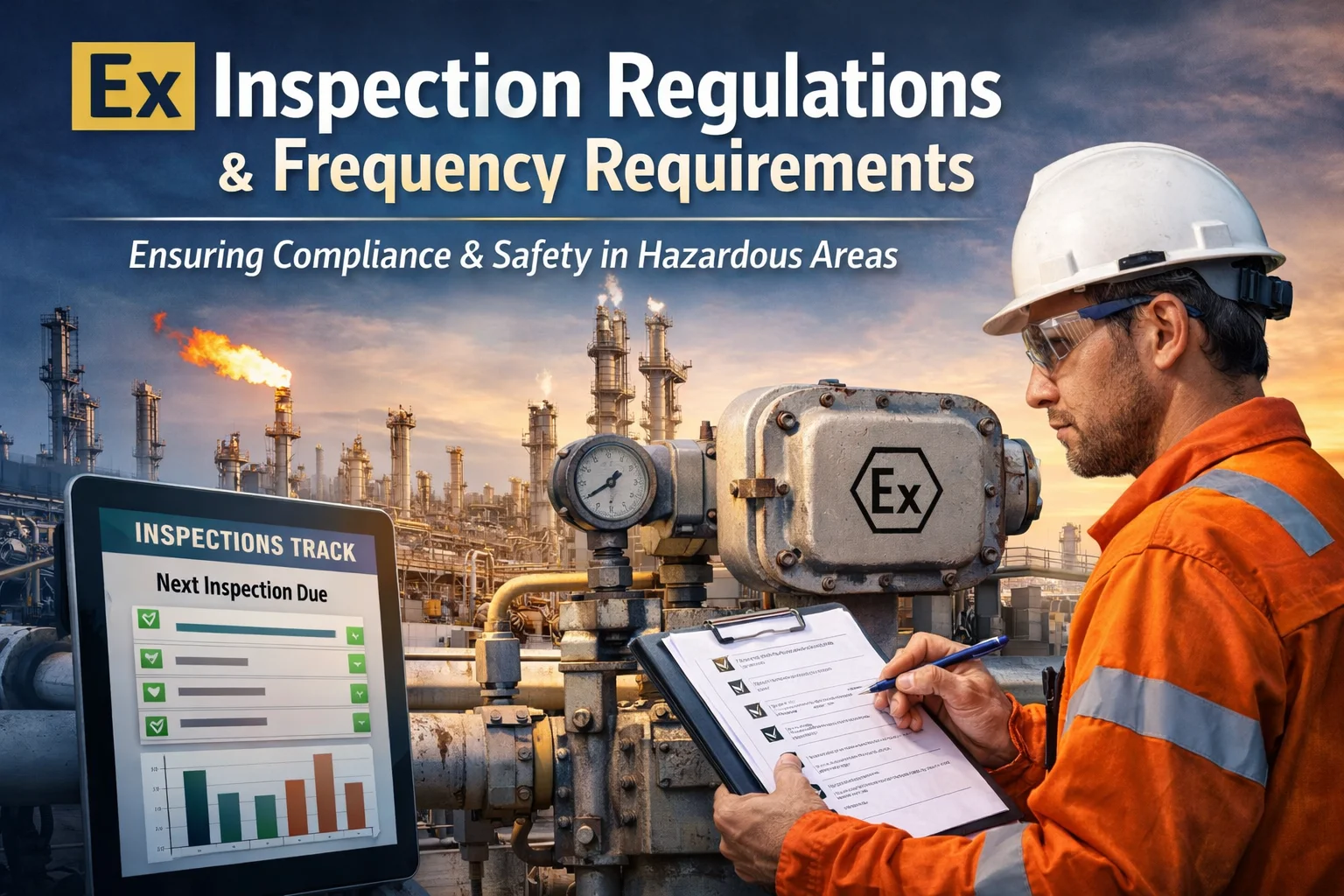
In hazardous environments such as oil and gas facilities, safety is not optional—it is regulated. Ex inspections (Explosion Protection Inspections) ensure that electrical and mechanical equipment installed in explosive atmospheres remains safe, compliant, and operational….


Comment (1)
NDT Inspection Software for Oil & Gas Industry - inspectionstrack
Feb 13, 2026[…] Read more: api 653 tank inspection guide for oil storage safety […]
Comments are closed.