
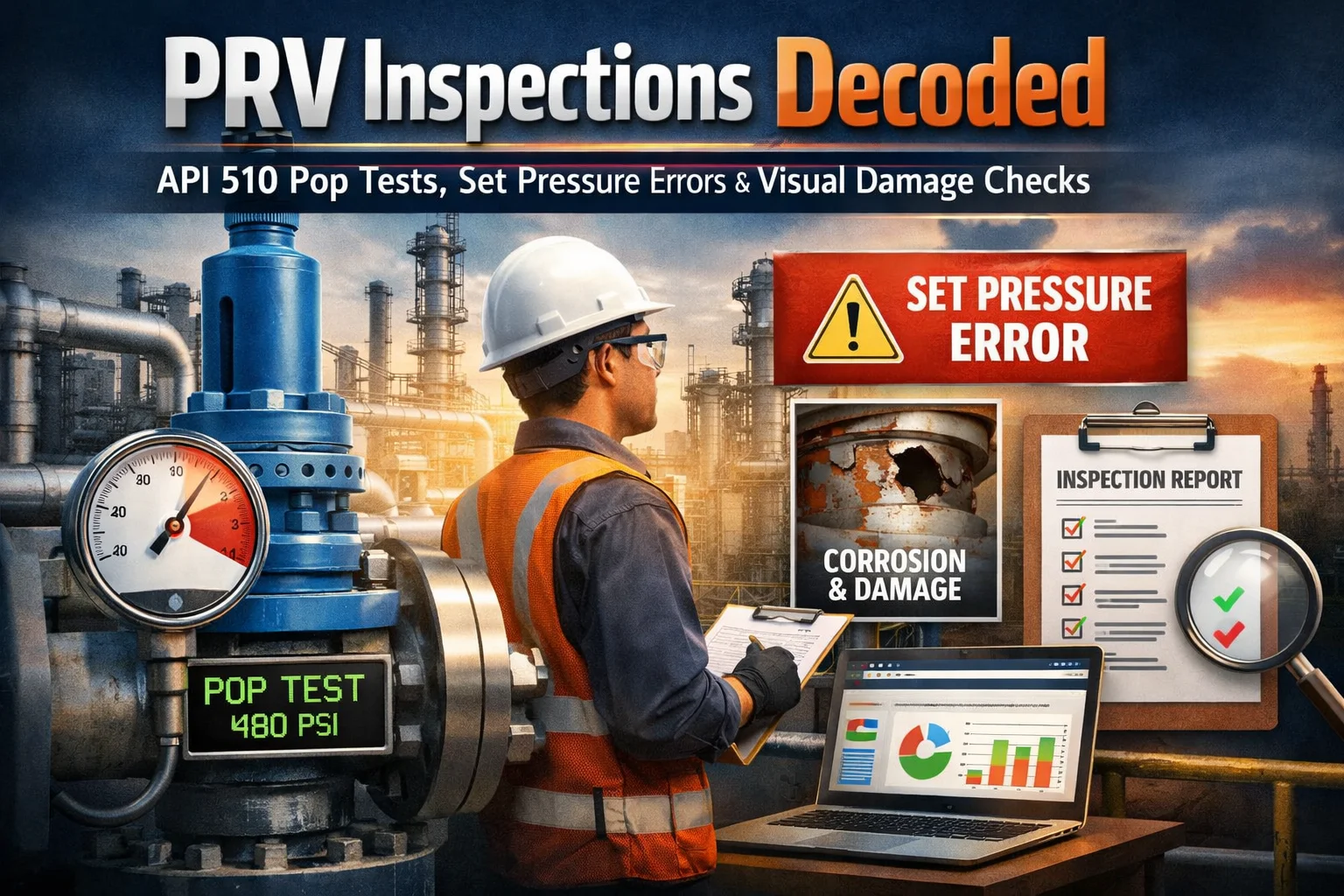
Pressure Relief Valves (PRVs) play a critical role in protecting pressurized systems across the oil and gas industry. When pressure exceeds safe limits, these valves automatically release excess pressure to prevent equipment failure, explosions, or environmental hazards.
However, PRVs can only perform reliably if they are inspected, tested, and maintained according to industry standards. This is where API 510 pressure vessel inspection guidelines and PRV pop testing procedures become essential.
In this guide, we will break down how PRV inspections work, explain API 510 pop test procedures, highlight common set pressure errors, and explore visual damage checks used by inspectors.
A Pressure Relief Valve (PRV) is a safety device designed to protect pressurized systems from exceeding safe pressure limits. It automatically opens when pressure reaches a predefined threshold and closes once the pressure returns to normal.
Without proper inspection:
Therefore, industries such as refineries, offshore rigs, chemical plants, and gas processing facilities rely on scheduled PRV inspections to ensure operational safety.
API 510 Pressure Vessel Inspection Code is a widely adopted standard that governs the inspection, repair, alteration, and rerating of pressure vessels.
Although PRVs are primarily covered under other standards like API 576 and API 527, API 510 inspectors frequently verify PRV functionality as part of pressure vessel safety systems.
Key objectives of API 510-related PRV inspection include:
As a result, PRV inspections are a critical part of plant integrity management programs.
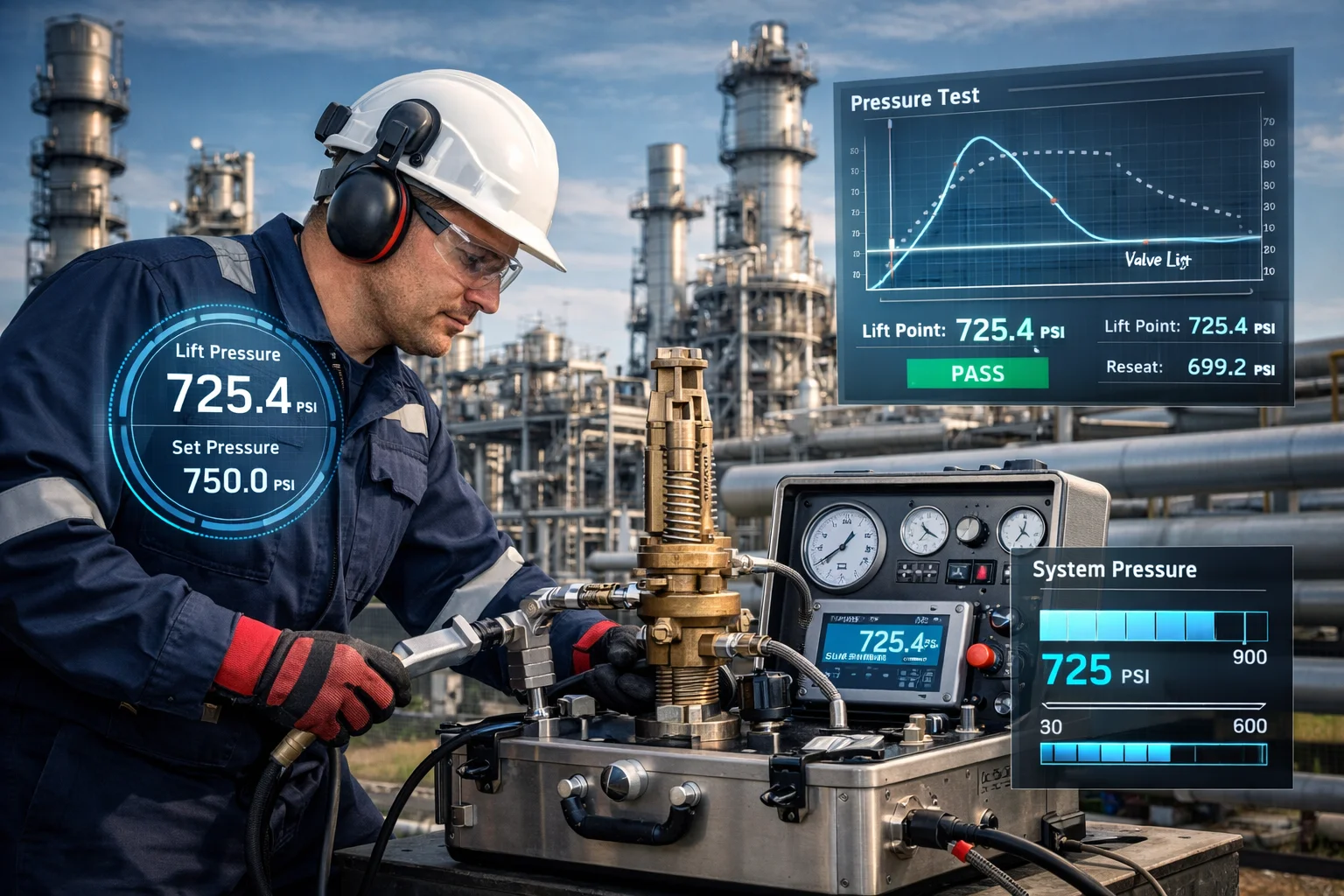
One of the most important methods used during PRV inspection is the pop test. This test determines whether the valve opens at the correct set pressure.
A pop test gradually increases pressure inside the valve until it suddenly opens or “pops.” The pressure at which this occurs is recorded and compared to the valve’s designated set pressure.
If the valve opens within an acceptable tolerance range, it passes the test.
Below is a simplified version of a typical PRV pop test process:
| Step | Procedure | Purpose |
|---|---|---|
| 1 | Install PRV on calibrated test bench | Ensure controlled testing conditions |
| 2 | Gradually increase inlet pressure | Simulate operating pressure conditions |
| 3 | Monitor pressure gauge | Identify the exact opening pressure |
| 4 | Record the “pop” pressure | Compare against the set pressure |
| 5 | Evaluate tolerance limits | Determine if recalibration is required |
According to industry practices, the valve should open within a specified tolerance.
| Set Pressure Range | Allowable Deviation |
|---|---|
| Up to 70 psi | ±2 psi |
| 70 – 300 psi | ±3% |
| Above 300 psi | ±3% |
If the valve opens outside these limits, it must be recalibrated or repaired before returning to service.
Even well-designed PRVs can develop calibration errors over time. These errors often occur due to operational stress or improper maintenance.
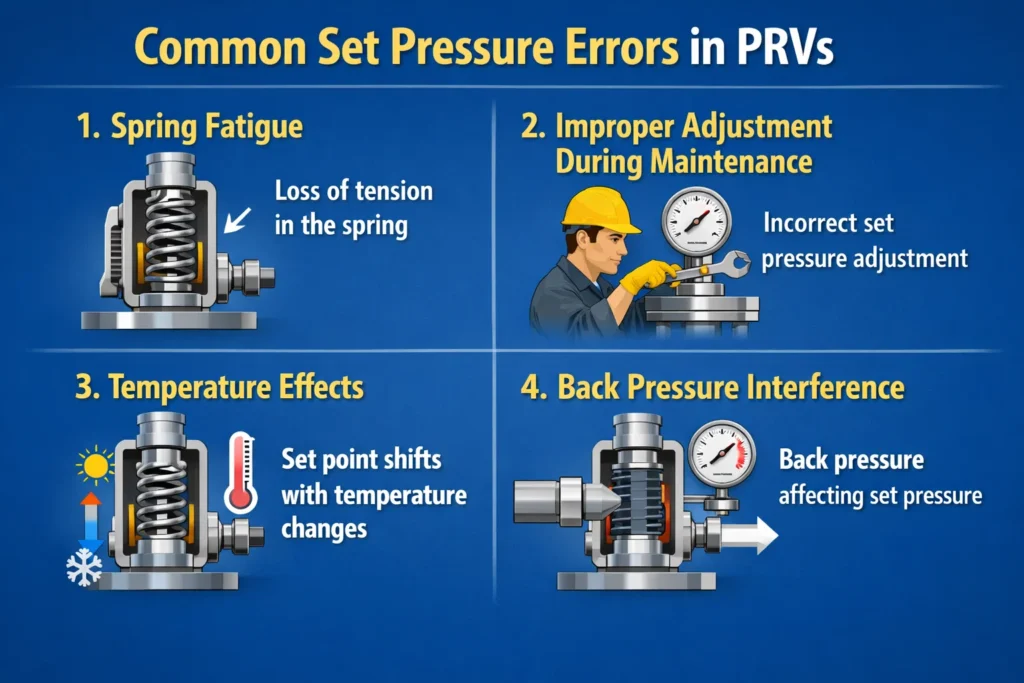
PRVs rely on internal springs to maintain the set pressure. Over time:
Therefore, periodic recalibration becomes essential.
Technicians sometimes misadjust the compression screw during servicing. Consequently, the valve may open too early or too late.
Common symptoms include:
Temperature fluctuations can influence valve behavior.
For example:
As a result, inspectors often verify temperature compensation settings during calibration.
Back pressure in discharge lines can affect valve performance.
This can cause:
Therefore, inspectors must ensure the system design accounts for back pressure effects.
While testing procedures verify functional performance, visual inspections reveal physical damage that may compromise safety.
Inspectors typically examine several external and internal components.
During field inspections, technicians look for:
These issues may indicate improper installation or environmental exposure.
When the valve is dismantled, inspectors evaluate:
If any damage appears, the valve must undergo repair or replacement.
Early detection prevents costly shutdowns. Common warning signs include:
Therefore, maintenance teams should treat these indicators seriously.
Manual inspection logs often create several challenges:
Modern inspection teams increasingly rely on digital platforms to solve these issues.
One example is Inspectionstrack, a specialized software designed for the oil and gas inspection industry.
Inspectionstrack helps inspection companies streamline PRV inspection workflows through:
As a result, inspectors can manage large-scale inspection programs more efficiently while maintaining regulatory compliance.
Furthermore, digital inspection systems significantly reduce human errors in pressure testing records.
To maintain safe and compliant operations, companies should implement structured inspection strategies.
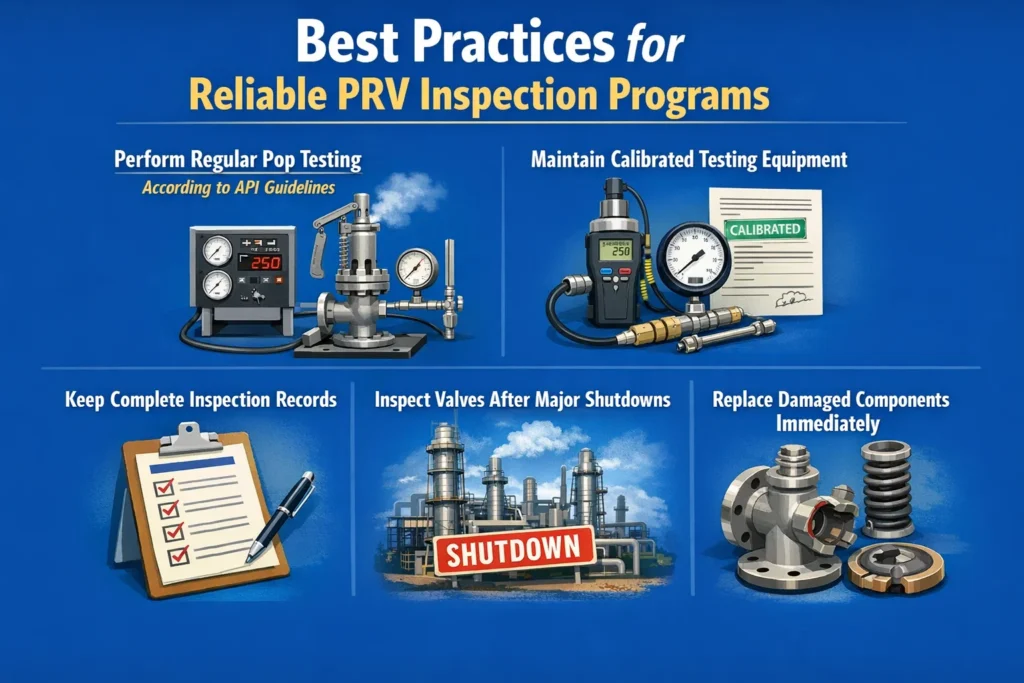
Additionally, companies should integrate inspection management software to ensure traceability and compliance.
The oil and gas industry is rapidly shifting toward digital inspection ecosystems.
Technologies such as:
are transforming how inspectors manage safety-critical assets like PRVs.
Consequently, inspection teams can detect valve performance issues before they cause operational failures.
PRVs serve as the last line of defense against overpressure hazards in industrial systems. However, their reliability depends entirely on proper inspection, calibration, and maintenance.
Understanding API 510 pop test procedures, identifying set pressure errors, and conducting thorough visual damage checks are essential for maintaining safe operations.
Moreover, adopting digital tools like Inspectionstrack inspection software allows organizations to modernize their inspection processes, improve accuracy, and ensure regulatory compliance across large-scale oil and gas facilities.
In an industry where safety cannot be compromised, effective PRV inspection programs remain a cornerstone of operational integrity.
Read more : technical guide to lifting gear inspections
A PRV pop test verifies that the valve opens at the correct set pressure, ensuring the system can safely release excess pressure.
Inspection intervals vary depending on operating conditions, but many facilities perform annual or scheduled inspections based on API standards and risk assessments.
If a valve opens outside acceptable tolerance limits, it must be recalibrated, repaired, or replaced before being returned to service.
Pressure Relief Valves (PRVs) play a critical role in protecting equipment, pipelines, and personnel in the oil and gas industry. However, PRV inspections and calibration can become expensive, especially when organizations rely entirely on external…

The oil and gas industry operates in high-risk environments where Ex (explosion-proof) inspections are critical. Traditional manual inspections are often slow, error-prone, and difficult to track. Today, the digital revolution is transforming Ex inspections with…


Comment (1)
In-House PRV Inspections: Cost-Saving Hacks - inspectionstrack
Mar 10, 2026[…] Read more : prv inspections api 510 pop tests damage checks […]
Comments are closed.